




01. Edit your form 9465 online
Type text, add images, blackout confidential details, add comments, highlights and more.

Type text, add images, blackout confidential details, add comments, highlights and more.

Draw your signature, type it, upload its image, or use your mobile device as a signature pad.

Send installment agreement request form 9465 via email, link, or fax. You can also download it, export it or print it out.
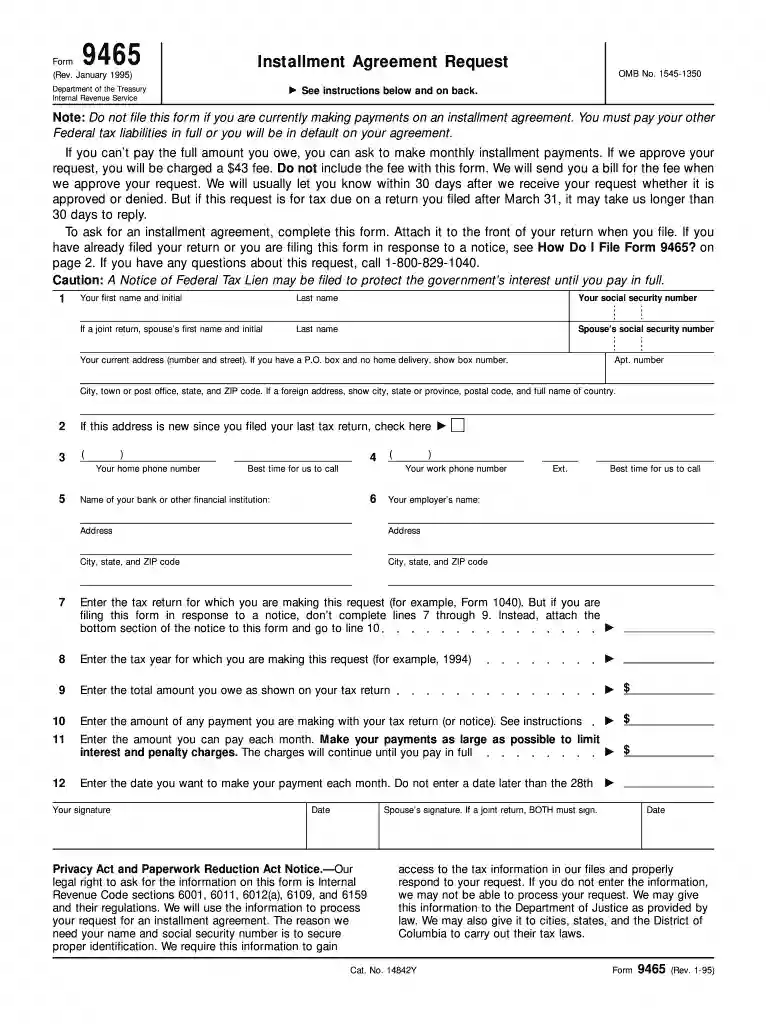
Form 9465, known as the Installment Agreement Request, is a document issued by the Internal Revenue Service (IRS) to allow taxpayers to arrange monthly installment payments if they are unable to pay their full tax liability at once. This form is particularly beneficial for individuals or entities who need more time to pay their debts without facing penalties for late payment. To ensure compliance with tax obligations while avoiding additional financial strain, it's essential to understand the form's requirements, processes, and associated terms.
To acquire Form 9465, you can visit the official IRS website where the form is available for download. Additionally, it can be requested by mail through the IRS' customer service. Tax software such as TurboTax or QuickBooks also often includes the option to fill out Form 9465 within their platforms. Regardless of the method chosen, ensure that you have access to the most recent version of the form to avoid processing delays.
Filling out Form 9465 involves several straightforward yet crucial steps:
Form 9465 is a critical tool for taxpayers facing financial difficulties. By requesting an installment agreement, taxpayers can avoid more severe consequences of non-payment, such as liens, levies, or asset seizure. In addition, it encourages maintaining compliance with future tax obligations, as the installment plan requires timely payments to remain active and in good standing with the IRS.
Form 9465 is frequently used by individuals who owe taxes but are unable to pay the full amount immediately. This includes:
Several terms are crucial to understanding the use and implications of Form 9465:
Understanding these terms ensures you comprehend the obligations and consequences related to tax debt installment plans.
The use of Form 9465 obligates taxpayers to adhere strictly to the agreed terms. Non-compliance can lead to legal actions including, but not limited to, enforced collections or revocation of the installment agreement. It is paramount to keep the IRS informed of any changes in financial circumstances that may affect your ability to adhere to the terms of the agreement.
The IRS provides specific guidelines for managing installment payments. These include:
These guidelines are designed to help taxpayers manage their tax obligations more effectively while avoiding penalties or additional charges related to late payments or non-compliance with agreement terms.
We've got more versions of the form 9465 form. Select the right form 9465 version from the list and start editing it straight away!
At DocHub, your data security is our priority. We follow HIPAA, SOC2, GDPR, and other standards, so you can work on your documents with confidence.
Use Form 9465 to request a monthly installment plan if you cannot pay the full amount you owe shown on your tax return (or on a notice we sent you).Read more
Complete this part only if all 3 conditions apply: 1. you defaulted on an installment agreement in the past 12 months,. 2. you owe more than $25,000 but notRead more
3) The completed Service Record form, Original Owner/Tire Installation. Information form, and the Original Invoice are presented to a participating. MichelinRead more


