
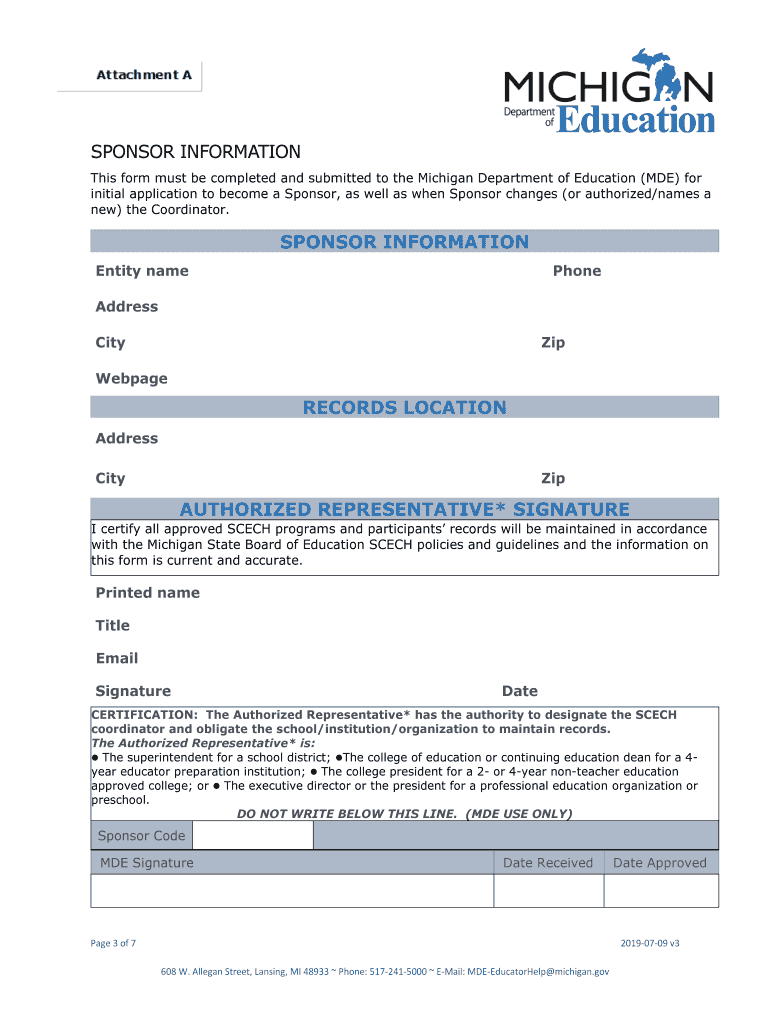







Definition & Meaning
State Continuing Education Clock Hours (SCECHs) are educational credits earned by completing certain professional development activities. In Michigan, becoming a SCECH sponsor involves a formal process where organizations are authorized to offer SCECHs to educators. The process ensures that professional development opportunities meet established standards and contribute to the continuing education of teachers and administrators.
Eligibility Criteria
To become a SCECH sponsor in Michigan, organizations must meet specific eligibility criteria. Eligible entities typically include:
- School districts and charter schools
- Intermediate school districts
- Educational consortia
- Professional organizations
- Higher education institutions
These organizations must demonstrate a commitment to providing quality professional development and adhere to state standards for SCECH programs.

Criteria for Approval
- Demonstrated history of providing quality educational services
- Capability to develop and maintain comprehensive SCECH programs
- Compliance with state regulations and guidelines for continuing education
Application Process & Approval Time
The application process for becoming a SCECH sponsor involves several key steps. The Michigan Department of Education oversees this process and ensures transparency and fairness.
- Preparation: Gather all required documents, including proof of eligibility and a detailed program proposal.
- Application Submission: Complete the official application form and submit it along with necessary supporting materials.
- Review Process: The application will be reviewed by the Department of Education, which may take several weeks.
- Approval Notification: Successful applicants will be notified of their status and provided with guidelines for operating as a SCECH sponsor.
Approval Timeframe
- Typical approval processes take upwards of 4 to 6 weeks.
- Expedite requests are subject to additional criteria and fees.
Key Elements of the SCECH Sponsorship
Becoming a SCECH sponsor includes several responsibilities and guidelines that must be adhered to for successful program delivery.
- Designing comprehensive professional development activities
- Maintaining detailed attendance and completion records
- Ensuring program evaluations are conducted and reviewed regularly
- Facilitating participant feedback to inform future programming
Record Keeping
- Sponsors must retain records of participant attendance and evaluations for a minimum of five years.
- Records should be accessible for audits and should adhere to privacy regulations.
Responsibilities of SCECH Coordinators
SCECH coordinators play a crucial role in organizing and managing the continuing education activities offered by their sponsoring organization. They are responsible for:
- Coordinating registration and enrollment processes
- Ensuring compliance with SCECH program standards
- Overseeing the evaluation and feedback mechanisms
- Communicating with the Department of Education regarding any program changes or updates
Key Responsibilities
- Handling participant inquiries and issues
- Documenting all correspondence with attendees
- Regularly updating credential and compliance status with the state
Important Terms Related to SCECHs
Understanding certain key terms is essential for organizations considering becoming SCECH sponsors:
- SCECH Coordinator: An individual responsible for managing SCECH programs within an organization.
- Professional Development: Training and educational activities designed to improve an educator's knowledge and skills.
- Clock Hours: The measure of time an educator spends actively participating in professional development programs.
Commonly Used Terms
- Program Proposal: A detailed plan outlining the objectives, content, and delivery methods for a proposed SCECH program.
- Credit Awarding: The process of issuing official SCECHs based on program completion and participation.
State-Specific Rules for Michigan
Michigan has specific regulations that govern the SCECH sponsorship process to maintain quality and consistency across educational programs.
- All SCECH activities must comply with Michigan's educational standards
- Sponsors must report SCECH activity completions to the state for official recording
- Programs should address specific state educational priorities and needs
Michigan-Specific Requirements
- Annual re-certification for sponsors to continue offering SCECHs
- Restrictions on the types of activities that qualify for SCECH credits
How to Use the SCECHs Sponsor Form
For organizations aiming to become SCECH sponsors, the form requires detailed information to evaluate eligibility and program quality.
- Accurately complete each section, including details about your organization and the proposed programs
- Provide all required supporting documents, such as tax-exempt status, mission statement, and objectives
- Ensure all provided information is up-to-date and verifiable
Form Utilization Tips
- Use clear and concise language when describing programs and objectives
- Double-check for accuracy and completeness before submission to avoid delays in processing
Steps to Complete the Sponsorship Application
Completing the application for SCECH sponsorship involves a sequence of clear, structured steps.
- Review Eligibility: Ensure your organization meets all the eligibility requirements.
- Compile Information: Gather all necessary documentation, including program outlines and organizational details.
- Form Completion: Fill out the application form meticulously.
- Submit: Send the completed application and supporting materials to the appropriate state department.
- Follow-Up: Monitor the status of your application and respond promptly to any requests for additional information.
Recommended Practices
- Assign a primary contact for all application-related inquiries
- Maintain a checklist to monitor completion of all requirements
Why Become a SCECH Sponsor
Becoming a SCECH sponsor offers several benefits to educational organizations.
- Enhances the organization's credibility and prestige within educational circles
- Provides educators with opportunities for professional growth and advancement
- Contributes to maintaining high educational standards and improving student outcomes
Benefits for Educators
- Access to varied professional development opportunities
- Ability to meet state educational requirements and advance their careers




