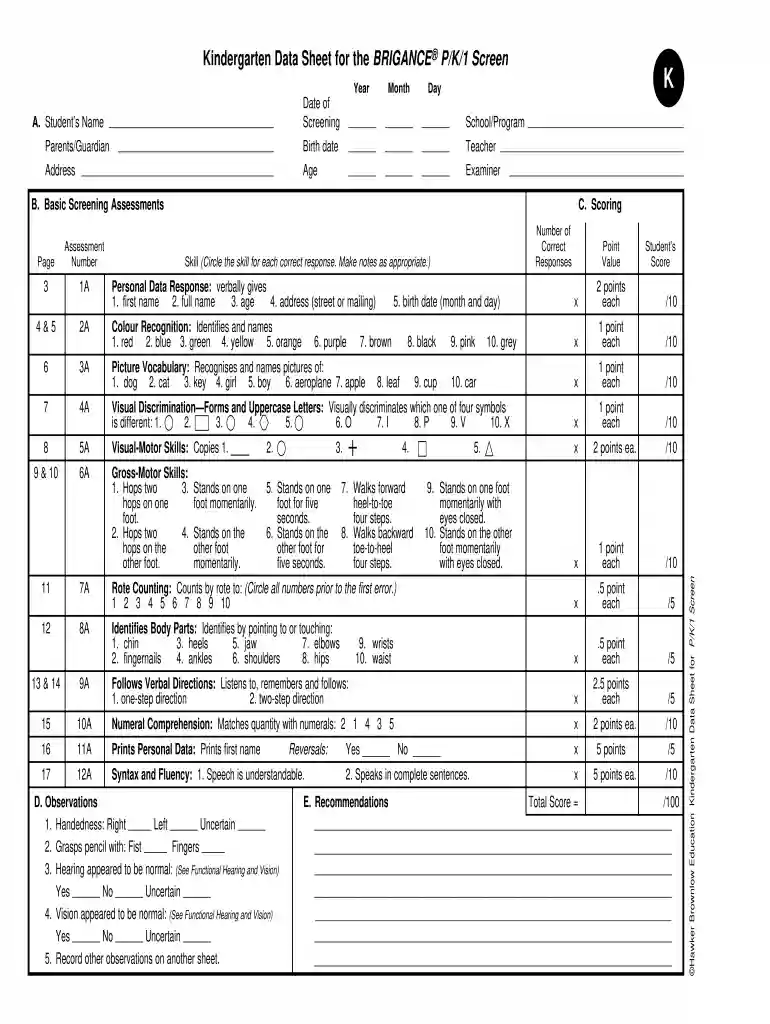
Definition and Purpose of the Brigance Assessment PDF
The Brigance Assessment PDF is a comprehensive tool designed to evaluate the developmental skills of children, particularly in preschool and kindergarten settings. The assessment is structured to encompass various skill areas, including cognitive, motor, language, and social-emotional development.
- Assessment Scope: This tool typically includes sections for personal information, developmental milestones, and specific areas of skill development. The assessment addresses various domains, enabling educators and specialists to capture a well-rounded profile of a child’s abilities.
- Use in Early Childhood Education: The Brigance assessment is frequently used by educators and professionals for screening and placement decisions, ensuring that each child receives targeted support for their developmental needs.
How to Use the Brigance Assessment PDF
Using the Brigance Assessment PDF involves several key steps that ensure a comprehensive evaluation process.
- Preparation: Gather necessary materials, including the assessment form, writing instruments, and any relevant background information on the child.
- Completion of Sections: Each section of the assessment should be filled out clearly, focusing on observed behaviors and capabilities. Educators may need to provide explanations or comments that offer insight into the child’s performance.
- Scoring: After completing the assessment, scores are compiled based on the responses. These scores can help in interpreting the child’s developmental status and readiness for school.
- Review and Recommendations: Reflect on the results to determine appropriate next steps, which might include tailored interventions or additional testing if concerns arise.
Steps to Complete the Brigance Assessment PDF
Completing the Brigance Assessment PDF requires careful attention to detail to ensure accuracy and reliability.
- Step 1: Introduction: Begin with the personal information section, collecting basic demographic details about the child.
- Step 2: Skill Areas Assessment: Move through various sections methodically. Each area, such as language or motor skills, should be assessed based on direct observation or standardized interactions.
- Step 3: Scoring System: Use the scoring guidelines provided within the PDF. Scores typically range based on developmental milestones, indicating whether the child is meeting, approaching, or exceeding expectations for their age group.
- Step 4: Final Compilation: After scoring each area, compile the data to create an overall profile of the child’s developmental strengths and weaknesses. This comprehensive view is essential for producing targeted support strategies.
Key Elements of the Brigance Assessment PDF
When utilizing the Brigance Assessment PDF, it is important to recognize the key elements that contribute to its effectiveness and comprehensiveness.
- Sections of the Assessment: The assessment typically includes areas for personal data, developmental skill scores, and observational notes.
- Scoring Rubric: A scoring rubric that defines what constitutes a passing score in different skill areas is crucial for interpreting results accurately. This allows educators to classify children's abilities consistently.
- Reporting Feedback: After conducting the assessment, educators have the opportunity to provide detailed feedback based on their observations and scoring outcomes, creating a tailored approach for each child's educational needs.
- Resource Listings: The Brigance PDF often includes sections on additional resources or next steps for further assessments, making it an essential document for ongoing educational planning.
Important Terms Related to the Brigance Assessment PDF
Understanding key terminology associated with the Brigance Assessment PDF enhances clarity and aids in effective communication among educators and parents.
- Developmental Domains: Refers to the various areas of child development assessed, including cognitive, language, social-emotional, and physical domains.
- Scoring Interpretation: This term encompasses the methods used to evaluate and understand the results of the assessment, guiding educators in decision-making.
- Benchmarking: Benchmarking is the process of comparing a child's scores to established developmental milestones, aiding in assessing whether the child is on track for their age group.
- Formative Assessment: This refers to assessments like the Brigance that are conducted to monitor children's learning progress and inform instruction.
Examples of Using the Brigance Assessment PDF
Implementing the Brigance Assessment PDF in educational settings provides varied examples of its utility.
- Initial Screening: In a preschool environment, educators can use the assessment at the start of the academic year to gauge the incoming students' developmental levels, tailoring lesson plans to their needs.
- Follow-Up Assessments: The Brigance assessment can be conducted mid-year to evaluate the effectiveness of interventions implemented for children identified as needing additional support, assessing growth or areas still needing attention.
- Individualized Education Programs (IEPs): For students requiring specialized support, results from the Brigance can contribute to IEPs by providing objective data on the child's abilities, helping to craft personalized educational plans.