




01. Edit your non resident firearm declaration canada online
Type text, add images, blackout confidential details, add comments, highlights and more.

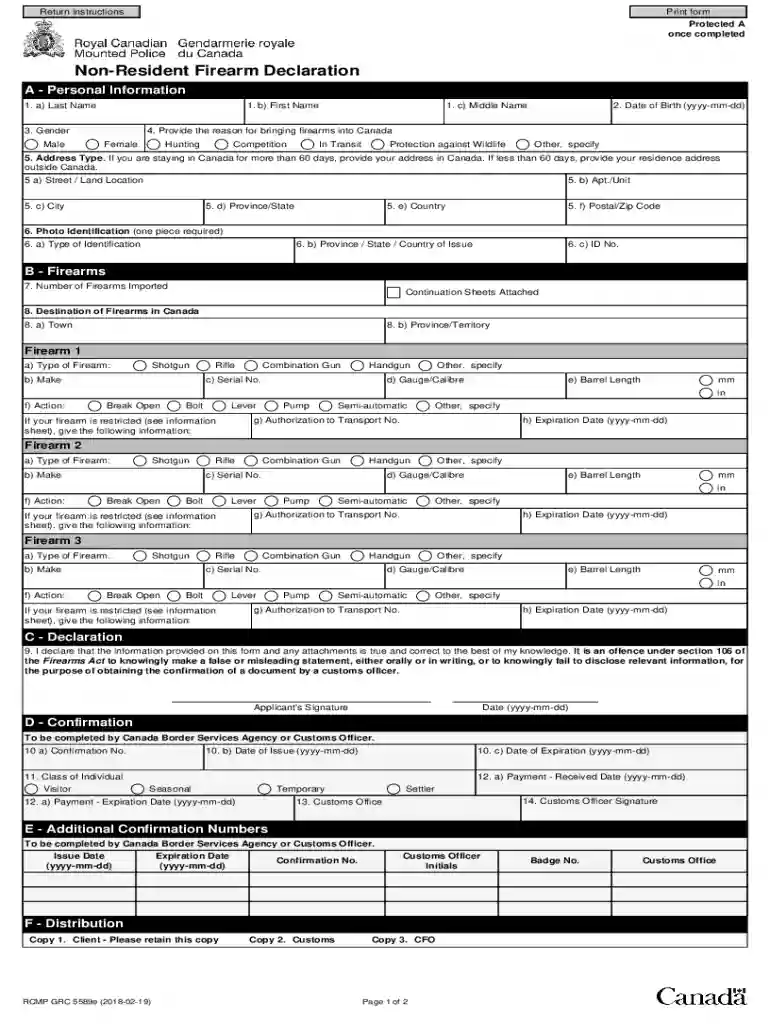
Type text, add images, blackout confidential details, add comments, highlights and more.

Draw your signature, type it, upload its image, or use your mobile device as a signature pad.

Send cafc 909 via email, link, or fax. You can also download it, export it or print it out.
The non-resident firearm declaration is essential for individuals from outside Canada who wish to bring firearms into the country. This document outlines the legal requirements and procedures to ensure firearms are declared properly upon entry.
Individuals completing the declaration must provide several personal details and information about the firearms they intend to bring. Essential information includes:
Providing accurate and complete information is crucial, as discrepancies may lead to delays or denial of firearm entry.
The non-resident firearm declaration must be submitted to the Canada Border Services Agency (CBSA) upon arrival in Canada. The submission process includes the following steps:
Understanding the classification of firearms is vital for completing the non-resident firearm declaration accurately. Firearms are categorized as follows:
Knowing the classification of your firearms not only aids in accurate declaration but also informs you of applicable laws and regulations during your stay.
When presenting you non-resident firearm declaration at the border, you must also provide identification. Acceptable forms of ID include:
It is imperative that the information on your identification matches the details provided on the declaration form.
As a non-resident entering Canada with firearms, you have legal responsibilities to adhere to under the Firearms Act. Key responsibilities include:
Failure to comply with these responsibilities can result in serious legal consequences, including confiscation of firearms and potential criminal charges.
If you plan to transfer firearms while in Canada, additional documentation may be required. This could include:
Understanding these requirements is important for anyone considering firearm transfers during their visit to Canada.
Failure to adequately declare firearms can lead to significant penalties, which may include:
Awareness of these potential consequences emphasizes the importance of following procedures correctly.
To illustrate the importance of the non-resident firearm declaration, consider these scenarios:
These examples underscore the necessity of understanding the declaration process and maintaining compliance with firearms laws in Canada.
We've got more versions of the non resident firearm declaration canada form. Select the right non resident firearm declaration canada version from the list and start editing it straight away!
Sure, and it’s really easy! DocHub is a web-based PDF editor with advanced document management functions that allow you promptly adjust your documents, complete empty fields and insert new ones for other people to fill out, and create eSignatures in several ways. Upload your canada form 5589, give information as requested, and decide how you want to eSign your template - by typing your name, drawing your signature, uploading its image, or using a QR code.
If you edit your firearm transfer forms canada with DocHub, you merely need a stable web connection and virtually any browser installed on your device. No need to install any third-party software or research guides. Just open a tab with DocHub, drag and drop your file, and modify it immediately.
At DocHub, your data security is our priority. We follow HIPAA, SOC2, GDPR, and other standards, so you can work on your documents with confidence.
by M Blair 2013 315, 328 29 (1995). (The 1986 amendments expanded the classes of persons prohibited from selling, shipping, or receiving firearms to include illegal aliens,Read more
Nov 4, 2025 Anyone importing firearms to Canada must be at least 18 years of age. Persons under 18 years of age cannot import firearms.Read more


