






Understanding Toolbox Talk Format
A toolbox talk format is crucial in ensuring effective communication during safety meetings or training sessions, especially in work environments that prioritize safety standards. This format primarily includes specific sections designed to foster engagement and provide vital information clearly and concisely.
Essential Components of a Toolbox Talk Format
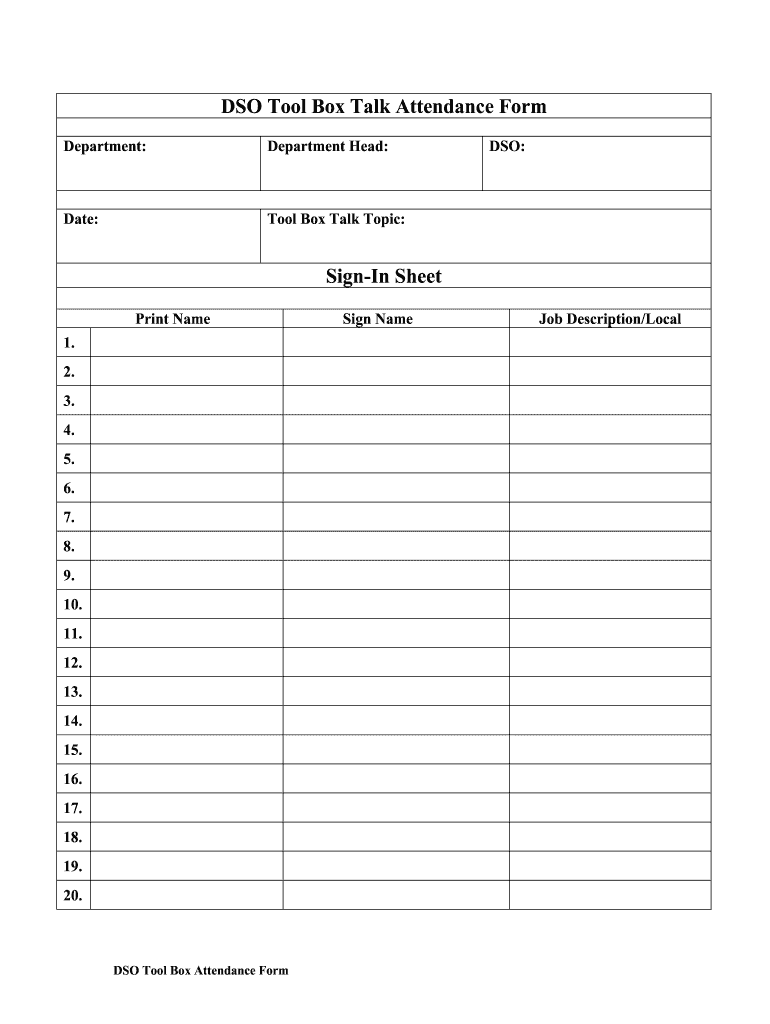
The elements of a well-structured toolbox talk format typically include:
- Date and Time: Essential for record-keeping and tracking participation.
- Location: Specifies where the meeting is held, important for context and record accuracy.
- Topic: Clearly denote the subject of the talk to focus discussions.
- Facilitator's Name: Listing the person leading the talk provides accountability and a point of contact for questions.
- Attendee Signatures: This section acts as a sign-off sheet to confirm participant presence and engagement.
These components not only comply with organizational requirements but also enhance the effectiveness of safety talks by ensuring all necessary information is readily available for future reference.
Benefits of Using a Toolbox Talk Template
Implementing a toolbox talk template offers several advantages:
- Consistency: A standardized format ensures that all talks cover necessary topics effectively, contributing to a stronger safety culture.
- Efficiency: Using a predefined template saves time during preparation, allowing facilitators to focus on the content rather than formatting.
- Record-keeping: Having a uniform method for documenting talks aids in tracking safety training compliance and identifying areas needing improvement.
- Flexibility: Though standardized, templates can be tailored to meet specific team or project needs, ensuring relevance across various contexts.
Creating an Effective Toolbox Talk
To ensure your toolbox talk is effective, consider the following steps:
- Identify Relevant Topics: Based on current safety concerns or historical data from your workplace.
- Engage Participants: Encourage interaction by asking questions or discussing real-life scenarios.
- Review Policies and Procedures: Link the topic to established safety policies, ensuring all employees understand their responsibilities.
- Provide Visual Aids: Use diagrams or handouts to reinforce concepts and enhance understanding.
- Encourage Questions: Allow time for attendees to ask questions or share experiences relating to the topic at hand.
Implementing these steps can significantly enhance participant engagement and retention of information presented in the talk.
Recording Attendance and Feedback
A portion of the toolbox talk format should be dedicated to attendance recording and gathering feedback. Key aspects to include are:
- Sign-in Sheet: Capture participant names and signatures to confirm attendance and facilitate follow-up.
- Feedback Section: Provide space for comments on the talk's content and delivery, allowing for continuous improvement of future sessions.
This focus on documentation not only creates a record for compliance but also demonstrates a commitment to safety and ongoing improvement.
Legal and Compliance Considerations
When conducting toolbox talks, it's essential to be aware of legal implications and compliance requirements. Key factors to bear in mind include:
- OSHA Guidelines: Familiarity with the Occupational Safety and Health Administration regulations ensures that toolbox talks meet legal safety requirements.
- Documentation: Retaining comprehensive records of talks can serve as evidence of safety training compliance, crucial during inspections or audits.
- State-Specific Regulations: Be informed about any local regulations that may dictate specific safety training procedures in your region.
Understanding these legal aspects helps protect both employees and the organization, fostering a culture of safety that meets all necessary legal standards.