






Definition & Meaning
A statutory declaration in the State of South Australia is a legal document used to affirm that certain information is true and correct. It is often employed in situations where a formal statement of truth is required but an affidavit is not necessary. This declaration typically pertains to personal, legal, or civic matters and can serve various functions such as verifying identity, confirming address, or stating a fact in the absence of official records.
In South Australia, a statutory declaration must be made before an authorized witness, ensuring its legal validity. Such witnesses include Justices of the Peace, police officers, and other specified legal professionals. Unlike affidavits, statutory declarations do not require a court setting for their creation, thus offering a more accessible option for individuals needing to declare the truthfulness of specific information without a court appearance.
How to Use the STATUTORY DECLARATION State of South Australia
To effectively use a statutory declaration in South Australia, it is crucial to:
-
Identify the Purpose: Determine why the declaration is required. Common reasons include verifying credentials, confirming residency, or declaring ownership.
-
Prepare the Content: Clearly articulate the information you are declaring. Ensure the content is precise, truthful, and detailed enough for legal scrutiny.
-
Select an Authorized Witness: Engage with a qualified individual to witness the declaration. This step is critical as it ensures the legal acceptance of the document.
-
Sign in Presence of a Witness: Complete the declaration by signing it in front of your chosen authorized witness. The witness will also sign, affirming they observed the process.
-
Retain Copies: Once signed, make several copies of the declaration for records, as it may need to be presented to various parties.
Steps to Complete the STATUTORY DECLARATION State of South Australia
Completing a statutory declaration involves a series of methodical steps to ensure its validity:
-
Download the Form: Obtain the statutory declaration form from an official South Australian government website or office.
-
Fill in Personal Details: Include your full name, address, and any relevant identification numbers on the form.
-
State Your Declaration: Clearly write the specific statement or facts you are declaring. Use explicit and concise language to avoid ambiguity.
-
Find an Authorized Witness: Locate a suitable person who can legally witness your declaration, such as a Justice of the Peace or police officer.
-
Sign the Document: In the presence of your witness, sign the declaration. The witness will then counter-sign and annotate the date, verifying the declaration's authenticity.
-
Submit as Required: Depending on the purpose, submit your statutory declaration to the appropriate authorities or organizations.
Key Elements of the STATUTORY DECLARATION State of South Australia
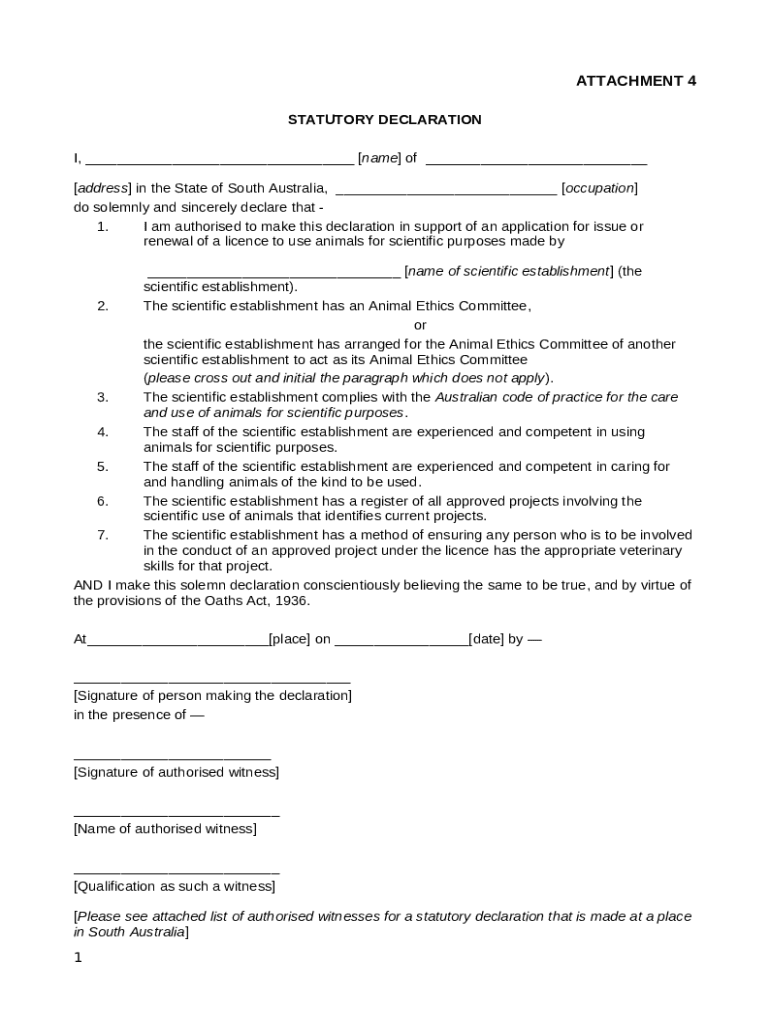
The statutory declaration form for South Australia consists of several essential components:
- Declarant Information: The full name, address, and contact information of the individual making the declaration.
- Witness Section: Details of the authorized witness, including their name, occupation, and contact information.
- Declaration Statement: A clearly written affirmation of the facts or statements being declared, requiring precision and truthfulness.
- Signature Blocks: Separate spaces for both the declarant and the witness to affix their signatures and the date of signing.
These elements ensure the declaration's legal standing and facilitate its acceptance in official or legal proceedings.
State-Specific Rules for the STATUTORY DECLARATION State of South Australia
Statutory declarations in South Australia follow specific regulations that must be observed:
- Witness Requirements: Only certain professionals are authorized to witness the signing of a statutory declaration, such as notaries or Justices of the Peace.
- Language Consistency: The declaration must be in English and, if necessary, translated by an accredited translator for non-English documents.
- Penalties for False Declarations: Providing false information in a statutory declaration is a criminal offense and subject to legal penalties under South Australian law.
These state-specific guidelines are critical for ensuring the document's validity and avoiding legal repercussions.
Examples of Using the STATUTORY DECLARATION State of South Australia
Statutory declarations serve a variety of purposes in South Australia, including:
- Identity Verification: Used by individuals to verify their identity when official documents (like a passport) are unavailable.
- Residency Confirmation: Employed by residents to confirm their living situation for school enrollment or government services.
- Asset Declaration: Utilized in family law matters to declare ownership or interests in assets for equitable division.
These examples illustrate the diverse scenarios where statutory declarations prove beneficial, emphasizing their importance in routine administrative and legal processes.
Important Terms Related to STATUTORY DECLARATION State of South Australia
Understanding the terminology associated with statutory declarations is vital:
- Declarant: The person making the statutory declaration.
- Affirmation: A solemn statement of truth, similar to an oath but not religiously tinged.
- Authorized Witness: A legal professional or official recognized by law to oversee the signing of the declaration.
These terms form the foundation for effectively preparing and understanding statutory declarations.
Legal Use of the STATUTORY DECLARATION State of South Australia
The legal use of statutory declarations in South Australia encompasses:
- Document Verification: Legalizing unofficial documents by declaring their content as true.
- Alternative to Affidavits: Providing a simpler option to affidavits for certain truths in legal and administrative contexts.
- Binding Declarations: Ensuring statements made within declarations are legally enforceable and recognized in official proceedings.
Statutory declarations provide a flexible and efficient means to engage with diverse legal requirements, enhancing administrative efficiency.