Definition & Meaning
The Illinois estimated tax payment is a method used by taxpayers in Illinois to prepay their state income tax obligations throughout the year. It is typically necessary for individuals who expect their total annual tax liability to exceed $1,000 after accounting for withholdings and credits. This requirement ensures that tax payments are spread out over the year rather than paid in a lump sum, aligning with federal estimated tax rules for managing state-level tax responsibilities efficiently.
Basic Understanding
- Who Needs It: Typically, taxpayers with income not subject to withholding, such as self-employed individuals, retirees receiving investment income, or partners in partnerships, need to make estimated tax payments.
- Purpose: To help taxpayers avoid penalties and interest due to underpayment of taxes during the year.
Steps to Complete the Illinois Estimated Tax Payment
Determine if You Must Pay
- Calculate expected gross income, deductions, and credits for the year.
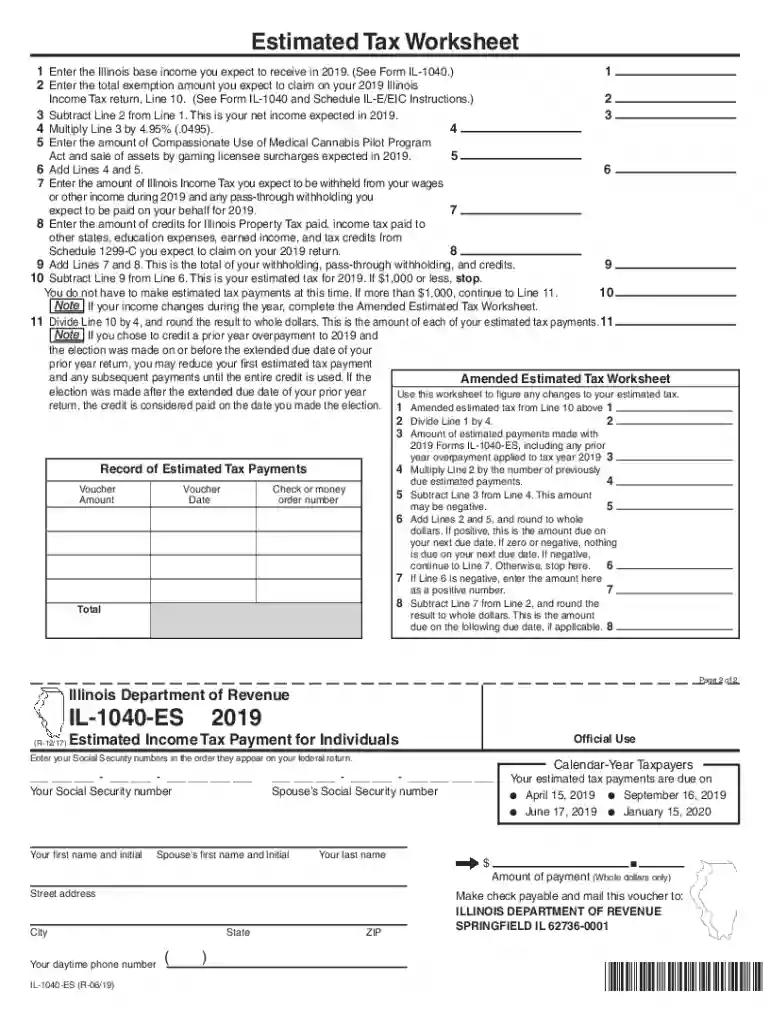
- Use the Illinois Estimated Tax Worksheet to compute your estimated tax liability.
Calculate Payment Amounts
- Divide the estimated annual tax liability by four to determine quarterly payment amounts.
Submit Payments
- Payments can be made via electronic payment systems or by mailing checks with payment vouchers.
Record-Keeping
- Keep detailed records of payments made for future reference and when filing your annual tax return.
Important Terms Related to Illinois Estimated Tax Payment
Key Financial Terms
- Withholdings: Taxes withheld from paycheck or other income.
- Credits: Amounts that can reduce your tax liability.
- Tax Liability: Total tax due based on income, deductions, and credits.
Tax-Specific Terms
- Estimated Tax Worksheet: A guide to calculate anticipated tax payments and liabilities.
- Underpayment Penalty: A penalty for not paying enough tax through withholdings or estimated payments.
Filing Deadlines / Important Dates
Quarterly Payment Schedule
- First Payment: April 15
- Second Payment: June 15
- Third Payment: September 15
- Fourth Payment: January 15 of the following year
Extension Considerations
- If the deadline falls on a weekend or holiday, the payment is due the next business day.
How to Use the Illinois Estimated Tax Payment
Using Electronic Payments
- Access the Illinois Department of Revenue’s website to make secure electronic payments.
Using Check Payments
- Fill out the Illinois state tax payment voucher, include it with your payment, and mail to the designated address provided by the Illinois Department of Revenue.
Optimizing Payment Strategy
- Consider setting aside money each month to cover estimated payments and avoid last-minute financial strain.
Penalties for Non-Compliance
Penalty Criteria
- Failure to make required estimated payments or underpaying each quarter can result in financial penalties.
Avoiding Penalties
- Ensure timely and adequate payments are made according to the annual estimated liability.
- Use safe harbor provisions which limit penalties if payments meet certain thresholds based on prior year’s tax.
Required Documents
Essential Documentation
- Previous Year’s Tax Return: Useful for estimating income and liabilities.
- Current Income Statements: To assess necessary adjustments in estimated taxes.
Suggested Documents
- Payment Vouchers: Assist in organizing payments.
- Receipts of Electronic Payments: For keeping records.
Form Submission Methods (Online / Mail / In-Person)
Online Submissions
- Make payments through the Illinois Department of Revenue's online portal for faster processing and confirmation.
Mail Submissions
- Include payment voucher when mailing a check, ensuring it reaches by the due date.
In-Person Options
- Payments can sometimes be made at designated state government offices.
IRS Guidelines
Alignment with Federal Laws
- Similar to federal estimated tax requirements, state estimated payments align under general IRS guidelines.
Suggested State Approach
- Follow both IRS and Illinois guidelines to ensure compliance and avoid confusion, especially if income sources are varied and complex.