







Definition and Meaning
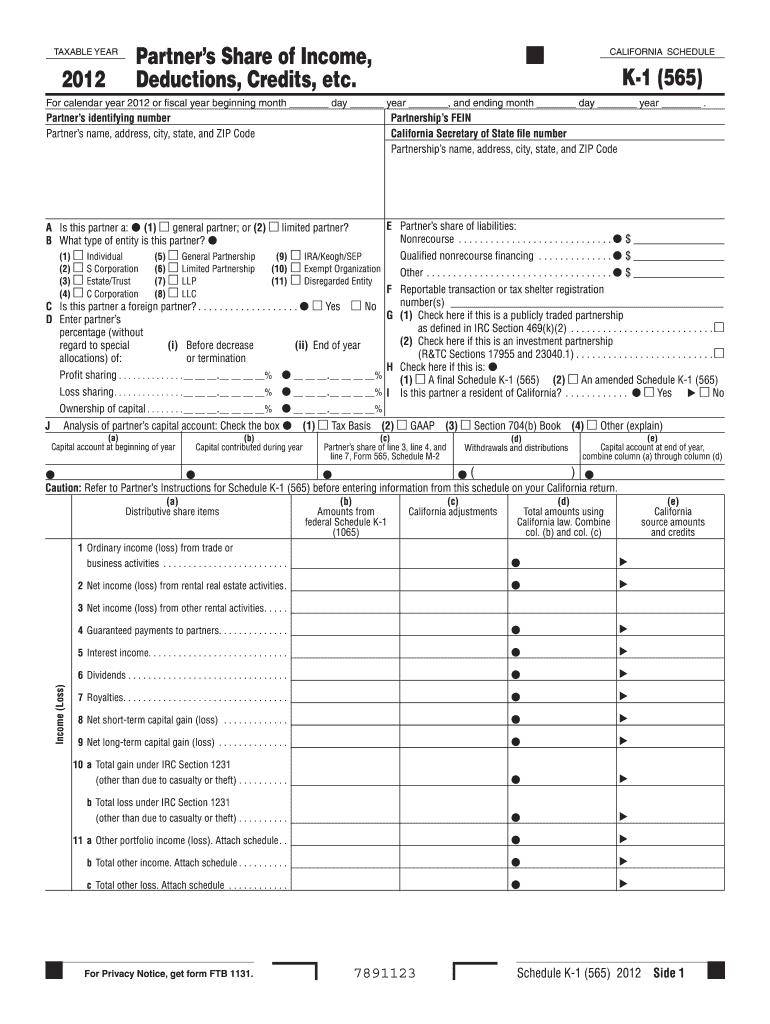
The FTB K-1 form is an essential document involved in the tax filing process for partnerships in the state of California. It is used by partnerships to report each partner's share of the partnership's income, deductions, credits, and other financial details. This form provides comprehensive insight into a partner's financial dealings within the partnership, crucial for accurate tax reporting to the Franchise Tax Board (FTB).
How to Use the FTB K-1 Form
Using the FTB K-1 form involves several critical steps:
- Gather Required Information: Collect all necessary financial and partnership-related data.
- Complete Identifying Information: Fill out sections regarding both the partnership and individual partner details.
- Report Financial Details: Enter specific financial allocations, including income, deductions, and credits.
- Verify Accuracy: Ensure all information is accurate and matches the partnership's accounting records.
- Submit with Tax Return: Include the completed form in your California tax return filing for the relevant year.
Steps to Complete the FTB K-1 Form
Partnership Identification
- Name and Address: Provide the full name and mailing address of the partnership.
- Taxpayer Identification Number (TIN): Record the partnership's TIN for identification purposes.
Partner Details
- Partner's Identification: Include the partner's name, address, and TIN.
- Ownership Percentage: Specify the partner's share in the partnership, which affects financial allocations.
Financial Disclosures
- Income and Deductions: List each partner's portion of the partnership’s income and allowable deductions.
- Capital Transactions: Document any alterations in the partner’s capital account, including distributions and contributions.
Example Scenario
A partner holding a 30% stake in a partnership with $100,000 in taxable income would report $30,000 on their FTB 565 K-1 form.
Key Elements of the FTB K-1 Form
Profit and Loss Allocations
- Ordinary Income/Loss: The partner’s share of the ordinary income or loss from the business.
- Net Rental Real Estate Income: For partners involved in real estate activities, document any related income or losses.
Special Allocations
- Investment Income: Allocated portions from dividends, interest, and capital gains.
- Tax Credits: Assigned tax credits resulting from partnership activities, enhancing tax efficiency.
Legal Use of the FTB K-1 Form
The FTB K-1 form holds significant legal weight in tax reporting for partnerships:
- Regulatory Requirement: It is a mandated form for partnerships to disclose partners' financial shares accurately.
- Ensures Compliance: Facilitates transparency with tax authorities, reducing risks of audits or penalties.
- Documenting Duties: Protects partners by clearly defining financial involvements and liabilities.
Filing Deadlines and Important Dates
Partnerships must adhere to specific deadlines when filing the FTB K-1 form:
- Regular Filing Deadline: Typically due by March 15 for calendar year partnerships.
- Extended Deadlines: Extensions may apply, pushing deadlines to September 15; however, timely requests are necessary.
Required Documents
To accurately complete the FTB K-1 form, partnerships must prepare:
- Financial Statements: Detailed reports of income, expenses, and changes in equity.
- Partnership Agreement: It helps define profit-sharing and responsibilities.
- Previous Year’s Tax Returns: Refer to past documents for consistency and continuity in reporting.
Software Compatibility
Digital tools can greatly assist in managing the FTB K-1 form process:
- Tax Preparation Software: Compatible with platforms like TurboTax and QuickBooks for efficient document processing.
- Secure Document Handling: Ensure protection with tools supporting SSL encryption and OAuth 2.0 authentication for digital submissions.
By following these detailed insights and steps, individuals and partnerships can effectively handle the complexities of the FTB K-1 form, ensuring accurate tax reporting and compliance.




