




01. Edit your form online
Type text, add images, blackout confidential details, add comments, highlights and more.

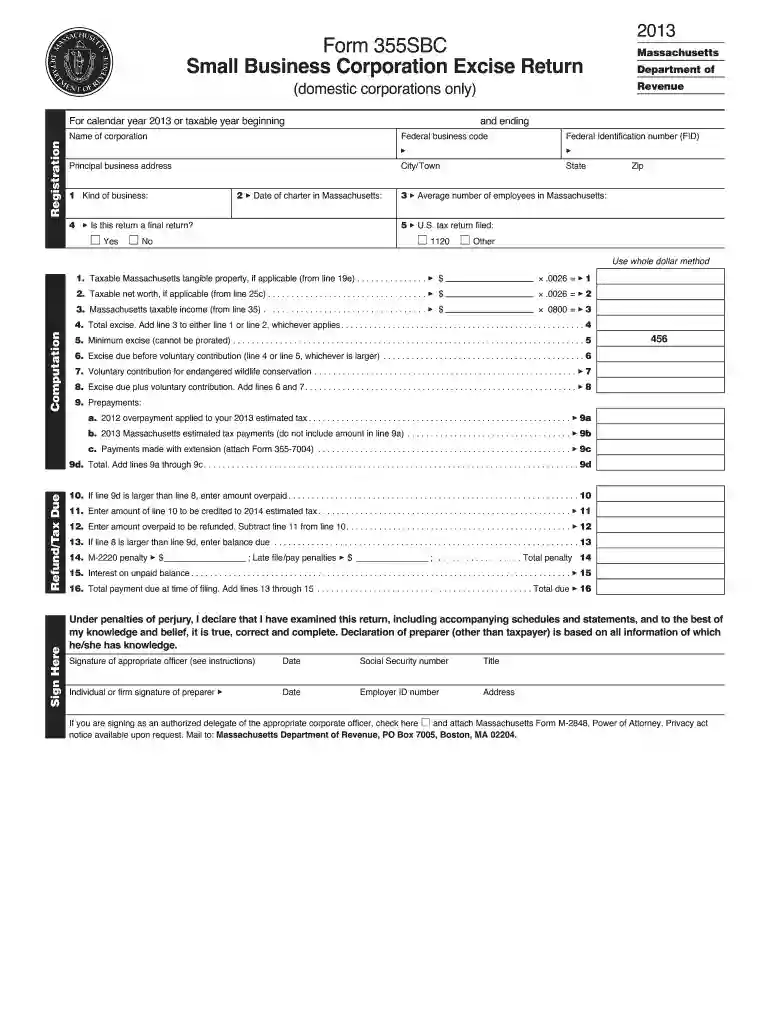
Type text, add images, blackout confidential details, add comments, highlights and more.

Draw your signature, type it, upload its image, or use your mobile device as a signature pad.

Send it via email, link, or fax. You can also download it, export it or print it out.
TIR 99-10, a Tax Information Release, is crucial for S Corporations operating in Massachusetts. This form outlines the state-specific requirements and guidelines for filing as a Qualified S Corporation. Understanding the meaning and purpose of TIR 99-10 is essential for ensuring compliance with Massachusetts tax laws. The form serves as a compliance document that clarifies the filing obligations for S Corporations, detailing how federal rules interact with state-specific requirements.
Qualified S Corporation Definition: This section of the form defines what constitutes a Qualified S Corporation under Massachusetts law. It identifies necessary criteria that need to be met, including corporate structure and income considerations.
Filing Requirements: Corporations must adhere to specific filing protocols, which include submitting Massachusetts tax returns and possibly other supplementary documents. This ensures compliance with both federal and state tax regulations.
State-Specific Tax Obligations: Massachusetts imposes additional obligations on S Corporations, which may include an excise tax. TIR 99-10 delineates these state-specific duties alongside general federal obligations.
Corporations must follow outlined procedures in TIR 99-10 to accurately file taxes with the Massachusetts Department of Revenue. This step-by-step process ensures compliance and helps streamline tax preparation by using the specific instructions provided.
Understanding the terminology used in TIR 99-10 is vital for accurate completion. Terms such as “Qualified S Corporation,” “excise tax,” and “pass-through entity” are frequently used and hold specific meanings within Massachusetts tax legislation. Familiarity with these terms aids in interpreting filing requirements.
The Massachusetts Department of Revenue is responsible for issuing TIR 99-10. Understanding the role of the issuing body helps clarify the document’s authority and its relevance to your corporation’s tax responsibilities.
Review Form Guidelines: Begin by thoroughly reading through the form to understand all requirements and conditions.
Prepare Financial Documents: Collect all necessary financial data, including income, expenses, and previous filings.
Complete Relevant Sections: Carefully fill out each applicable section, ensuring accuracy and completeness.
Submit the Form: Follow the submission guidelines, specifying whether the form is filed online, by mail, or in-person, as required.
Annual Filing Date: Massachusetts generally requires S Corporations to file their taxes by the 15th day of the third month following the close of their taxable year.
Extensions and Penalties: Understanding extension options and potential penalties for late filing is crucial for compliance.
Non-compliance with TIR 99-10 can result in penalties from the Massachusetts Department of Revenue. Penalties can include fines and interest on unpaid taxes. Adhering to the mandated procedures and timelines is essential for avoiding these additional charges.
Massachusetts may have unique provisions affecting S Corporation filings, different from federal tax requirements. Awareness of these state-specific rules is necessary to ensure compliance at the state level.
State Excise Tax: Massachusetts may levy an excise tax on S Corporations, unlike federal law.
Special Deductions or Credits: Certain deductions or credits may be available to S Corporations that adhere to specific criteria outlined in TIR 99-10.
Understanding all aspects of TIR 99-10 empowers S Corporations to fulfill their tax obligations thoroughly and efficiently. This comprehensive knowledge not only ensures compliance but also positions corporations to harness any available benefits or deductions specific to Massachusetts tax law.
We've got more versions of the TIR 99-10: Filing Requirements for Qualified S Corporation - Mass form. Select the right TIR 99-10: Filing Requirements for Qualified S Corporation - Mass version from the list and start editing it straight away!
| Versions | Form popularity | Fillable & printable |
|---|---|---|
| 2021 | 4.4 Satisfied (38 Votes) | |
| 2020 | 4.8 Satisfied (234 Votes) | |
| 2019 | 4.4 Satisfied (151 Votes) | |
| 2018 | 4.3 Satisfied (115 Votes) | |
| 2017 | 4.3 Satisfied (104 Votes) | |
| 2014 | 4.4 Satisfied (416 Votes) | |
| 2013 | 4.1 Satisfied (55 Votes) | |
| 2012 | 4.3 Satisfied (28 Votes) | |
| 2007 | 4.4 Satisfied (69 Votes) |
At DocHub, your data security is our priority. We follow HIPAA, SOC2, GDPR, and other standards, so you can work on your documents with confidence.
This Technical Information Release (TIR) explains the Massachusetts filing requirements for qualified S corporation subsidiaries that are domestic or foreign
May 1, 2012 The FAA recommends the guidelines and specifications in this AC for materials and methods used in the construction of airports. In general, use
Oct 24, 2011 SUMMARY: This document provides fi- nal regulations relating to the election to expense qualified refinery property under section 179C of the


