




01. Edit your form online
Type text, add images, blackout confidential details, add comments, highlights and more.

Type text, add images, blackout confidential details, add comments, highlights and more.

Draw your signature, type it, upload its image, or use your mobile device as a signature pad.

Send it via email, link, or fax. You can also download it, export it or print it out.
New Zealand citizenship provides individuals with the legal status and rights afforded to citizens of New Zealand. As a citizen, one is entitled to live, work, and study in New Zealand indefinitely. It also allows individuals to travel on a New Zealand passport, offering visa-free or visa-on-arrival access to many countries. Citizenship signifies a formal relationship between an individual and the state, granting certain protections under New Zealand law as well as responsibilities, such as participation in democratic processes and adherence to local laws. This legal status is critical for those wishing to fully integrate and participate in New Zealand society.
Eligibility for New Zealand citizenship is based on several key criteria that ensure the alignment of the applicant with the values and requirements of the New Zealand government. Key criteria include:
Each of these criteria includes specific regulations and exceptions that may apply in unique cases, such as for those with refugee status or other special circumstances.


Applying for New Zealand citizenship involves a structured process that ensures all necessary information and documentation are accurately submitted. The typical steps are as follows:
Each step must be executed with attention to detail to avoid delays or rejection of the application.
Providing the correct documents is crucial for a successful application. Commonly required documents include:
Each document must be current and submitted in the format specified by the New Zealand Department of Internal Affairs. Special considerations apply to individuals with unique circumstances, such as name changes or dual citizenship.
Holding New Zealand citizenship provides legal rights and obligations under New Zealand law. Citizens can:
Citizenship also imposes legal responsibilities, including obeying New Zealand laws and regulations. Failure to adhere to these responsibilities may result in legal consequences, affecting the individual's status and rights.
The process of submitting the New Zealand citizenship application comes with flexibility to accommodate various needs:
It's important to follow specific instructions provided for each method to ensure all requirements are met and avoid processing delays.
The application process for New Zealand citizenship is comprehensive and may take several months. Key aspects include:
The approval time may vary based on individual cases, particularly if further investigation or interviews are required. On average, the process can take from six to twelve months.
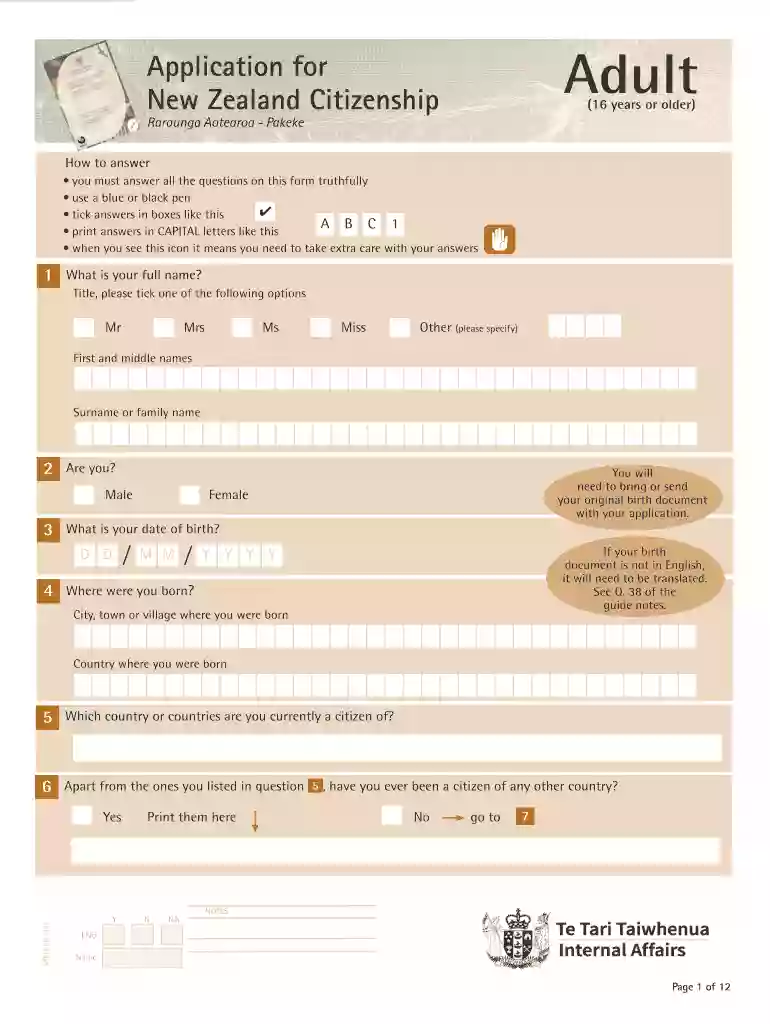
The New Zealand citizenship form is designed to collect comprehensive information about the applicant. Key elements include:
Each section must be filled out with precision, as inaccuracies could affect the outcome of the application process.
We've got more versions of the New Zealand Citizenship form. Select the right New Zealand Citizenship version from the list and start editing it straight away!
At DocHub, your data security is our priority. We follow HIPAA, SOC2, GDPR, and other standards, so you can work on your documents with confidence.


