







Definition & Meaning
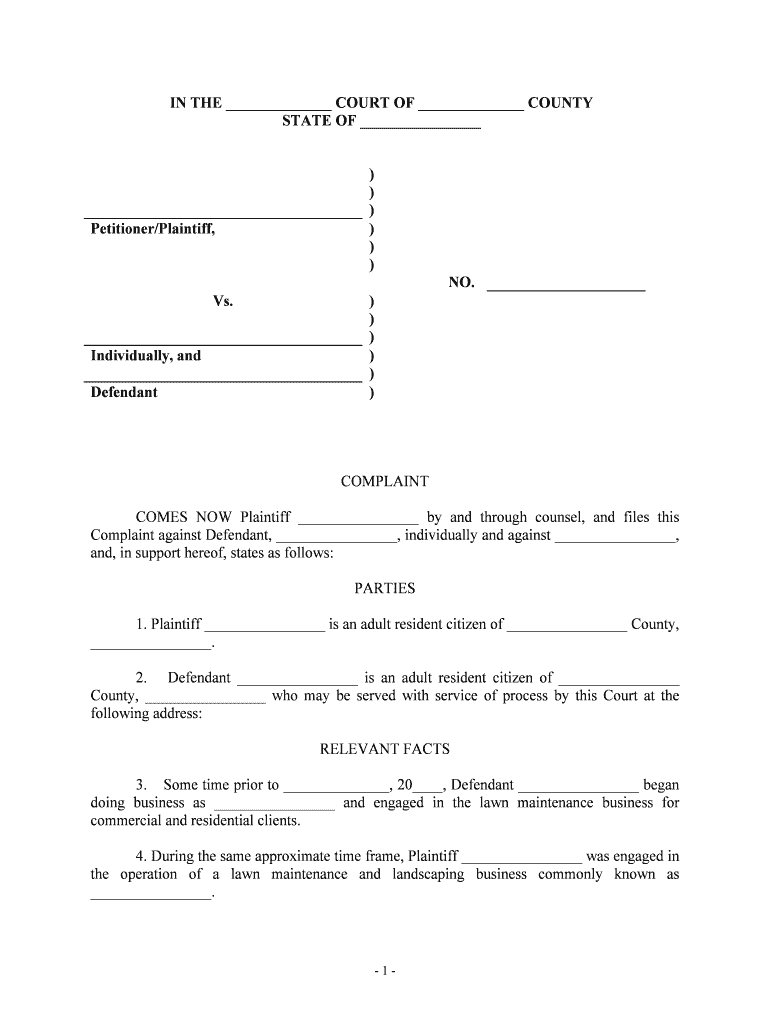
A "complaint for breach of contract" is a legal document filed by a plaintiff to initiate a lawsuit against a defendant who is accused of not fulfilling terms of a legally binding agreement. This document outlines the specific terms of the contract that were allegedly violated, the nature of the breach, and the remedies or damages sought by the plaintiff. It serves as the foundation of a breach of contract lawsuit, detailing the plaintiff's case and alerting the defendant of the legal action being taken.
Specific Components
- Plaintiff and Defendant Identification: Includes details about the parties involved.
- Contract Details: Specifies the original contract terms and conditions.
- Nature of Breach: Provides a detailed explanation of how the contract was breached.
- Remedies Sought: Lists the specific remedies or compensation requested by the plaintiff.
Key Elements of the Complaint for Breach of Contract
A thorough breach of contract complaint contains several critical components. Each must be clearly articulated to form a strong basis for the lawsuit.
Contract Existence and Validity
The plaintiff must first demonstrate that a valid contract existed. This involves:
- Offer and Acceptance: Proof that an offer was made and accepted by both parties.
- Consideration: Displaying that something of value was exchanged between the parties.
- Capacity and Legality: Ensuring both parties had the legal capacity to contract and the agreement's legality.
Breach Assertion
The plaintiff needs to assert with clarity how the defendant breached the contract terms:
- Explicit Terms Violated: Specify which aspects of the contract were not fulfilled.
- Evidence: Any supporting documentation that shows the breach occurred.
Damages or Remedies
Presenting the damages or remedies sought is critical to the complaint:
- Monetary Compensation: Specific amounts being claimed for losses suffered.
- Non-Monetary Relief: Other requests such as performance or rescission of the contract.
Steps to Complete the Complaint for Breach of Contract
Filing a complaint involves several essential steps to ensure accuracy and compliance with legal protocols. The following outlines a typical process:
- Draft the Complaint: Outline the key elements and facts of your case, including the breach and damages sought.
- Attach Supporting Documents: Include copies of the contract and any evidence of the breach.
- File with the Court: Submit the completed form to the appropriate court either online or in person.
- Serve the Defendant: Legally deliver a copy of the complaint to the defendant.
- Await Response: Once served, the defendant typically has a specified period to respond.
Importance of Precision
It is critical to ensure all information is precise and accurate to avoid delays or dismissal of the case due to technical errors.
Legal Use of the Complaint for Breach of Contract
In the context of U.S. law, specific legal principles and precedents guide the use of a breach of contract complaint:
Legal Grounds
- Common Law: Rooted in traditional principles of contract law.
- UCC Regulations: May apply for sales of goods and related transactions.
Judicial Considerations
- Burden of Proof: Lies with the plaintiff to establish that a breach occurred and resulted in damages.
- Defensive Pleas: Defendants can offer income evidence or arguments to counter the complaint.
Important Terms Related to Complaint for Breach of Contract
Understanding foundational terms is essential when dealing with a breach of contract complaint:
- Breach: The failure to meet the terms of the contract.
- Plaintiff: The party who initiates the lawsuit.
- Defendant: The party accused of the breach.
- Damages: Financial compensation sought by the plaintiff.
Contractual Clauses
Specific clauses within contracts can often be focal points in these complaints, such as:
- Force Majeure: Excuses performance due to extraordinary events.
- Termination Clauses: Outline how parties may exit the contract.
Examples of Using the Complaint for Breach of Contract
Several real-world scenarios illustrate how complaints for breach of contract are utilized:
- Business Disputes: Such as a supplier failing to deliver goods as agreed upon in a purchase agreement.
- Service Contract Violations: Where a contractor does not complete a project within the specified timeframe.
- Employment Agreements: Cases where an employee might not adhere to non-compete or confidentiality agreements.
Case Study: Lawn Maintenance Business Partnership
In a noted case, a plaintiff filed a complaint involving breaches of contract and fiduciary duty, alleging that the defendant failed to issue corporate stock, misrepresented business agreements, and wrongfully retained assets after dissolving a partnership. The complaint sought damages and asset return, illustrating breach of contract applications in business partnerships.
State-Specific Rules for the Complaint for Breach of Contract
Contract law can vary significantly from state to state within the U.S., with each jurisdiction imposing unique rules and procedures:
Jurisdictional Variations
- Statutes of Limitations: Timeframes to file a complaint can differ widely.
- Contractual Requirements: Some states have unique directives for what constitutes a valid contract.
Local Court Systems
Understanding the local court’s rules and procedures is crucial for correctly filing a breach complaint:
- Filing Methods: Options may include electronic submission through state-specific judicial portals.
- Hearing Protocols: Procedures for case hearings can vary based on the court system.




