
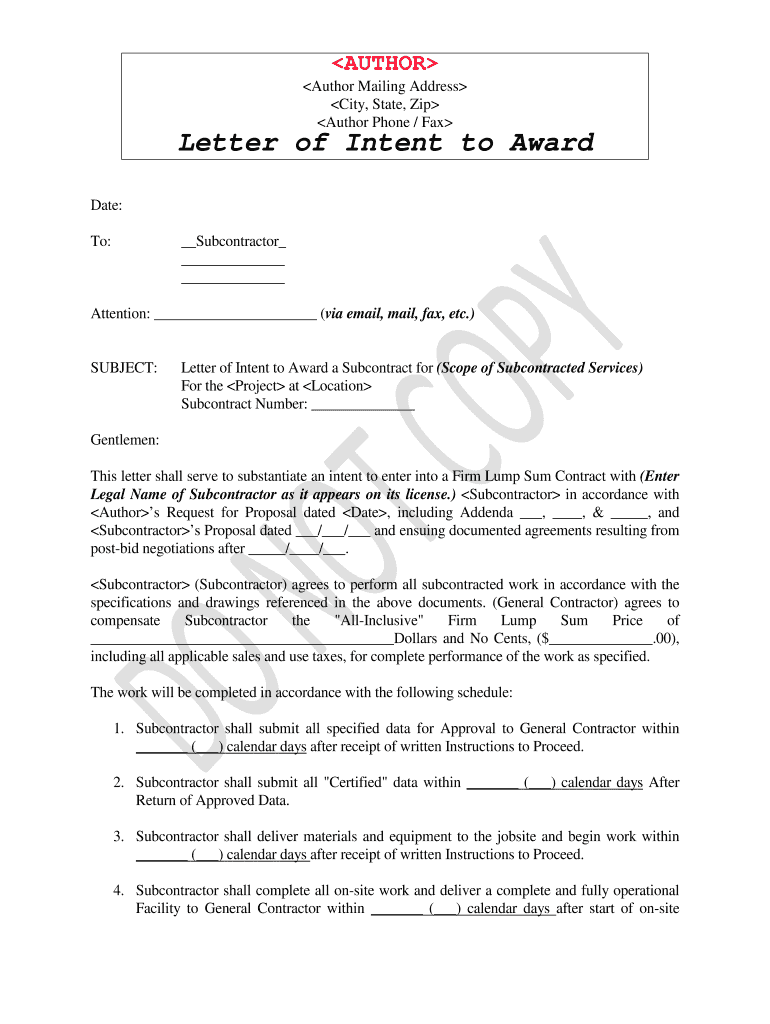







Definition and Meaning of a Letter of Intent for Construction Projects
A Letter of Intent (LOI) in the context of construction projects is a formal document that outlines the preliminary agreement between parties involved in a construction project, typically between a general contractor and a subcontractor. The LOI expresses the intent to enter into a legally binding contract and specifies the general terms that will govern the relationship between the parties. While the LOI is a precursor to a more formal contract, it helps clarify expectations and commitments prior to the final agreement.
Key Characteristics of a Letter of Intent
- Intent: It indicates the willingness of one party to enter into a contract.
- Outline: It includes essential details such as the scope of work, payment terms, and schedule.
- Non-Binding Nature: In most cases, it does not constitute a binding agreement, although it can create obligations under certain conditions.
Understanding the nature of a letter of intent is crucial for mitigating misunderstandings that might arise during contract negotiations, hence fostering clearer communication between parties involved in the construction project.
How to Use the Letter of Intent for Construction Projects
Using a Letter of Intent effectively involves several steps that set the foundation for a successful construction project. The core purpose of the LOI is to establish a framework for the future agreement while ensuring that all parties are aligned on key details.
Steps to Use a Letter of Intent
-
Draft the Document: Start by drafting the LOI, including key components such as project description, key dates, financial terms, and conditions for commencement.
-
Review Terms with Stakeholders: Ensure that all parties involved review and agree to the terms outlined in the document to prevent any discrepancies later.
-
Distribute for Signature: Once consensus is reached, distribute the LOI for signatures from all parties involved. It is advisable for both the general contractor and the subcontractor to retain copies of the signed document.
-
Follow-Up: Maintain communication about the transition from the LOI to the formal contract, ensuring that all parties fulfill initial commitments made in the LOI.
-
Utilize as Reference: Use the signed LOI as a reference point in future discussions or formal contract negotiations to keep track of verbal agreements initially reached.
An effective LOI strengthens relationships and streamlines negotiations as it helps clarify intentions before formalizing a more comprehensive contract.
Key Elements of the Letter of Intent for Construction Projects
A well-crafted Letter of Intent includes several critical elements that ensure clarity and mutual understanding among parties involved in the construction project.
Essential Components of an LOI
-
Introduction: Clear statement identifying the parties to the letter and the project they intend to undertake.
-
Project Details: Description of the project scope, including specific tasks, responsibilities, and deliverables associated with the construction project.
-
Timeline: Proposed start date, key milestones, and completion timeline for project phases.
-
Financial Terms: Outline of costs, payment schedules, and any potential financial incentives associated with project milestones.
-
Conditions of Work: Any preliminary conditions under which work can commence prior to formal contract execution, including permitting, inspections, and approvals.
-
Disclosure Statements: Any necessary disclaimers or statements regarding the non-binding nature of the document or the intent of the parties to negotiate in good faith.
Including these elements in the LOI ensures that all parties maintain a clear understanding of their rights and obligations while transitioning to a contractual agreement.
Examples of Using the Letter of Intent for Construction Projects
Understanding practical applications of a Letter of Intent can enhance its effectiveness in real-world scenarios. Here are two specific examples:
Example 1: Subcontractor Engagement
A general contractor wishes to engage a subcontractor for electrical installation work on a large commercial project. The contractor issues a letter of intent to the subcontractor that outlines the scope, payment terms, and project timeline. This LOI allows the subcontractor to mobilize resources and prepares them for the upcoming work while the formal contract is being finalized.
Example 2: Land Acquisition
In another scenario, a developer intends to secure a property for a new residential construction project. Before the sale is finalized, they send a letter of intent to the property owner, indicating their offer and willingness to negotiate terms. The LOI facilitates a clearer discussion about next steps while ensuring both parties are aligned before entering into a purchase agreement.
These examples highlight the versatility of the letter of intent in facilitating clear communication and transactions in various aspects of construction projects.
Legal Use of the Letter of Intent for Construction Projects
The legal weight of a letter of intent can vary based on jurisdiction and specific language within the document. Typically, it serves as an important preliminary step that can lead to a binding contract.
Legal Considerations
-
Non-Binding Nature: Unless explicitly stated, most LOIs are considered non-binding, functioning primarily as a statement of intent to negotiate.
-
Enforceability: Certain terms in an LOI may be enforceable in court if they reflect a definitive agreement on essential matters like price and work scope, especially if one party relies on it to their detriment.
-
State Regulations: In the United States, the enforceability of LOIs can differ by state, so it's important to be aware of local construction laws.
Recent cases demonstrate that parties must navigate these legal ramifications carefully, ensuring that the language used in the LOI aligns with their desired outcomes while anticipating future contract obligations.




