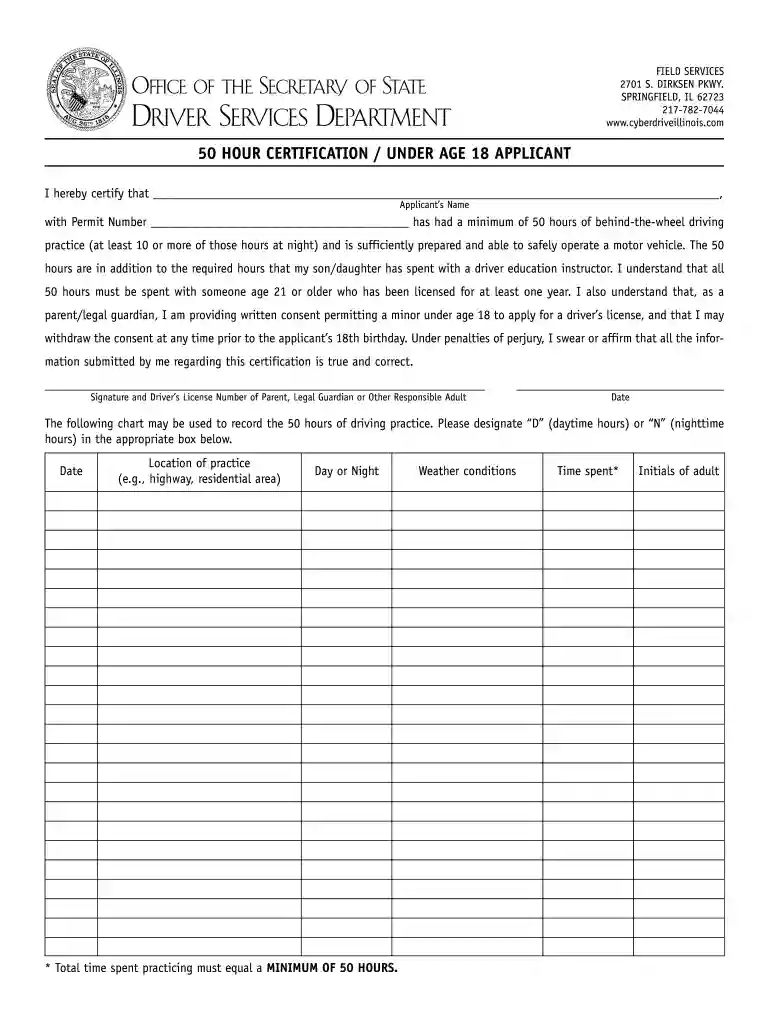
Definition & Meaning
The Illinois driving record sheet refers to an official document that details an individual's driving history within Illinois. This record includes critical information such as traffic violations, accident reports, and license status. The 2006 form version uniquely specifies the guidelines and regulations applicable for that year, incorporating various legal definitions and categories pertinent to driving infractions and compliance with state laws.
Key components of the driving record sheet include:
- Driver’s Identification: Full name, address, date of birth, and driver's license number.
- Driving History: A list of any citations, collisions, or administrative actions taken against the driver.
- Points Accumulation: Documentation of points accrued due to infractions, which may impact the individual's license status and insurance premiums.
- Status of the License: Indicates whether the driver's license is valid, suspended, or revoked.
Understanding the driving record sheet is essential for drivers as it provides insight into their driving behavior and potential liabilities impacting insurance rates or driving privileges.
How to Obtain the Illinois Driving Record Sheet for the 2006 Form
Acquiring a copy of the Illinois driving record sheet for the 2006 form involves several straightforward steps. These records can be obtained through the Illinois Secretary of State’s office, either online, by mail, or in person.
Online Request
- Visit the official Illinois Secretary of State website.
- Navigate to the driving record section, often labeled as "Driver Services" or "Driving Records."
- Enter the required information, such as your driver's license number, date of birth, and last name.
- Follow prompts to verify your identity and process the payment, which is usually a nominal fee.
- Download or print your driving record once the transaction is complete.
Mail Request
- Download the appropriate request form from the Illinois Secretary of State website.
- Complete the form with the necessary personal information.
- Include a copy of your identification and payment for the processing fee.
- Mail the completed form to the designated address listed on the website.
In-Person Request
- Locate the nearest Illinois Secretary of State facility.
- Bring valid identification, such as a driver’s license and any necessary forms.
- Request your driving record at the counter and complete the payment.
Obtaining these records is vital for various purposes, such as checking for accuracy, preparing for legal matters, or applying for a job that requires driving.
Steps to Complete the Illinois Driving Record Sheet for the 2006 Form
Filling out the Illinois driving record sheet correctly is crucial for ensuring that all information accurately reflects the driver’s history. Here are the steps to complete the form:
- Gather Personal Information: Collect necessary details such as full name, address, date of birth, and driver's license number.
- Review Driving History: Check all past incidents that need to be included, including dates of traffic violations and type of offenses.
- Complete the Form:
- Fill in personal details accurately.
- List any traffic violations chronologically, including the date, type of violation, and consequences (e.g., fines, points).
- Verify Points: Ensure that any points awarded for infractions are correctly noted and that their cumulative total is accurate.
- Check for Errors: Review the completed form for any mistakes or omissions that could lead to issues with processing.
- Submit the Form: Once completed and verified, submit the form according to the preferred method (online, by mail, or in-person).
- Follow Up: If submitted by mail or in person, keep a record of the submission and follow up as necessary to ensure processing.
Accurate completion is essential, as errors may lead to complications with licensing or insurance.
Important Terms Related to the Illinois Driving Record Sheet for the 2006 Form
Familiarity with terms associated with the Illinois driving record sheet enhances understanding and ensures efficient navigation of the documentation process. Important terms include:
- Traffic Violation: Any breach of traffic laws which may lead to penalties.
- Points System: A method used to track violations, where different offenses incur varying points; exceeding a specific total can lead to license suspension.
- Requestor: The individual requesting their own or a third-party’s driving record.
- Administrative Actions: Measures taken by the state in response to infractions, such as suspensions or revocations.
- Driving Privilege: The legal right to operate a vehicle within the state.
Understanding these terms assists in better interpreting the information contained within the driving record sheet and ensures compliance with state driving regulations.
Legal Use of the Illinois Driving Record Sheet for the 2006 Form
The driving record sheet serves multiple legal purposes and is recognized across various sectors. Here are common legal uses:
- Employment Verification: Employers may require a driving record as part of background checks, especially for positions involving driving responsibilities.
- Insurance Assessment: Insurance companies may request driving records to determine eligibility for coverage and to set premiums based on driving behavior.
- Court Documentation: Individuals involved in legal disputes or traffic court may need to present their driving record as evidence.
- License Renewal and Reinstatement: Drivers seeking to renew or reinstate their license must often provide an updated driving record.
Understanding when and how to use this form is crucial for compliance with legal and professional requirements.
State-Specific Rules for the Illinois Driving Record Sheet for the 2006 Form
All states have unique regulations governing driving records, and Illinois is no exception. Specific rules that affect how the driving record sheet is utilized include:
- Retention Period: Certain violations remain on the driving record for varying periods, typically up to five years, while more severe infractions like DUI may stay permanently.
- Privacy Regulations: Illinois law restricts access to driving records, allowing only specified parties (e.g., employers, law enforcement) to obtain them without the driver’s consent.
- Point Limits: The state utilizes a point system to assess driving records; accumulating more than a predefined number of points may lead to mandatory driving courses or license suspension.
- Record Updates: Drivers are encouraged to regularly review their records for accuracy and to dispute any inaccuracies through proper channels.
Awareness of these regulations ensures individuals maintain compliance and understand the implications of their driving history.
Examples of Using the Illinois Driving Record Sheet for the 2006 Form
Employing the Illinois driving record sheet effectively can yield numerous advantages. Here are practical examples:
- Job Applications: A delivery company may require a driving record during the hiring process, ensuring that candidates possess a clean driving history.
- Insurance Rates: An individual comparing auto insurance may present their driving record to negotiate better rates based on a positively viewed driving history.
- Legal Representation: A driver contesting a traffic ticket might use their record to demonstrate a history of good driving behavior, influencing the court's decision.
- License Suspension Appeal: An individual facing license suspension due to accumulated points can present their driving history as part of their case to appeal the decision.
Understanding these application scenarios helps emphasize the importance of accurately maintaining and utilizing the driving record sheet.