






Definition and Purpose of the 2014 Form 8962
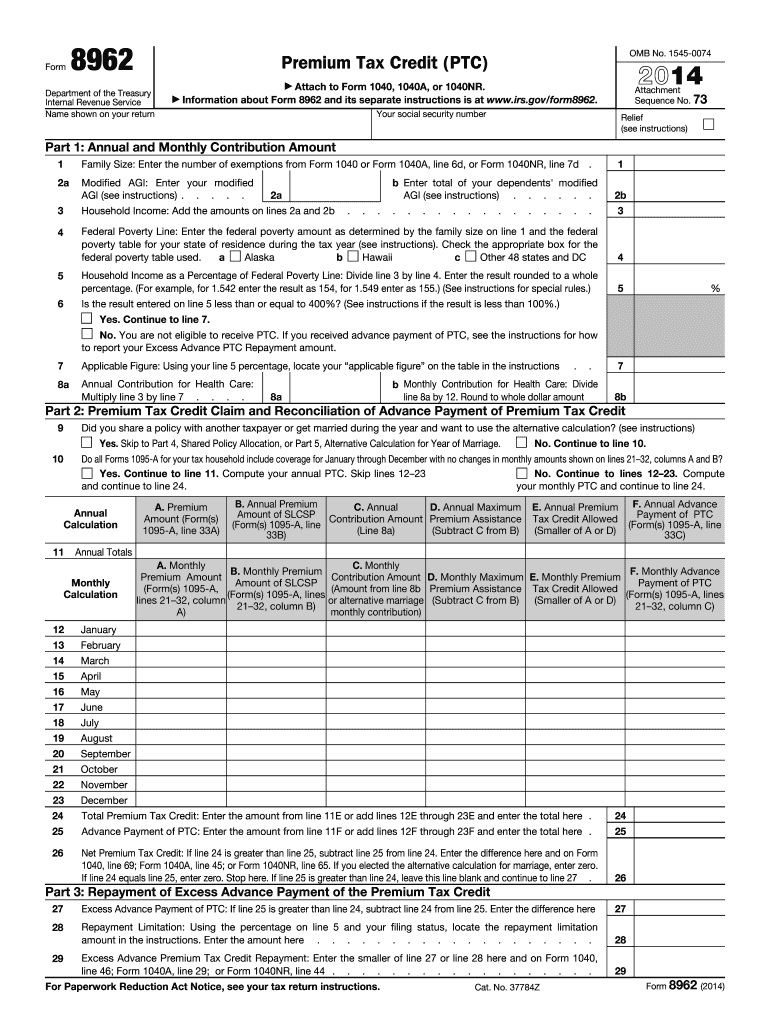
The 2014 Form 8962, also known as the Premium Tax Credit form, is used by taxpayers to calculate and claim the Premium Tax Credit (PTC). The credit is designed to help individuals and families afford health insurance purchased through the Health Insurance Marketplace. By completing this form, taxpayers reconcile any advance payments of the Premium Tax Credit they received with the actual credit amount they are eligible for based on their income and family size. The form ensures that individuals either receive additional credit or repay any excess advance credit payments.
How to Obtain the 2014 Form 8962
Taxpayers can obtain the 2014 Form 8962 through several channels. It is available for download on the Internal Revenue Service's (IRS) official website, where you can print a PDF version to complete manually. Alternatively, taxpayers can use tax preparation software, which typically includes the form, guiding users through the completion process digitally. These services often provide step-by-step instructions to ensure all necessary information is accurately filled in.
Steps to Complete the 2014 Form 8962
-
Gather Required Information:
- Collect all relevant documents, including Form 1095-A, which provides details about your health coverage.
- Verify your modified adjusted gross income and family size.
-
Calculate the Credit:
- Use the details from Form 1095-A to complete sections for calculating your Premium Tax Credit.
- Determine the proper federal poverty level percentage for your household size.
-
Reconcile Advance Payments:
- Enter any advance credit payments received throughout the year.
- Compare this amount to your calculated PTC to determine if you owe additional taxes or are eligible for a refund.
-
Fill Out and Review:
- Carefully complete the remaining sections of the form, checking for errors or omissions.
- Review the finished form for accuracy before submission.
Who Typically Uses the 2014 Form 8962
This form is typically used by taxpayers who enrolled in health insurance through the Health Insurance Marketplace and received advance payments of the Premium Tax Credit. These individuals need to reconcile these payments with their actual credit eligible for the tax year. This group primarily includes self-employed individuals, lower to middle-income families, and anyone whose income qualifies them for the Premium Tax Credit under marketplace coverage.


Important Terms Related to the 2014 Form 8962
- Premium Tax Credit (PTC): A refundable credit designed to help eligible taxpayers afford health insurance purchased through the Health Insurance Marketplace.
- Advance Credit Payments: Payments made on behalf of eligible individuals directly to insurance providers as part of the Premium Tax Credit.
- Modified Adjusted Gross Income (MAGI): An individual’s adjusted gross income that includes certain tax-exempt interest and other adjustments.
IRS Guidelines for Completing the 2014 Form 8962
The IRS provides specific guidelines to assist taxpayers in correctly filling out Form 8962. Taxpayers are instructed to use Form 1095-A to populate the necessary sections, and they must follow the rules for calculating eligibility and reconciling advance credit payments. The IRS requires that the completed form be included with your annual tax return if you have received advance credit payments.
Filing Deadlines and Important Dates
Taxpayers must submit the 2014 Form 8962 as part of their annual tax return by the federal filing deadline, which typically falls on April 15 of the year following the tax year. Missing the filing deadline may result in penalties or the requirement to file an amended return. It is crucial to adhere to these deadlines to avoid complications or the loss of benefits.
Required Documents for the 2014 Form 8962
To accurately complete the 2014 Form 8962, gather the following documents:
- Form 1095-A: Provided by the Health Insurance Marketplace, detailing your health coverage information.
- Income Statements: Such as W-2s or 1099 forms to establish your household income.
- Personal Identification Information: Including Social Security numbers for each member of your tax household.
Penalties for Non-Compliance
Failure to accurately complete or submit the 2014 Form 8962 can result in penalties. Taxpayers who do not reconcile their advance credit payments may owe additional taxes and interest. Furthermore, failing to file Form 8962 may result in the loss of future eligibility for advance Premium Tax Credit payments, impacting the affordability of health coverage.