







Definition and Meaning of the Yellow Card Application Form
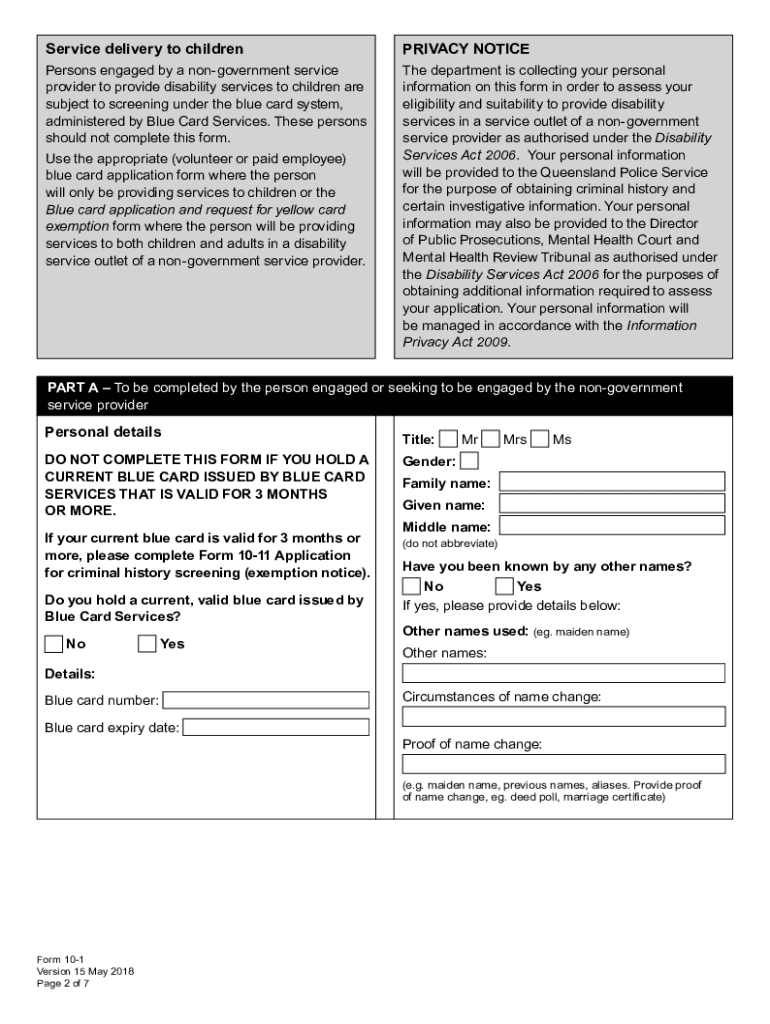
The yellow card application form is a crucial document aimed at facilitating criminal history screening for individuals involved in non-government service provision within disability services, dictated by the Disability Services Act 2006. It is pivotal for compliance, ensuring the safety of vulnerable populations by vetting employees, volunteers, and board members. This form verifies if individuals possess any criminal history that could pose a risk in their roles aiding those with disabilities.
Purpose of the Yellow Card Application Form
The main purpose of the yellow card application form is to:
- Protect vulnerable populations by screening potential employees and volunteers.
- Establish a systematic process for evaluating criminal histories.
- Ensure that compliance with state laws is upheld by service providers.
How to Obtain the Yellow Card Application Form
To acquire the yellow card application form, follow these straightforward steps:
- Visit the Appropriate Website: Access your state’s Department of Disability Services or relevant state authority.
- Locate the Forms Section: Look for a dedicated section for criminal history screening or yellow card application.
- Download the Form: Choose the yellow card application form, which is typically available in a PDF format.
- Request a Physical Copy: If you prefer a physical copy, you can request one through the mail or by visiting a local disability services office.
Additional Sources for the Form
- Ethiopian Embassy Resources: If seeking a yellow card related to Ethiopian origin, visit the Ethiopian embassy or consulate websites, particularly for expatriates in the U.S.
- Community Organizations and NGOs: Local nonprofits often provide assistance and resources for obtaining the application form for those involved in community service.
Steps to Complete the Yellow Card Application Form
Completing the yellow card application form requires careful attention to detail. Follow these steps:
- Personal Information: Provide full name, address, date of birth, and any other requested identifying information.
- Identification Documents: Prepare to submit proof of identity, which may include a government-issued ID or passport.
- Criminal History Disclosure: Accurately disclose any criminal history according to the form’s instructions.
- Signature: Sign and date the application, affirming the truth of the information provided.
- Submission Process: Review guidelines on how to submit—whether online, via mail, or in person.
Commonly Required Documents
- Government-issued identification
- Documentation of residency
- Previous criminal record or declaration if applicable
Important Terms Related to the Yellow Card Application Form
Understanding specific terminology related to the yellow card application form can enhance comprehension of the application process. Some key terms include:
- Criminal History: Refers to any prior convictions or charges against an individual that could affect their eligibility for service-related positions.
- Screening Process: This is the procedure employed to evaluate an individual's criminal background and fitness for roles within disability services.
- Compliance: Adhering to legal guidelines outlined by the Disability Services Act or any relevant state laws in relation to employment in the disability sector.
Implications of Key Terms
- Individuals with serious criminal backgrounds may be disqualified from certain roles.
- Understanding these terms can help applicants navigate both the form and the expectations of potential employers.
Legal Use of the Yellow Card Application Form
The yellow card application form is legally binding and functions within the framework established by the Disability Services Act. This ensures several key elements are adhered to:
- Mandatory for Employment: Its use is often a legal requirement for individuals seeking positions that interact with vulnerable populations.
- Privacy Protections: Personal data collected is safeguarded to comply with privacy laws, ensuring it is not exposed or misused during the process.
- Validity of Information: Misrepresentations or failure to disclose pertinent information can have legal repercussions.
Accountability Mechanisms
- Agencies that conduct screening must maintain transparency and accountability.
- There may be penalties for non-compliance with applicable laws governing the use of the yellow card application form.
Application Process and Approval Time
The application process for the yellow card can vary significantly based on state regulations but generally follows these stages:
- Submission of Application: Complete the yellow card application form and submit it to the relevant authority.
- Review and Verification: The submitted forms undergo thorough review processes, including identity verification and background checks.
- Notification of Approval or Denial: Once reviewed, applicants will be informed of the decision. This may take anywhere from several weeks to a few months, depending on the state’s processing workload.
Considerations for Timelines
- Delays: Factors such as incomplete applications or high volumes of applications can lead to extended wait times.
- Expedited Requests: Some states may offer expedited services for an additional fee, facilitating quicker processing times for urgent applications.
Key Elements of the Yellow Card Application Form
The yellow card application form incorporates several essential elements to ensure the thorough capturing of necessary data:
- Applicant Information: This includes full legal name, date of birth, address, and contact details.
- Criminal Record Disclosure Sections: Specific questions prompting applicants to detail any legal history relevant to public service roles.
- Signature and Date: A required section for applicants to affirm the accuracy of the information provided.
Importance of Each Element
- Accurate completion of these elements is crucial as any omission or error may lead to application denial or legal complications.
- Each section serves a specific purpose to ensure detailed and thorough screening practices.




