
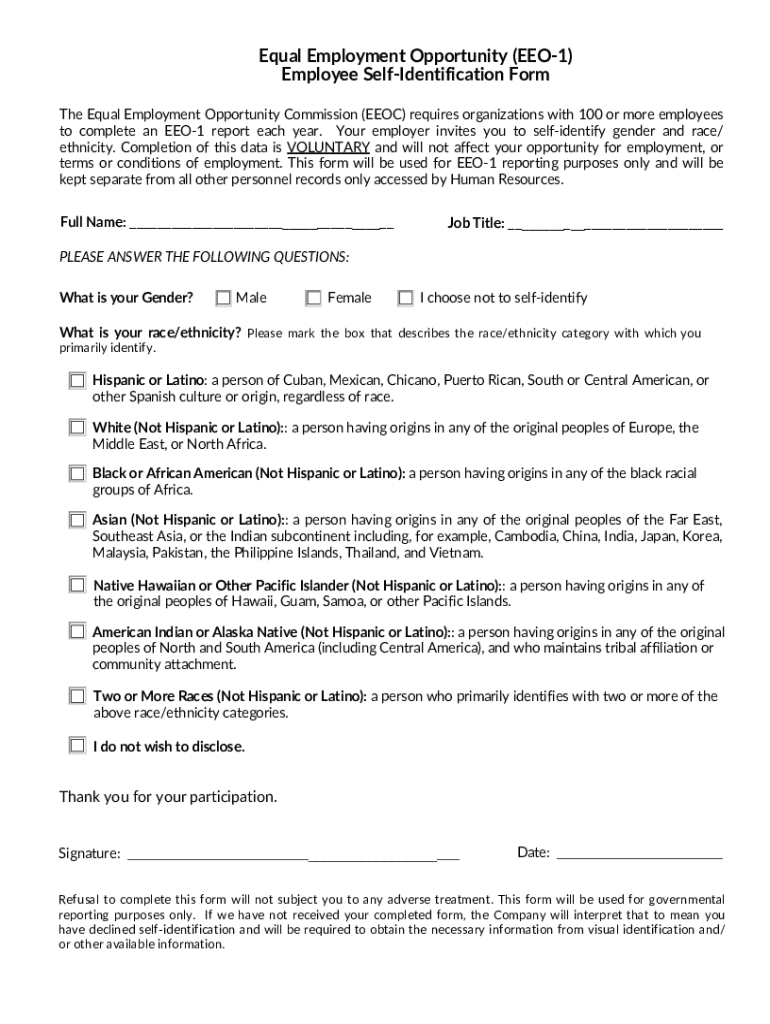







Definition & Importance of the EEO-1 Form
The EEO-1 Form, officially known as the Employer Information Report, is a crucial compliance document required by the U.S. Equal Employment Opportunity Commission (EEOC). This form is mainly used by private employers with 100 or more employees, as well as federal contractors with fifty or more employees who have federal contracts worth $50,000 or more. The EEO-1 Form collects data on employees' race, gender, and job category, aiding the EEOC in enforcing anti-discrimination laws and ensuring workplace diversity.
How to Access the EEO-1 Form
Employers can access the EEO-1 Form through the EEOC’s online portal. To obtain the form, organizations need to create an account with the EEOC. Once logged in, employers can download the form and any accompanying instructions. The transition to an electronic system has streamlined the process, eliminating the need for paper submissions.
Steps to Complete the EEO-1 Form
- Gather Employee Information: Collect data on employees’ race, gender, and job categories.
- Review Workforce Structure: Organize employees into predefined EEO-1 job categories.
- Input Data: Enter the relevant information into the online EEO-1 Form following provided guidelines.
- Verify Accuracy: Double-check the data to ensure its completeness and accuracy.
- Submit the Form: Once verified, submit the form via the EEOC’s electronic filing system.
- Retain a Copy: Keep a validated copy of the submission for your records.
Why is Completing the EEO-1 Form Essential?
Filing the EEO-1 Form is mandatory for qualifying employers. It plays a critical role in promoting workplace equality by identifying employment patterns for women and minorities. Non-compliance can lead to legal repercussions and financial penalties, and it may negatively impact a company's reputation in terms of diversity and inclusion.
Typical Users of the EEO-1 Form
The primary users of the EEO-1 Form are HR professionals and compliance officers in larger corporations and federal contractors. These individuals are responsible for ensuring that the data submitted is both accurate and consistent with regulatory requirements. The form is also utilized by legal teams and diversity officers aiming to bolster inclusivity initiatives within their organizations.
Key Components of the EEO-1 Form
- Employer Information: Details about the company, including name, EIN, and contact information.
- Employee Data: Information on race, gender, and ethnicity of employees, categorized by job type.
- Confidentiality Assurance: Provisions to ensure the confidentiality of the submitted data. Understanding these elements helps in accurately filling out the form, thereby reducing errors in submission.
Legal Considerations and Compliance
Employers must adhere to legal guidelines while completing the EEO-1 Form, ensuring all information is accurate and submitted by the stipulated deadlines. The data collected assists the EEOC in identifying trends of potential discrimination, allowing for proactive measures to enforce workplace equality standards. Failure to comply can result in investigations or fines from the EEOC.
Filing Deadlines and Important Dates
The EEOC usually sets the deadline for the EEO-1 Form submission around the third quarter of the calendar year. Employers should be aware of these deadlines to avoid penalties. Regularly checking the EEOC official website for any changes in submission dates ensures compliance. Employers should also utilize reminders and checklists to manage these important deadlines effectively.
Form Submission Methods
The EEO-1 Form must be submitted electronically through the EEOC’s dedicated online portal. This method enhances accuracy and efficiency in data processing. Employers should ensure that their digital systems are compatible with the EEOC portal to facilitate a smooth submission process. Paper submissions are no longer accepted, emphasizing the importance of electronic filing readiness.
Penalties for Non-Compliance
Non-compliance with EEO-1 Form submission can lead to penalties, including monetary fines and potential legal action. Federal contractors might risk losing contracts due to non-compliance. Organizations must establish internal systems to ensure timely and accurate submission, reducing the risk of such penalties. Keeping up-to-date with regulatory changes is vital in maintaining compliance.
Digital vs. Paper Version of the EEO-1 Form
The shift from paper to digital has streamlined the EEO-1 Form submission process. The digital version facilitates faster processing, immediate error reduction, and secure data transmission. Employers benefit from this digital transition by having real-time updates and tracking capabilities during the submission process, making it a more efficient and reliable method over the outdated paper submissions.
Business Types That Benefit Most from the EEO-1 Form
Businesses with significant workforce diversity, those in rapid growth sectors, or those aiming to enhance diversity and inclusion initiatives benefit most from the EEO-1 Form. By analyzing EEO-1 data, these companies can gain insights into employment practices, helping structure effective diversity policies. Moreover, it aids in aligning corporate objectives with regulatory standards.
State-by-State Differences Regarding the EEO-1 Form
While the EEO-1 Form is a federal requirement, state-specific guidelines and additional regulations may apply. Employers should familiarize themselves with any state mandates regarding affirmative action and equal opportunity practices. Understanding both federal and state regulations ensures comprehensive compliance and contributes to a harmonious work environment.




