Iowa social security worksheet 2022-2026

Get Form
iowa social security worksheet Preview on Page 1

Here's how it works

01. Edit your iowa social security worksheet online
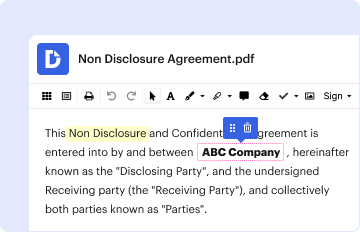
Type text, add images, blackout confidential details, add comments, highlights and more.

02. Sign it in a few clicks
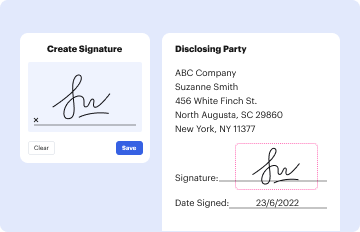
Draw your signature, type it, upload its image, or use your mobile device as a signature pad.

03. Share your form with others
Send it via email, link, or fax. You can also download it, export it or print it out.

How to use or fill out Iowa Social Security Worksheet 2022 with DocHub

Form edit decoration
9.5
Ease of Setup
DocHub User Ratings on G2
9.0
Ease of Use
DocHub User Ratings on G2
  1. Click ‘Get Form’ to open the Iowa Social Security Worksheet 2022 in our editor.
  2. Begin by entering the amount from Box 5 of your SSA-1099 forms in line 1. If filing jointly, include totals for both spouses.
  3. For line 2, calculate one-half of the amount entered in line 1 and input that value.
  4. On line 3, sum the specified lines from your Federal 1040 form along with any applicable Railroad Retirement benefits.
  5. Enter the amount from line 8b of your Federal return on line 4.
  6. Add lines 2, 3, and 4 together and write the total on line 5.
  7. Input total adjustments from your Federal return on line 6.
  8. Subtract line 6 from line 5 and record this result on line 7.
  9. Based on your filing status, enter the appropriate amount on line 8.
  10. Subtract line 8 from line 7 for line 9. If zero or less, enter -0-. This indicates if any benefits are taxable.
  11. Finally, enter one-half of the amount from line 9 on line 10 and determine taxable benefits for reporting.

Start using our platform today to easily complete your Iowa Social Security Worksheet for free!

be ready to get more

Complete this form in 5 minutes or less

Get form

Got questions?

We have answers to the most popular questions from our customers. If you can't find an answer to your question, please contact us.
Contact us
In addition to the homestead tax credit, eligible claimants who are 65 years of age or older on or before January 1 of the assessment year are now eligible for a homestead tax exemption. For the assessment year beginning on January 1, 2023, the exemption is for $3,250 of taxable value.
On March 1, 2022, Governor Kim Reynolds signed House File 2317. Division VI of that legislation excludes retirement income from Iowa taxable income for eligible taxpayers for tax years beginning on or after January 1, 2023.
Does Iowa tax Social Security benefits? No, Iowa does not tax Social Security. The federal government does tax some Social Security benefits. Starting in 2023, Iowa stopped charging income tax on retirement benefits like 401(k)s, pensions, annuities and individual retirement accounts.
No, Iowa does not tax Social Security. The federal government does tax some Social Security benefits. Starting in 2023, Iowa stopped charging income tax on retirement benefits like 401(k)s, pensions, annuities and individual retirement accounts.
You must pay taxes on up to 85% of your Social Security benefits if you file a: Federal tax return as an individual and your combined income exceeds $25,000. Joint return, and you and your spouse have combined income of more than $32,000.

Security and compliance

At DocHub, your data security is our priority. We follow HIPAA, SOC2, GDPR, and other standards, so you can work on your documents with confidence.

Learn more
ccpa2
pci-dss
gdpr-compliance
hipaa
soc-compliance
be ready to get more

Complete this form in 5 minutes or less

Get form

People also ask

Iowa state income tax Thats largely because the state does not tax retirement income for retirees 55 and older. Tax-exempt retirement income in Iowa includes: Roth conversion income. Distributions from qualified 401(k), 403(b), and 457(b) plans.
The social security benefits worksheet lines 6a and 6b are part of the IRS worksheet used to determine the taxable portion of Social Security income. Line 6a typically records the total amount of Social Security benefits received by the taxpayer, while line 6b reflects the tax-exempt portion of those benefits.

Related links