







Definition & Meaning
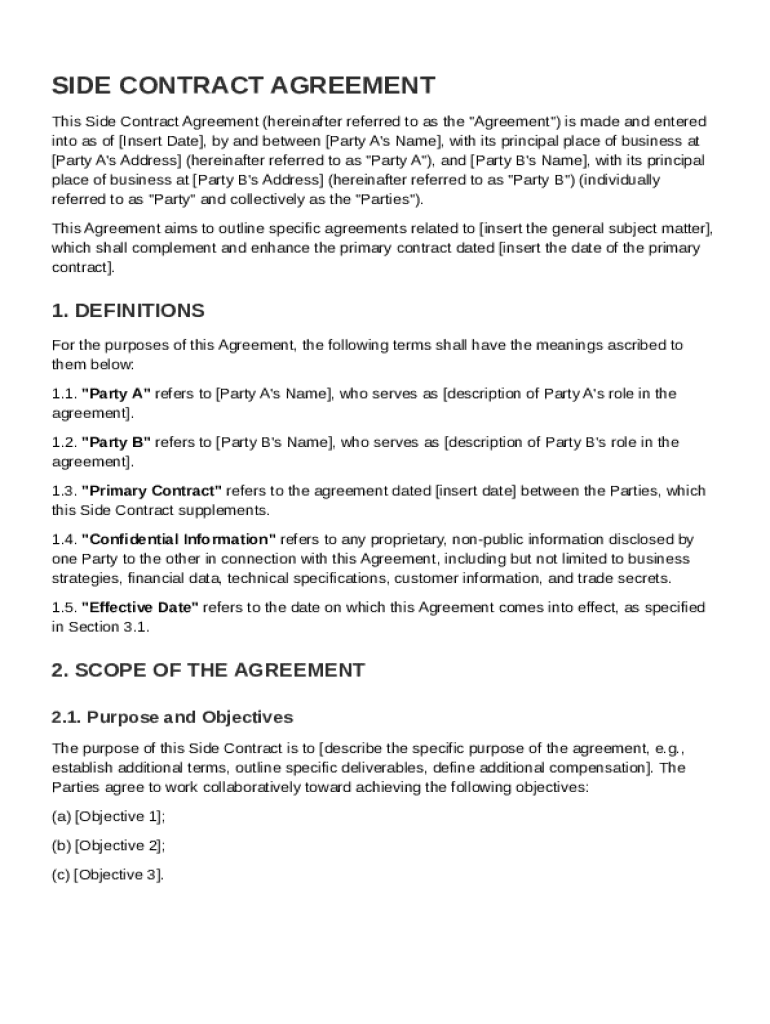
The Side Contract Template is a legal instrument designed to supplement a primary agreement between two parties, usually referred to as Party A and Party B. This document outlines additional roles, obligations, and expectations, enhancing the understanding and execution of the main contract. The side contract clarifies key components such as payment terms, confidentiality clauses, and dispute resolution processes. It's crafted to ensure all parties have a mutual understanding of supplementary details that may not be covered in the primary contract, thereby facilitating smoother operations between collaborators. This template typically serves as an extension of core agreements, reinforcing the professional relationship and reducing the risks of disputes through clear, explicit documentation.
How to Use the Side Contract Template
To effectively use the Side Contract Template, parties should first identify the aspects of their primary agreement that require further clarification or expansion. Once these elements are pinpointed, parties can proceed with the following steps:
- Review the Primary Contract: Assess which areas lack specificity or require additional terms.
- Customization: Tailor the template to address your specific needs, adding sections such as payment details, confidentiality obligations, and performance metrics.
- Consultation: It's advisable to seek legal consultation to ensure the modifications comply with relevant legal standards and align with the primary contract's terms.
- Review and Edit: Conduct a thorough review and make necessary edits, ensuring mutual agreement and understanding.
- Finalization and Signing: Once both parties are satisfied, print and sign the document to activate the contract.
Practical Example
A tech firm may use such a template to delineate particular technical support services provided outside the scope of the initial service agreement. By stipulating response times and support tiers in the side contract, both parties gain a clearer understanding of service expectations.
Key Elements of the Side Contract Template
The effectiveness of a Side Contract Template hinges on its specific components, which should be clearly defined and mutually agreed upon by the parties involved. These elements typically include:
- Roles and Responsibilities: Defines the specific tasks and obligations each party is expected to fulfill.
- Payment Terms: Clarifies payment amounts, schedules, and methods, including any contingencies or conditions.
- Confidentiality: Outlines the scope of information considered confidential and the obligations to protect such information.
- Dispute Resolution: Provides mechanisms for resolving disputes, such as mediation or arbitration.
- Termination Conditions: Specifies conditions under which the side contract may be terminated.
Real-World Scenario
Consider a construction project where additional safety protocols are required beyond the main contract. The side contract can explicitly state these additional measures, ensuring both parties adhere to elevated safety standards.
Important Terms Related to the Side Contract Template
Understanding the terminology within a Side Contract Template is critical for effective negotiation and implementation. Here are some vital terms:
- Addendum: A supplement to the existing contract, often detailing changes or additional agreements.
- Counterparty: The other party involved in the contract.
- Indemnification: A provision to compensate for loss or damage.
- Jurisdiction: The geographical area covered by the legal stipulations of the contract.
By understanding these terms, parties can negotiate more effectively and ensure comprehensive agreements.
Legal Use of the Side Contract Template
The Side Contract Template serves as a legally recognized document, provided it meets jurisdictional requirements and is executed correctly:
- Compliance with Laws: It must adhere to relevant laws governing contract formation and execution.
- Parties' Competence: All parties must have the legal capacity to enter into a contract.
- Mutual Assent: Agreement by both parties to the terms outlined.
- Consideration: Something of value exchanged as part of the agreement.
Example Legal Context
A freelance writer and a magazine may use a side contract to agree on additional payment for urgent projects. As long as both parties consent, the agreement is enforceable under contract law.
Who Typically Uses the Side Contract Template
Side Contract Templates are versatile and cater to various sectors and use cases, such as:
- Businesses: From startups to multinational corporations, businesses use these templates to define supplementary agreements.
- Freelancers and Independent Contractors: They use side contracts to expand on project details not covered in initial agreements.
- Service Providers: Include specific extra services or conditions not initially covered.
Such users find these templates beneficial for maintaining clarity and addressing the specifics of their engagements.


Steps to Complete the Side Contract Template
- Initial Meeting: Parties discuss and outline the need for a side contract.
- Drafting: Fill in the template with specific terms related to payment, roles, confidentiality, etc.
- Legal Review: Consult with a legal professional to ensure the draft's enforceability.
- Revision and Negotiation: Review and negotiate terms until both parties reach an agreement.
- Signing and Execution: Sign the document and execute the terms outlined.
Each step is crucial in crafting a contract that reflects the true intent and protects the interests of both parties.
State-Specific Rules for the Side Contract Template
The enforceability of side contracts may be influenced by state laws, widely varying across the United States:
- Governing Law Clauses: These can dictate which state's laws will govern the contract.
- Signature Requirements: Some states have specific stipulations regarding digital versus physical signatures.
- Disclosure Rules: Varying requirements for what must be disclosed within the contract.
Example Variance
California might have specific rules on confidentiality that differ from those in Texas, impacting how terms are defined and enforced.
Filing Deadlines / Important Dates
While side contracts do not typically require filing with government bodies, awareness of certain dates is crucial:
- Execution Date: The date on which the contract becomes effective.
- Payment Schedules: Include due dates for payments or deliverables.
- Review Cycle: Periodic review dates for assessing and potentially adjusting contract terms.
Example Consideration
In a consultancy contract, the dates might reference milestones that must be met, which are critical to align with the main contract timeline.
Real-World Examples of Using the Side Contract Template
Various industries provide insightful examples of side contract applications:
- Technology: Software firms might use side contracts to define service-level agreements supplementing a main contract.
- Real Estate: Property managers use them for stipulating maintenance responsibilities separate from lease agreements.
These examples demonstrate the adaptability of side contracts to various use cases, allowing for fine-tuned business relations.




