






Definition & Meaning
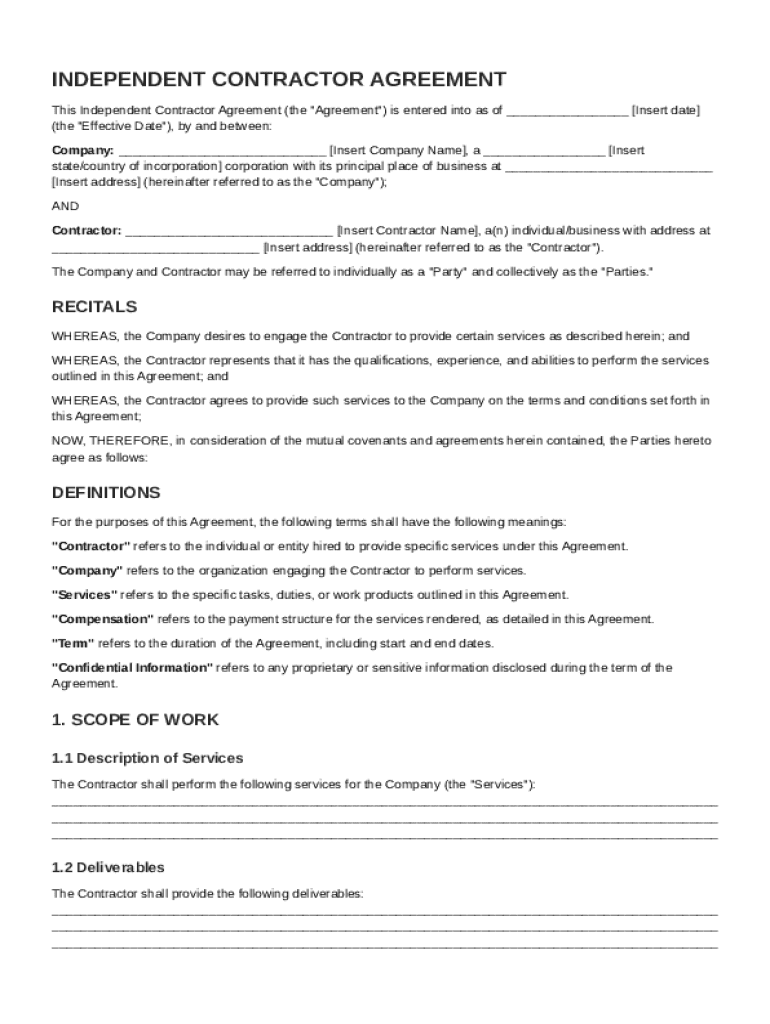
The 1099 Employee Contract Template is a crucial legal document that outlines the terms and conditions of engagement between a company and an independent contractor. This template clarifies the rights and responsibilities of both parties, ensuring mutual understanding and a transparent working relationship. The term "1099 employee" specifically refers to independent contractors who receive a 1099 form for reporting earnings to the IRS, highlighting their non-employment status and distinct tax reporting obligations compared to traditional employees.
Independent Contractor Status
- Nature of Engagement: Unlike regular employees, independent contractors work without the constraints of employment oversight. They operate as their own entities, offering services to businesses under defined contracts.
- Tax Implications: Contractors typically handle their own tax payments, including self-employment tax, which makes the distinction from W-2 employees critical for both legal and financial reasons.
Key Elements of the 1099 Employee Contract Template
A comprehensive Independent Contractor Agreement comprises several essential components that define the working relationship and ensure clarity.
Scope of Work
- Description of Services: Clearly outlines the specific services the contractor is expected to perform. This section sets the boundaries for the tasks and responsibilities.
- Deliverables and Timelines: Details the expected deliverables and the timeline for completion, ensuring expectations are aligned.
Compensation and Payment Terms
- Rate of Pay: Describes how much and how the contractor will be compensated, whether hourly, per project, or through another agreed method.
- Payment Schedule: Specifies when payments will be made, such as weekly, bi-weekly, or upon completion of specific milestones.
Confidentiality and Intellectual Property
- Non-Disclosure Agreements (NDAs): Protects sensitive company information that the contractor may access.
- Ownership of Work: Clarifies who retains the ownership rights of work produced, often assigning intellectual property rights to the company upon completion.
How to Use the 1099 Employee Contract Template
Leveraging the 1099 Employee Contract Template involves a structured approach to customizing the document to fit specific business needs.
Customizing the Template
- Insert Business Details: Begin by filling in the business and contractor names, addresses, and contact information.
- Tailor Work Descriptions: Customize the scope of work and compensation sections to align with the specific job role and payment terms.
Review and Finalize
- Legal Review: Consider having a legal professional review the contract to ensure all legal requirements are met and the document reflects both parties' intentions accurately.
- Mutual Agreement: Both parties should carefully review the final document, making sure all terms are clearly understood before signing.
Steps to Complete the 1099 Employee Contract Template
Completing the 1099 Employee Contract Template involves incorporating all necessary information and ensuring all sections are carefully filled out.
- Fill in Basic Information: Start by entering the names and contact information of both parties involved.
- Define the Scope of Work: Clearly outline the contractor’s duties and responsibilities.
- Specify Payment Terms: Detail the compensation structure, including payment amounts and schedules.
- Add Confidentiality Agreements: Include sections on confidentiality to protect sensitive information.
- Set Intellectual Property Clauses: Define who owns the rights to creations resulting from the work.
- Review References: Ensure all terms and references are accurately represented.
- Finalize and Sign: Both parties should review and sign the document, ensuring mutual agreement.
Legal Use of the 1099 Employee Contract Template
The legal utilization of the 1099 Employee Contract Template involves adherence to applicable laws and regulations governing independent contractor relationships.
Ensuring Legal Compliance
- IRS Regulations: The agreement should align with Internal Revenue Service guidelines detailing contractor status, which impacts tax reporting and liability considerations.
- State Laws: Contracts should be compliant with state-specific labor laws that may influence the contractor’s provisions, rights, and obligations.
Who Typically Uses the 1099 Employee Contract Template
This template is widely used by businesses and individuals looking to establish an independent contractor relationship.


Common Users
- Small and Medium Enterprises (SMEs): Frequently engage independent contractors for specialized tasks, capitalizing on expertise without expanding full-time employee numbers.
- Freelancers and Consultants: Utilize the contract to formalize relationships with multiple business clients, securing clear agreements around their service offerings.

State-Specific Rules for the 1099 Employee Contract Template
Understanding the variations in state regulations is vital when customizing a 1099 Employee Contract Template for use in different jurisdictions.
Notable State Variations
- California’s AB5 Law: Requires specific criteria to classify a worker as an independent contractor, impacting the format and content of agreements.
- New York Freelance Isn’t Free Act: Mandates that contracts must be provided for work valued at $800 or more over a 120-day period.
Examples of Using the 1099 Employee Contract Template
Practical case studies exemplify how diverse businesses might utilize the 1099 Employee Contract Template.
Example Scenarios
- Tech Startups: Hiring app developers on a project basis to build specific components, defining deliverables and timelines within the contract.
- Marketing Agencies: Engaging freelance graphic designers to create brand materials, stipulating terms of work and delivery conditions in the contract agreement.