






Definition and Meaning
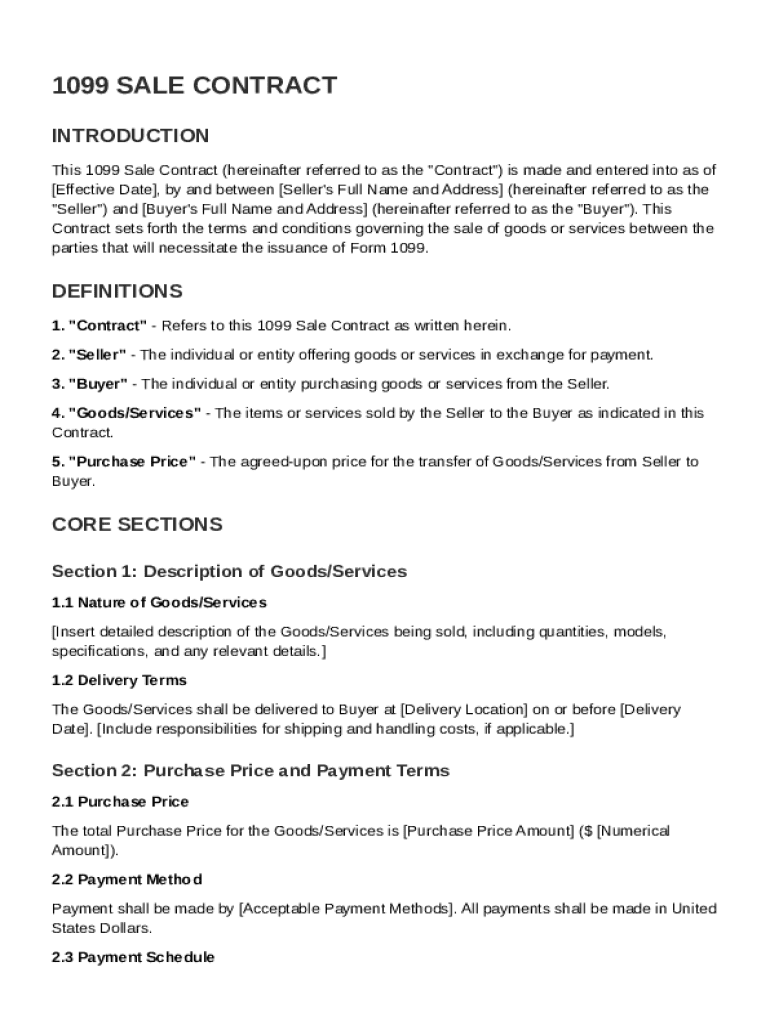
The 1099 Sale Contract Template serves as a standardized form used to establish agreements for the sale of goods or services between two parties, typically a seller and a buyer, both of whom agree on various terms and conditions outlined within the document. This contract specifically pertains to transactions where the sale needs to be reported for tax purposes via Form 1099. It includes sections detailing the description of goods or services, purchase price, payment terms, and any conditions each party must satisfy. Additionally, the contract includes clauses on tax reporting obligations, ensuring both parties are aligned with IRS requirements for issuing a 1099 form.
Key Elements of the 1099 Sale Contract Template
This contract template contains several critical sections that ensure clarity and legal compliance:
- Definitions: This section provides clear explanations of terms used throughout the document, ensuring mutual understanding.
- Descriptions of Goods/Services: Outlines the specific details of the goods or services being sold, preventing future misunderstandings.
- Purchase Price and Payment Terms: Specifies the agreed purchase amount and the terms under which payment will be made, including due dates and acceptable payment methods.
- Representations and Warranties: Both parties make assertions about their rights and capabilities, which are legally binding.
- Indemnification Clauses: Protects parties from losses suffered due to breaches or other issues arising from the contract.
These sections are designed to cover all necessary legal and practical aspects of the sale, ensuring both parties clearly understand their rights and obligations.
How to Use the 1099 Sale Contract Template
To utilize the 1099 Sale Contract Template effectively, both parties should follow a systematic approach:
- Download the Template: Obtain the template from a reliable source or legal platform such as DocHub.
- Fill Out Each Section: Enter specific information about the transaction, including seller and buyer details, item descriptions, pricing, and terms.
- Review Representations and Warranties: Both parties should carefully review these sections to ensure all assertions are accurate and agreed upon.
- Add Signatures: Both parties must provide legally binding signatures, which can be done electronically through services like DocHub, complying with the ESIGN Act.
- Save and Share: Store the completed contract securely and distribute necessary copies to all involved parties for their records.
Using this template ensures that all necessary elements are addressed, minimizing risks and enhancing compliance with legal standards.
Important Terms Related to 1099 Sale Contract Template
Understanding key terms related to the 1099 Sale Contract Template is crucial:
- Form 1099: A tax form used to report various types of income other than wages, salaries, and tips.
- Seller and Buyer: The parties involved in the transaction who exchange goods or services for compensation.
- Signatures: Legally binding marks from both parties that indicate agreement to the contract terms.
- Indemnification: A clause that outlines compensation for losses incurred due to breaches or other specified conditions.
Comprehension of these terms helps ensure all parties are aligned on expectations and obligations, supporting smoother transactions.
Legal Use of the 1099 Sale Contract Template
The 1099 Sale Contract Template is widely adopted across industries such as retail, services, and manufacturing. It provides a legally binding framework to facilitate compliant transactions that require issuance of Form 1099 for tax reporting. Adhering to this template ensures that transactions meet state and federal legal standards, mitigating issues related to misreporting and misunderstandings.
Each party should consult with legal advisors to tailor the template according to specific needs and compliance requirements, especially when dealing with industry-specific regulations and conditions.
State-Specific Rules for the 1099 Sale Contract Template
While the 1099 Sale Contract Template provides a broad framework, some state-specific rules may affect its usage:
- Variations in Tax Laws: States have distinct tax laws and requirements which may influence contract terms.
- State-Specific Language: Certain legal terminologies and clauses might require modification to align with state laws.
- Registration and Filing Requirements: Some states may require the contract to be filed with a government body, or there might be specific deadlines for issuing a 1099.
Understanding these state-based differences can help ensure full legal compliance. Consulting with local legal professionals or utilizing resources from platforms like DocHub can enhance understanding of state-specific obligations.
Examples of Using the 1099 Sale Contract Template
Consider typical scenarios where this template might be applied:
- Real Estate Transactions: Used to outline the sale of properties with specified payment terms and conditions.
- Service Agreements: Utilized by freelancers or independent contractors to document service agreements that require tax form issuance.
- Product Sales: Companies use this template when selling goods in bulk to ensure a clear record of the transaction for tax purposes.
These examples illustrate how diverse industries and roles can benefit from the standardized protection and clarity this template provides.
Penalties for Non-Compliance
Failure to adhere to the 1099 sale contract and tax reporting requirements can lead to penalties:
- Financial Penalties: The IRS may impose fines for late filing or providing incorrect information on 1099 forms.
- Legal Repercussions: Breaches of contract terms could lead to lawsuits or required compensation.
- Lost Business Reputation: Non-compliance issues might harm business relations and credibility.
Using the 1099 Sale Contract Template ensures all necessary terms are addressed, helping avoid these potential pitfalls while promoting transparent and compliant transactions.