




01. Edit your pennsylvania ue online
Type text, add images, blackout confidential details, add comments, highlights and more.

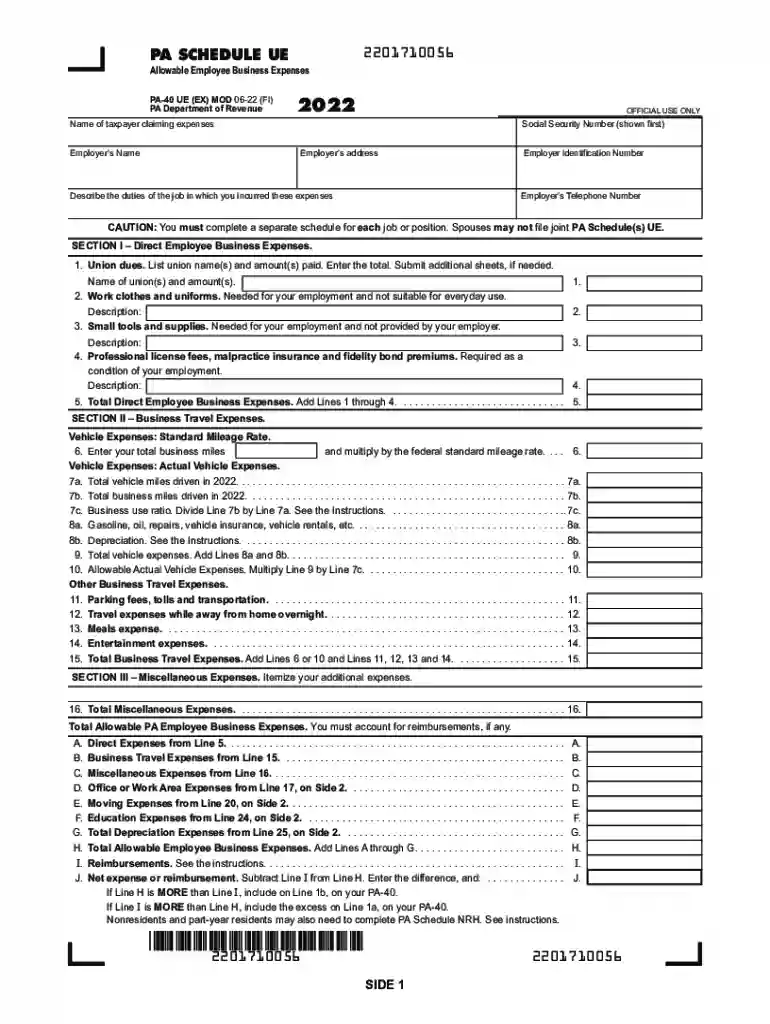
Type text, add images, blackout confidential details, add comments, highlights and more.

Draw your signature, type it, upload its image, or use your mobile device as a signature pad.

Send pa schedule ue via email, link, or fax. You can also download it, export it or print it out.
The PA-40 Schedule UE is a crucial component of the Pennsylvania personal income tax filing process. It specifically focuses on reporting unreimbursed employee business expenses. These expenses are not covered by the employer but are necessary for performing one’s duties effectively. The goal of this form is to provide a structured way for taxpayers to claim these expenses and reduce the amount of taxable income. By doing so, eligible individuals can potentially lower their tax liability, ensuring that they are only taxed on their true net income after accounting for necessary work-related expenditures.
Several types of unreimbursed expenses can be reported using the PA-40 Schedule UE:
The PA-40 Schedule UE form can be acquired through various channels:
The form is made available early in the tax filing season to ensure ample time for completion and submission. It is essential for taxpayers to keep abreast of any updates or changes in the forms released each year to ensure compliance and accurate reporting.
Completing the PA-40 Schedule UE requires careful attention to detail to ensure all eligible expenses are reported accurately. Here’s a step-by-step guide:


The form is generally designed for employees who incur business expenses that are necessary for their job but are not reimbursed by their employer. Eligible individuals include:
Understanding the terminology and elements included in the PA-40 Schedule UE is crucial:
In Pennsylvania, PAY-DRIVEN JOB-EXPENSE treatment may differ compared to federal guidelines, making this part significant for understanding claimed deductions locally.
By understanding these intricate details of the PA-40 Schedule UE, Pennsylvania taxpayers can better navigate their unreimbursed employee expenses and optimize their tax filings effectively.
We've got more versions of the pennsylvania ue form. Select the right pennsylvania ue version from the list and start editing it straight away!
Electronic document approval demands a software solution that complies with data security and eSignature regulations. DocHub is a perfect tool for that, because it meets all the aforementioned requirements. Whatever method you prefer to sign your pa ue in DocHub, your eSignature will be legally binding and court-admissible.
If you need to edit your pa schedule ue form online easily, it does not matter what browser you use. DocHub’s straightforward editing tools are available using any internet browser. Just open the appropriate tab within our editor, add your document, and fill it out without stress.
At DocHub, your data security is our priority. We follow HIPAA, SOC2, GDPR, and other standards, so you can work on your documents with confidence.
Sep 30, 2020 allow for unlimited use and unrestricted exposure (UU/UE). The Site is located in Upper Merion Township, Montgomery County, Pennsylvania (
The Physician Assistant Program at UE is a seven-semester graduate program. Students receive a blend of classroom lecture and hands-on learning from facultyRead more
Learn about Pennsylvanias unemployment programs, how to get benefits, report fraud, and more. Please contact Treasury at 877-869-1956


