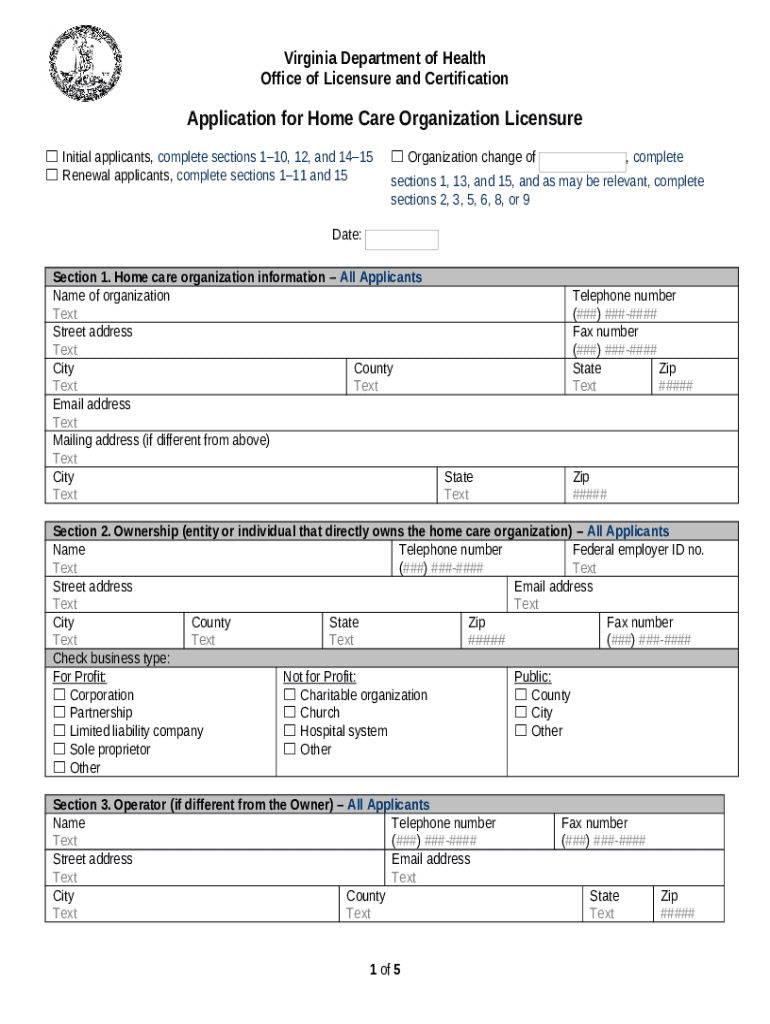







Understanding the Virginia Department of Health Professions Licensure and Certification
The Virginia Department of Health Professions oversees the licensure and certification of health professions within the state. This is crucial for ensuring that professionals meet the necessary standards of practice. The licensure process involves verifying qualifications, ensuring compliance with legal requirements, and maintaining public safety and trust in health services. Certification can be required for certain professions and may involve additional exams or credential verification.
Obtaining Licensure with the Virginia Department of Health Professions
To obtain licensure from the Virginia Department of Health Professions, applicants must complete a detailed application process. This generally involves:
- Submission of Application: Complete the official form, providing accurate and thorough information regarding educational background and training.
- Proof of Education: Supply transcripts or documentation verifying that the necessary educational requirements have been met.
- Verification of Credentials: For professions that require it, submit proof of certification from a recognized board or institution.
- Background Check: Undergo a mandatory criminal background check, which is a standard procedure to ensure the safety and integrity of healthcare services.
- Payment of Fees: Pay any applicable application or licensing fees, the specifics of which are outlined for each profession.
Steps to Complete the Application for Licensure
Successfully completing the application process requires attention to detail. Here are the critical steps:
- Gather Necessary Documents: Ensure you have all required documents before starting the application.
- Fill the Application Form: Accurately complete all sections of the application form. Double-check entries for precision.
- Submit Required Documents: Attach all mandatory supporting documents, such as proof of education, verification of certifications, and any other specified paperwork.
- Pay Fees: Use the recommended payment methods as specified on the form to avoid delays in processing.
- Submit Application: Depending on the available methods, submit your application online, via mail, or in-person. Each method may have differing deadlines and processing times.
Who Typically Uses These Licensure and Certification Services
This service is chiefly utilized by individuals seeking to practice a regulated health profession in Virginia. This includes:
- Healthcare Professionals: Doctors, nurses, pharmacists, and therapists.
- Healthcare Administrators: Individuals responsible for the management of healthcare facilities.
- Specialized Practitioners: Those in niche areas of healthcare that require state-specific certification or licensure.

Legal Use and Compliance
Legal compliance in using the Virginia Department of Health Professions' licensure and certification services involves adhering to state laws and regulations governing healthcare practice. This includes maintaining up-to-date licensure, following ethical guidelines, and ensuring continued education requirements are met. Non-compliance can result in penalties, including fines, suspension of a license, or revocation.
Key Elements of the Licensure Application
The application consists of several vital components:
- Personal Information: Basic personal identification details.
- Educational Background: Specifics about educational institutions attended and degrees earned.
- Professional Experience: Details of relevant work experience in the field.
- Certification Details: Information relating to any certifications held that are pertinent to the application.
- Criminal History: Disclosure of any past convictions, alongside the results of background checks.
State-Specific Rules and Regulations
Licensure requirements can vary significantly by state. In Virginia, specific details include:
- Resident Requirements: Certain licenses might be limited to residents of Virginia.
- State Exams: Some professions require passing state-specific examinations.
- Continual Education: Requirements for ongoing education to maintain licensure status.
Examples and Scenarios of Using Licensure
Consider a newly graduated nurse looking to practice within the state. They would:
- Prepare Application: Gather transcripts, fill out the application, and provide proof of any national certifications.
- Submit the Application: Complete the application process by the deadline and pay associated fees.
- Await Approval: Once submitted, approvals may take several weeks. The nurse must ensure all credentials are verified during this time.
Application Process and Approval Time
The timeframe can vary depending on the specific profession and completeness of the application at submission. Typically, it ranges from several weeks to a few months, from initial submission to final approval, contingent on meeting all requirements and corrections of any discrepancies found during the review process.