






Overview of Operation Palliser
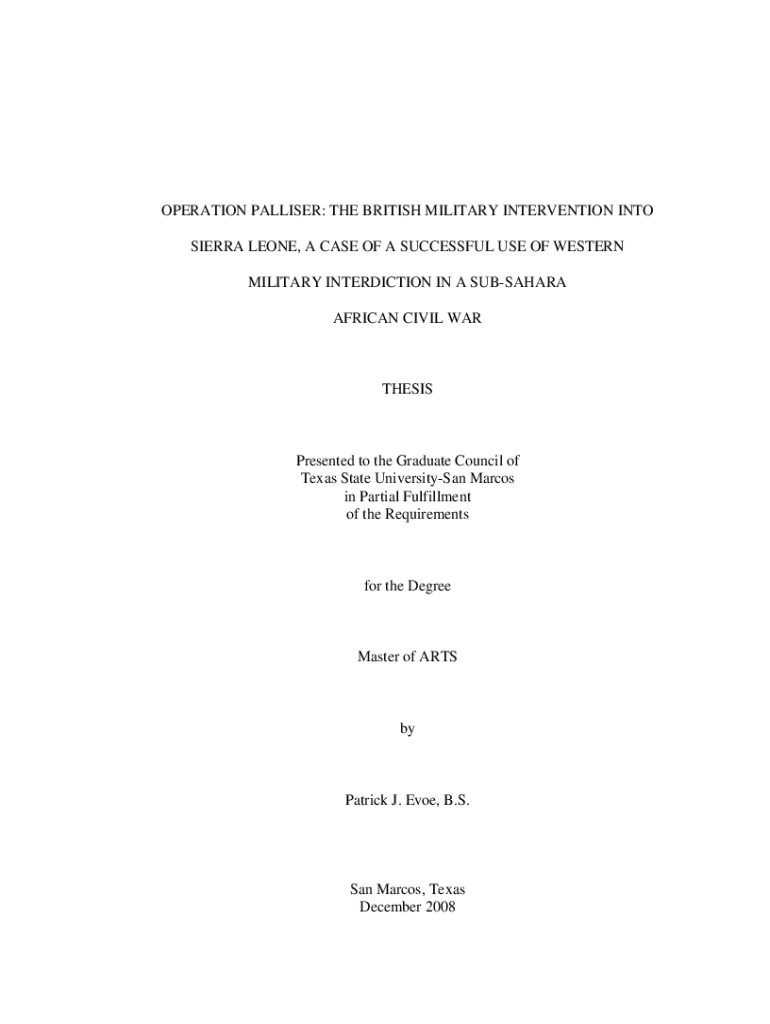
Operation Palliser was the British military intervention carried out in 2000 to bring stability to Sierra Leone during its civil war. It demonstrated a unique approach to Western military interventions in sub-Saharan Africa, highlighting the effectiveness of rapid deployment and strategic military engagement. Unlike previous efforts by international bodies such as ECOMOG and UNAMSIL, Operation Palliser successfully alleviated a dire humanitarian crisis and restored order, primarily through decisive action and psychological warfare to deter rebel forces.
Historical Context and Significance
The intervention occurred amid Sierra Leone’s brutal civil war, famed for the notorious tactics of the Revolutionary United Front (RUF), including the use of child soldiers and atrocities against civilians. Operation Palliser came after a decade-long conflict, where previous peacekeeping efforts had largely failed. The British intervention was a turning point that shifted the momentum towards peace, showcasing a model for international military response amidst complex humanitarian crises. Understanding the socio-political conditions of the time is integral to grasping the necessity and impact of such military interventions.
Military Strategies Employed
Operation Palliser was characterized by rapid deployment and the use of well-thought-out military strategies that ensured quick success. These strategies included securing the capital, Freetown, protecting key installations, and conducting operations that maximized the psychological pressure on rebel factions. The presence of British forces served as a powerful deterrent to further violence, underlining the importance of prompt, targeted military engagement in conflict zones.
Success Factors in Intervention
Several factors contributed to the success of Operation Palliser. The timing of the operation and the ability to rapidly deploy forces were crucial. Additionally, the intervention benefited from clear political objectives and rules of engagement that aligned military actions with diplomatic goals. The understanding of local dynamics and the integration of military efforts with humanitarian and political strategies proved to be key elements in achieving and maintaining peace in Sierra Leone.
Lessons from Sierra Leone
The lessons from this intervention highlight the importance of understanding local conditions and the potential of a military presence to stabilize a region. The aftermath of Operation Palliser provided critical insights into the efficacy of combining rapid deployment with a well-defined mission to prevent humanitarian disasters. Future interventions can draw from these experiences to improve planning and execution.
Key Elements of Effective Intervention
- Rapid Deployment: Speed in action helped prevent further escalation of violence.
- Strategic Military Positioning: Secured key areas and deterred opposing forces.
- Psychological Impact: Military presence served to demoralize and deter rebels.
- Coordination with Diplomacy: Military efforts were effectively aligned with political strategies.
- Cultural and Situational Awareness: Understanding local dynamics was essential for successful operations.
Impact on Humanitarian Efforts
Operation Palliser had a profound impact on the broader humanitarian situation in Sierra Leone. By stabilizing the region, it facilitated the delivery of humanitarian aid, protected civilians, and created conditions for longer-term peacebuilding initiatives. This intervention has been used as a model for deploying military forces to support humanitarian missions in conflict zones.
Long-term Outcomes and Stability
The British intervention not only quelled the immediate conflict but also set the stage for long-term recovery and stability in Sierra Leone. It underscored the potential for a well-planned military intervention to transform war-torn societies and support efforts to build resilient governance structures. The operation has been widely studied to understand how similar strategies might be applied in other conflict settings to achieve sustainable peace.