
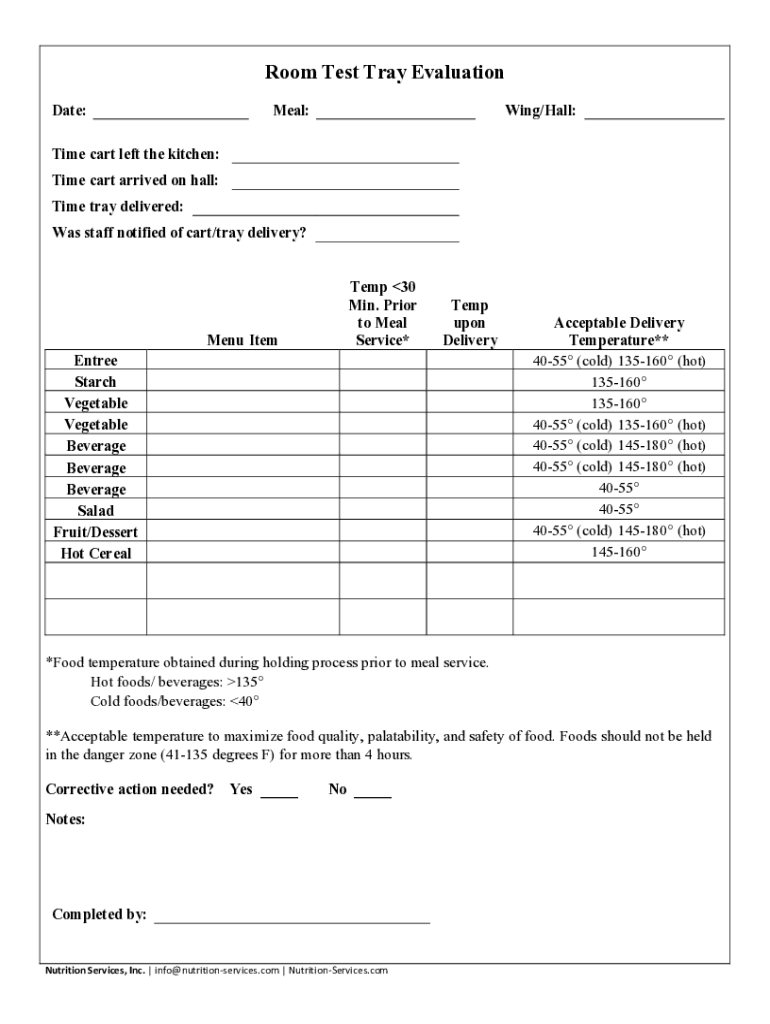







Definition and Meaning of Test Tray .doc
The "Test Tray .doc" form is primarily used in healthcare or institutional settings to evaluate the temperatures at which meals are delivered. This assessment ensures that food safety and quality standards are met. By documenting meal details, delivery times, and conducting temperature checks, institutions can maintain compliance with food safety regulations. The form helps to prevent any health risks associated with improper food handling, which is critical in environments like hospitals and care facilities.
How to Use the Test Tray .doc
To effectively use the Test Tray .doc, follow a step-by-step process:
- Document Meal Details: Start by recording the type and components of the meal. Include information such as the main dishes, sides, and beverages.
- Record Delivery Times: Note the exact times when meals are dispatched from the kitchen and when they are received at the delivery point.
- Perform Temperature Checks: Measure and log the temperatures of various meal items upon delivery. Ensure the results are within the acceptable temperature ranges specified in the form.
- Take Corrective Actions if Necessary: If any item falls outside of the specified temperature range, document the corrective actions taken to address the issue.
Steps to Complete the Test Tray .doc
Completing the Test Tray .doc involves the following steps:
- Prepare Necessary Equipment: Gather a calibrated thermometer and any required documentation materials.
- Select Sample Trays: Randomly select trays that represent the full meal service being evaluated.
- Measure and Document Temperatures: Use a thermometer to check hot and cold food item temperatures and record these on the form.
- Complete Supporting Sections: Fill in additional details, such as staff involved in the delivery process and any observations relevant to the meal service.
Why Should You Use the Test Tray .doc
Using the Test Tray .doc ensures compliance with food safety standards by:
- Providing a systematic approach to monitor meal delivery temperatures.
- Helping detect temperature issues early to prevent outbreaks of foodborne illness.
- Supporting documentation for audits, inspections, and internal quality assessments.
- Offering a framework for consistent training of staff on food safety protocols.
Key Elements of the Test Tray .doc
The Test Tray .doc includes several critical sections:
- Meal Description: Captures detailed information about each meal item, including any dietary modifications.
- Delivery and Reception Times: Ensures timely checks by recording all relevant time stamps.
- Temperature Log: Documents temperatures of both hot and cold items, specifying whether they fall within safe range limits.
- Corrective Actions: Details steps taken when temperatures deviate from standard requirements to address potential safety concerns.
Examples of Using the Test Tray .doc
In a hospital setting, dietetic staff might use the Test Tray .doc to evaluate meal delivery for inpatient services. For instance:
- Breakfast Service Assessment: Staff compare the log against food safety operational standards, ensuring scrambled eggs are served at safe temperatures.
- Lunch Review: Observations might include ensuring salads are maintained at appropriate cold temperatures during lunch rounds, promoting patient safety.
Important Terms Related to Test Tray .doc
Understanding certain terms enhances the use of the form:
- Acceptable Temperature Range: Defined temperature limits for food safety, typically between 140°F for hot items and below 41°F for cold items.
- Corrective Actions: Procedures implemented to fix deviations from standard temperature requirements to reduce health risks.
- Audit Trail: A documented timeline of activities and checks related to meal deliveries for transparency and regulatory compliance.
Legal Use of the Test Tray .doc
While primarily focused on food safety, the Test Tray .doc also meets legal obligations by:
- Aligning with federal, state, and local health regulations imposing stringent food handling and safety rules.
- Providing documentation required during inspections by health authorities.
- Supporting legal defense in cases where food safety practices might be questioned, with detailed logs as evidence.




