




01. Edit your form online
Type text, add images, blackout confidential details, add comments, highlights and more.

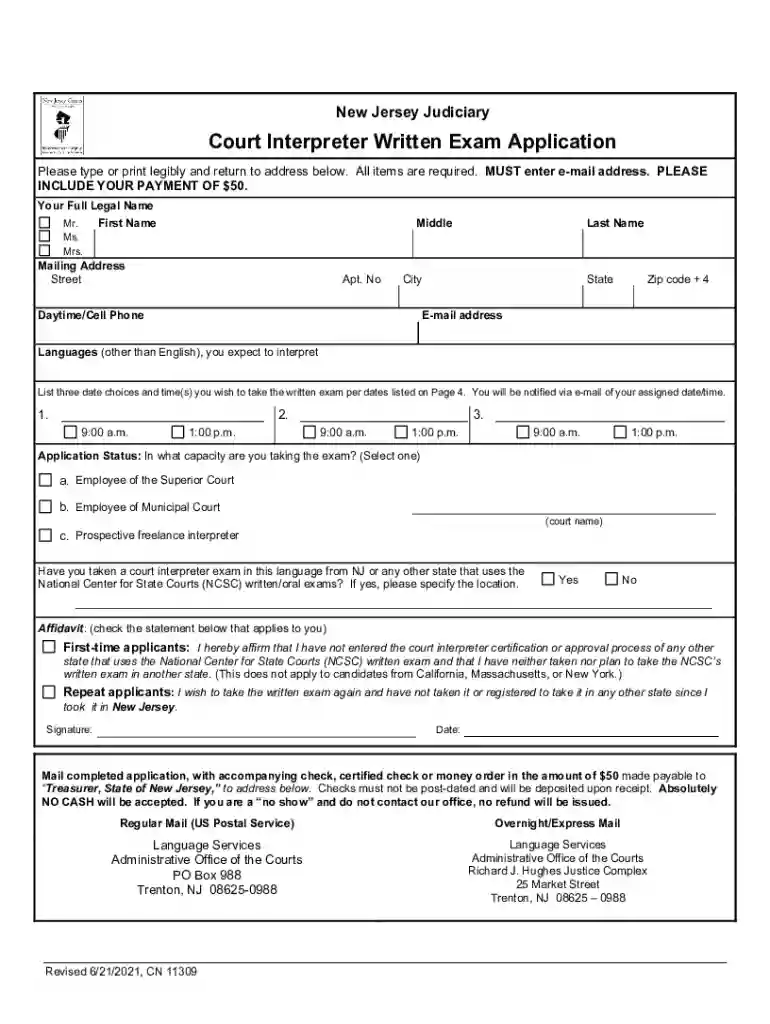
Type text, add images, blackout confidential details, add comments, highlights and more.

Draw your signature, type it, upload its image, or use your mobile device as a signature pad.

Send it via email, link, or fax. You can also download it, export it or print it out.
The NJ Form is a critical tool for individuals and businesses dealing with various regulatory and compliance requirements in New Jersey. This form serves a range of functions, depending on its specific type, such as tax reporting, business registration, or legal documentation. Each variant of the NJ Form is tailored to capture specific data necessary for fulfilling state obligations. Understanding the specific purpose of your NJ form is vital for ensuring compliance with state regulations and facilitating smooth interactions with state agencies.
Using the NJ Form effectively requires familiarity with its structure and designated fields. To start, carefully read through the entire form to understand the information required. It is important to gather all relevant personal or business data before beginning to fill out the form. Many NJ Forms allow for electronic completion, which often includes step-by-step prompts to guide users through the process. After completing the necessary fields, double-check for accuracy and ensure that all mandatory sections are filled to avoid potential processing delays or rejections.
Acquiring the NJ Form can be done through several methods. The most straightforward way is to download the form directly from the official New Jersey government website. Here, updated versions of all forms are readily available. Additionally, forms can be requested via mail or picked up in person at state and municipal offices. For those who prefer digital solutions, some third-party software services offer downloadable versions of NJ Forms, often accompanied by additional guidance for completion.
The NJ Form consists of several critical components that users must address accurately. These include identifying details such as full names, addresses, and Social Security or Employer Identification Numbers. The form may also require specific financial disclosures, depending on its purpose. Users should be diligent about completing mandatory sections and understanding which parts pertain specifically to their situation.
Compliance with legal and regulatory standards is essential when utilizing the NJ Form. Proper legal use ensures adherence to state laws and helps avoid sanctions or penalties. Understanding the legal implications of the form, including deadlines and precise reporting requirements, helps maintain transparency and credibility. Users are advised to consult legal experts or state agency representatives should they have questions about the lawful use of the form in their specific circumstances.
The NJ Form is typically used by a diverse group, including individual taxpayers, self-employed individuals, businesses, and legal entities operating within New Jersey. Each user group may have different needs based on their specific circumstances. Taxpayers filing annual returns, businesses registering for state licenses, or legal practitioners submitting court documentation are just a few examples of who typically requires these forms.


Understanding key terminology used within the NJ Form ensures proper completion and submission. Terms like "filing status," "exemptions," "liabilities," and "deductions" are prevalent in financial-related forms and require careful interpretation. Familiarize yourself with these and other terms specific to the NJ Form variant being used to avoid errors. Resources such as glossaries or help guides available on state websites can provide clarity.
New Jersey has specific rules and regulations that govern the use and submission of its forms. These rules can affect everything from filing deadlines to the type of information required by the state. It is important to review state guidelines thoroughly, which are often detailed in accompanying instructional documents or easily accessible on state websites. Adhering to these state-specific requirements ensures compliance and helps prevent any legal or procedural issues.
Failure to properly complete or submit the NJ Form can result in significant penalties, including fines, interest charges, or legal action. These penalties vary depending on the form type and the nature of the non-compliance. For instance, late submission of tax forms may incur financial penalties, whereas improper business registration may lead to operational restrictions. Awareness and adherence to form requirements and timelines are crucial to avoid non-compliance consequences.
We've got more versions of the nj form form. Select the right nj form version from the list and start editing it straight away!
At DocHub, your data security is our priority. We follow HIPAA, SOC2, GDPR, and other standards, so you can work on your documents with confidence.
You must complete and submit a form each year DocHubing you have no New Jersey Gross Income Tax liability and claim exemption from withholding. If you haveRead more
Dec 3, 2025 Print and download current New Jersey income tax returns, instructions, schedules, and supplemental forms.


