
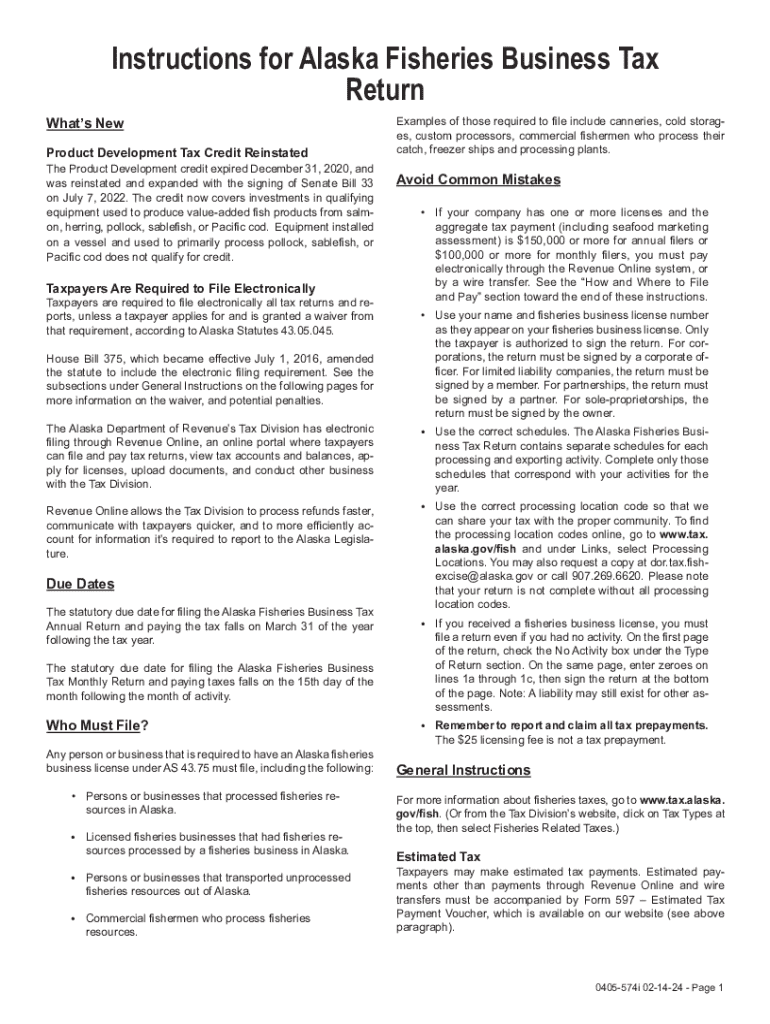







Definition and Importance of Alaska Fisheries Business Tax
The Alaska Fisheries Business Tax is a critical requirement for businesses involved in the fisheries industry within the state. This tax applies to entities that process or export fisheries resources, and it is essential for contributing to the public services benefiting the fisheries industry. The tax revenue supports infrastructure and community development in areas dependent on fisheries. Understanding the Alaska Fisheries Business Tax is crucial for businesses to ensure compliance, avoid penalties, and contribute to the sustainable management of Alaska's fishery resources.
How to Use the Instructions for Alaska Fisheries Business Tax
The instructions for the Alaska Fisheries Business Tax guide businesses through the filing process. These instructions help businesses accurately report their taxable fishery resources, calculate the correct tax amount, and submit their returns on time. Businesses can efficiently use these instructions by following sections on tax calculations, reporting requirements, and procedural details for form submission. This ensures that the filing is complete, accurate, and adheres to the state’s guidelines.
Steps to Complete the Alaska Fisheries Business Tax Return
- Gather Necessary Documentation: Prepare all documents related to fisheries resource processing and exports, including sales records and processing logs.
- Calculate Taxable Value: Determine the value of fisheries resources subject to the tax. The state provides formulas and rates based on species and processing methods within the instructions.
- Complete Required Forms: Fill out the tax forms with all relevant details about your business and calculated taxable value.
- Review and Verify Information: Double-check all entries for accuracy to prevent errors and possible penalties.
- Submit Forms and Payments: Follow the guidelines for submission, whether online or via mail, ensuring that payment is enclosed or transacted electronically.
- Keep Records: Retain copies of the completed forms and all related documents for future reference or potential audits.
Key Elements of the Instructions for Alaska Fisheries Business Tax
- Eligibility Criteria: Defines which entities are required to file based on their business activities in the fisheries sector.
- Taxable Resources: Lists the specific resources and activities subject to the tax, including processing and exporting.
- Calculation Methods: Describes how to compute the tax based on resource type and processing activities.
- Submission Guidelines: Details the acceptable methods for filing the tax return and making payments.
- Deadlines: Clearly states the due dates for filing returns and payments to avoid late fees.
Legal Obligations Related to the Alaska Fisheries Business Tax
Compliance with the Alaska Fisheries Business Tax is legally mandated for businesses in the sector. Failure to report and remit taxes correctly can result in significant penalties. The instructions outline these legal responsibilities and highlight the necessity of maintaining accurate records and documentation to demonstrate compliance. Businesses should regularly consult these instructions to stay informed about any legal updates or changes in tax requirements.
Filing Deadlines and Important Dates
Meeting the tax filing deadlines is essential to avoid penalties. The Alaska Fisheries Business Tax return is generally due at the end of March each year. The instructions specify the exact due date and highlight any extensions available. Businesses are encouraged to mark these dates and ensure all submissions are made timely to remain compliant.
Examples and Case Scenarios for Using the Instructions
The instructions include practical examples to illustrate the filing process. For instance, a processing company that exports salmon would use the provided examples to calculate its tax based on the quantity exported and the applicable tax rate. These examples help clarify the methodology for tax calculation and provide a reference for businesses in similar scenarios.
Penalties for Non-Compliance
The penalties for failing to comply with the Alaska Fisheries Business Tax can be severe, including fines and interest on unpaid taxes. The instructions detail both the financial consequences and the potential legal ramifications of late filing or payment. Understanding these penalties underscores the importance of timely and accurate tax filings.
State-Specific Rules and Variances in Alaska
Alaska has unique regulations concerning fisheries business taxes, reflecting its extensive reliance on the fishing industry. The instructions address these state-specific rules, ensuring businesses understand how state regulations impact their tax obligations. This includes details on credits, such as the Product Development Tax Credit, aimed at supporting in-state fisheries innovations.




