




01. Edit your form online
Type text, add images, blackout confidential details, add comments, highlights and more.

Type text, add images, blackout confidential details, add comments, highlights and more.

Draw your signature, type it, upload its image, or use your mobile device as a signature pad.

Send it via email, link, or fax. You can also download it, export it or print it out.
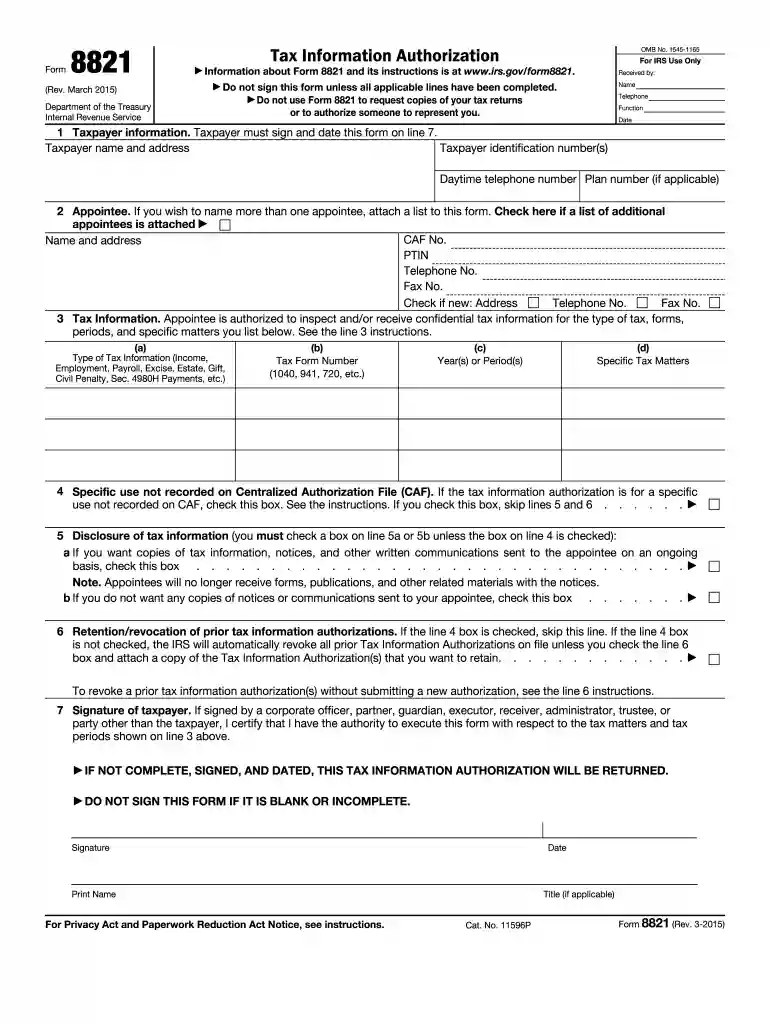
IRS Form 8821, known as the "Tax Information Authorization" form, is used by taxpayers to authorize an appointed individual or organization to inspect and receive confidential tax information from the Internal Revenue Service (IRS). This document is essential for individuals wishing to allow a third party, such as an accountant or tax attorney, to access specific tax data without granting them the ability to act on behalf of the taxpayer. The form specifies what information can be shared and sets boundaries to protect the taxpayer's privacy.
Understanding how to properly utilize IRS Form 8821 from 2015 is crucial for safeguarding your tax data while granting necessary access. The form must be meticulously filled out, indicating the specific tax information and the periods for which you are authorizing access. Ensure all relevant sections are complete to avoid processing delays. The appointed designee, or appointee, cannot amend tax returns or conduct transactions—this person is only authorized to review specific tax records. Typically, this form is employed when taxpayers require expert consultation or an external review from a designated appointee, such as a tax professional.
Taxpayer Information: Begin by providing your personal information, including name, address, and taxpayer identification number (TIN).
Appointee Details: Enter the name and contact details of the appointee who is authorized to access your tax information.
Tax Matters: Specify the type of tax information and the tax periods involved.
Retention/Revocation: Indicate whether you want this authorization to remain effective if you become incapacitated. Also, learn how to revoke it, if necessary.
Signature and Date: Ensure you sign and date the form. If a joint return is involved, both spouses must sign.
Taxpayers use IRS Form 8821 to delineate access to their tax records. Common users include businesses consulting with financial advisors, individuals who want their tax attorneys to review their records, or family members managing the financial affairs of another relative. This form is crucial for situations where multiple parties need insight into specific tax matters without the authorization to act on behalf of the taxpayer.


The IRS is strict about adhering to privacy laws; therefore, the legal use of Form 8821 mandates that it only authorizes information sharing without allowing the appointee decision-making power. Any misuse, such as representing oneself as authorized to act on behalf of the taxpayer, violates IRS regulations. It is important for both taxpayer and appointee to understand these legal boundaries.
Non-compliance with proper usage of IRS Form 8821 can result in the IRS revoking authorization. For appointees, overstepping the bounds of their access can lead to severe penalties, including fines or disbarment from practice. As per IRS procedures, always follow instructions carefully to avoid misinformation or unauthorized actions.
Although Form 8821 is primarily a physical document, many tax filing and financial management software systems like TurboTax or QuickBooks may offer compatibility or complementary supports. These systems can guide users through proper form preparation and ensure that details align with IRS requirements, although submission typically follows a manual or direct method.
This structured approach offers a comprehensive guide, focusing on facilitating a clear understanding and effective use of IRS Form 8821 from 2015.
We've got more versions of the irs form 8821 2015 form. Select the right irs form 8821 2015 version from the list and start editing it straight away!
At DocHub, your data security is our priority. We follow HIPAA, SOC2, GDPR, and other standards, so you can work on your documents with confidence.


