






Definition and Purpose of IRS Form 8821
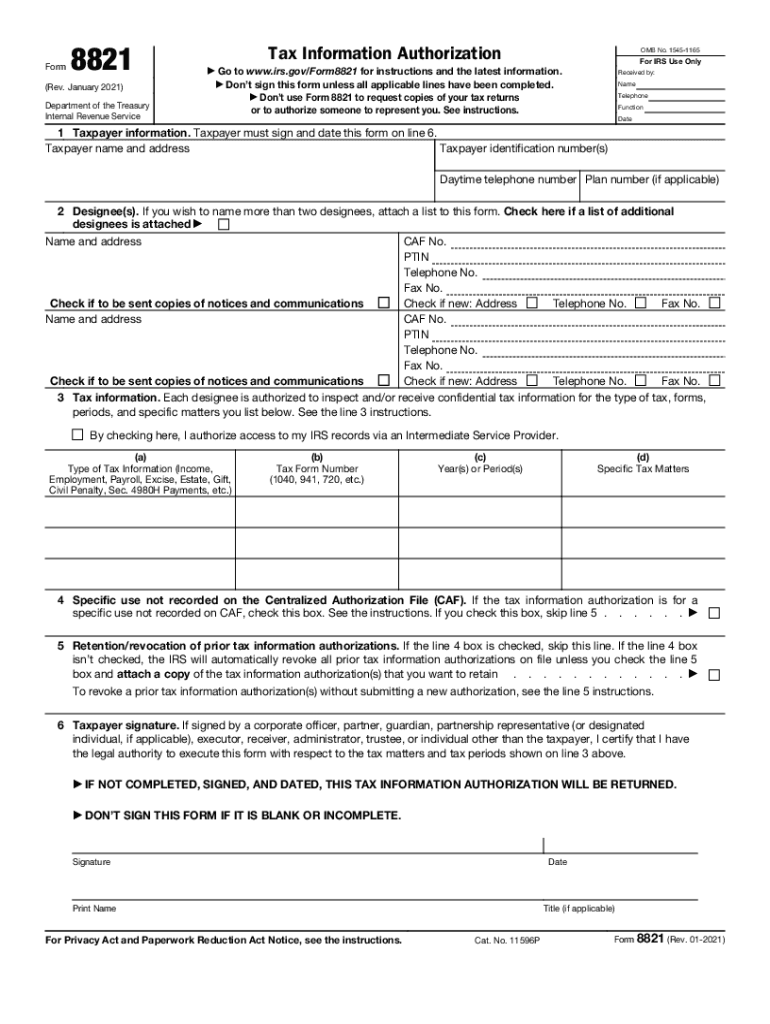
IRS Form 8821, known as the Tax Information Authorization, is a document used by taxpayers to authorize designated individuals, firms, or organizations to access their confidential tax information held by the Internal Revenue Service (IRS). This form facilitates the sharing of sensitive tax data between the taxpayer and authorized parties, granting them the ability to communicate with the IRS regarding specific tax matters. It's important to comprehend that completing this form does not grant the authorized party the right to act on behalf of the taxpayer or to make any binding commitments.
- Key Uses: Primarily utilized to assign authority for accessing tax records, it serves a crucial function in handling tax matters where complex analysis or third-party intervention is required.
- Revocation: The form provides an option to revoke prior authorizations, ensuring that taxpayer data is accessed only by currently trusted entities, offering peace of mind regarding data security.
Steps to Complete IRS Form 8821
Filling out IRS Form 8821 requires precision and accuracy to ensure valid authorization. Below is a breakdown of each section and what it entails:
- Taxpayer Information: Start with the taxpayer’s full name, address, and taxpayer identification number (TIN), which is often the Social Security Number (SSN) or Employee Identification Number (EIN).
- Designee Information: Provide the details of the individual or organization being authorized, including name, address, and CAF number if previously assigned. Ensure that the designee information is current and correct.
- Tax Matters and Years or Periods: Specify the tax matters being authorized, such as tax forms and years. For instance, you can authorize access for Form 1040 tax returns for the years 2020 to 2022.
- Revocation of Prior Authorizations: Clearly indicate if any previous authorizations are being revoked by noting them in the designated section.
- Signature: The form must be signed and dated by the taxpayer to be valid. Without a signature, the authorization will not be accepted by the IRS.
How to Obtain IRS Form 8821
IRS Form 8821 can be acquired through several straightforward methods:
- IRS Website: Download the form directly from the official IRS website, available in PDF format for easy access and printing.
- Tax Professional: Request the form from a tax advisor or professional who might also offer guidance on its completion and submission.
- Local IRS Office: Visit a local IRS office to obtain a physical copy. This is useful for taxpayers who require immediate assistance or guidance.
Who Typically Uses IRS Form 8821
The form is commonly used by various individuals and entities:
- Individual Taxpayers: Those who require assistance from tax professionals to resolve complex tax issues or need someone else to access their IRS tax records.
- Businesses: Corporations, partnerships, and LLCs that engage external accounting firms or legal representatives for tax reporting and compliance.
- Other Representatives: Financial planners, attorneys, and tax consultants needing access to clients’ tax information to offer comprehensive services.
Key Elements of IRS Form 8821
Understanding the main sections of the form is crucial for effective completion:
- Taxpayer Information Section: Essential for identifying whose information is being authorized.
- Designee Information Section: Critical for ensuring the accuracy of the party being granted access.
- Authorization Scope: Clear specification of which tax types and periods the authorization covers.
Legal Use and Compliance
Such authorizations must adhere to specific legal standards:
- Impact of Authorization: Grants access solely for information purposes and communications with the IRS, without permitting actions like filing or representing on behalf of the taxpayer.
- Compliance: Ensure conformity with IRS policies, particularly the correct use of designated signatures and valid periods of authorization to avoid legal complications.
Software Compatibility and Digital Access
With the rise of digital solutions, understanding compatibility can streamline form management:
- Digital Filing: While IRS Form 8821 itself doesn’t authorize e-filing by the third party, it supports the transmission of tax information in a digital format.
- Tax Software: Compatibility with tax software platforms like TurboTax and QuickBooks can facilitate easier preparation and tracking of tax-related processes for authorized designees.
Taxpayer Scenarios
Exploring different scenarios helps to understand the form's application:
- Self-Employed Individuals: May use the form to allow accountants to access business-related tax details.
- Retirees: Can benefit from authorizing family members or legal assistants to handle tax inquiries or issues.
- Students: Might need their parents or guardians to manage tax affairs, especially those involving educational tax credits.
Each of these elements is crafted to provide detailed insights and examples, ensuring the comprehensive understanding and proper use of IRS Form 8821 while facilitating secure and legal access to personal tax information.