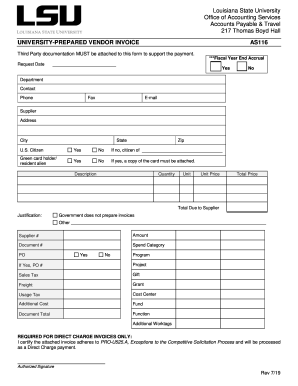
Chapter 13 Plan and Coversheet - Rhode Island 2026

Get Form
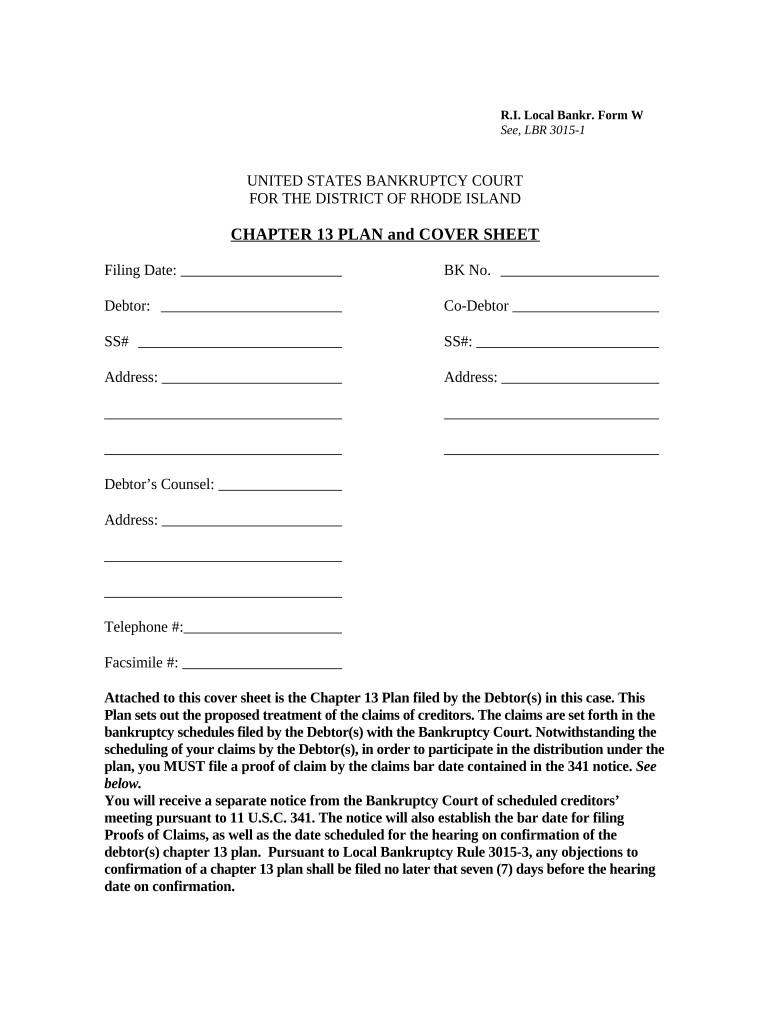
Chapter 13 Plan and Coversheet - Rhode Island Preview on Page 1

Here's how it works

01. Edit your form online
Type text, add images, blackout confidential details, add comments, highlights and more.
02. Sign it in a few clicks
Draw your signature, type it, upload its image, or use your mobile device as a signature pad.
03. Share your form with others
Send it via email, link, or fax. You can also download it, export it or print it out.

How to use or fill out Chapter 13 Plan and Coversheet - Rhode Island with our platform

Form edit decoration
9.5
Ease of Setup
DocHub User Ratings on G2
9.0
Ease of Use
DocHub User Ratings on G2
  1. Click ‘Get Form’ to open the Chapter 13 Plan and Coversheet in the editor.
  2. Begin by entering the Filing Date and BK Number at the top of the form. This information is crucial for identifying your case.
  3. Fill in your personal details, including Debtor and Co-Debtor names, Social Security Numbers, and addresses. Ensure accuracy to avoid processing delays.
  4. In the Chapter 13 Plan section, specify the Term of the Plan and monthly payment amount. Clearly outline secured claims, priority claims, administrative claims, and unsecured claims in their respective sections.
  5. Complete the Liquidation Analysis section by providing fair market values for real estate and automobiles. This helps assess available assets under Chapter 7.
  6. Review all entries for accuracy before saving or exporting your completed form. Utilize our platform’s features to sign electronically if required.

Start using our platform today to fill out your Chapter 13 Plan and Coversheet easily and for free!

be ready to get more

Complete this form in 5 minutes or less

Get form

Got questions?

We have answers to the most popular questions from our customers. If you can't find an answer to your question, please contact us.
Contact us
Losing your disposable income - Having to keep making sizeable monthly payments is the biggest downside of filing under Chapter 13. Your monthly payment will be calculated to roughly equal your disposable income. This means that you will have little money left for discretionary spending.
A chapter 13 bankruptcy is also called a wage earners plan. It enables individuals with regular income to develop a plan to repay all or part of their debts. Under this chapter, debtors propose a repayment plan to make installments to creditors over three to five years.
It may take approximately three to five years to complete the repayment plan. You need to make regular payments to the trustee in accordance with the bankruptcy repayment plan approved by the trustee.
In this post, well go over 9 things you cannot do after filing Chapter 13. #1 Skip Or Miss Plan Payments. #2 Take On New Debt Without Approval. #3 Sell Or Transfer Property Without Permission. #4 Stop Cooperating With Your Trustee. #5 Pay Creditors Outside The Plan. #6 Ignore Tax Obligations.
A Chapter 13 petition for bankruptcy will likely necessitate a $500 to $600 monthly payment, especially for debtors paying at least one automobile through the payment plan. However, since the bankruptcy court will consider a large number of factors, this estimate could vary greatly.

Security and compliance

At DocHub, your data security is our priority. We follow HIPAA, SOC2, GDPR, and other standards, so you can work on your documents with confidence.

Learn more
ccpa2
pci-dss
gdpr-compliance
hipaa
soc-compliance
be ready to get more

Complete this form in 5 minutes or less

Get form

People also ask

Downsides include a long repayment commitment, higher costs than a Chapter 7 bankruptcy, a negative mark on your credit for years, loss of most credit card access, and limits on filing another bankruptcy soon after. Youll still have to pay non-dischargeable debts like child support, alimony, and most student loans.
After Plan Completion: After all payments have been completed, the Chapter 13 Trustee will file a Motion to Return any Excess Funds to Debtor and to Terminate any Payroll Deduction by Employer. If the Motion is granted, the Court will enter an order granting the motion and issue two notices.

Related links