




Understanding the 2013 EZ Form
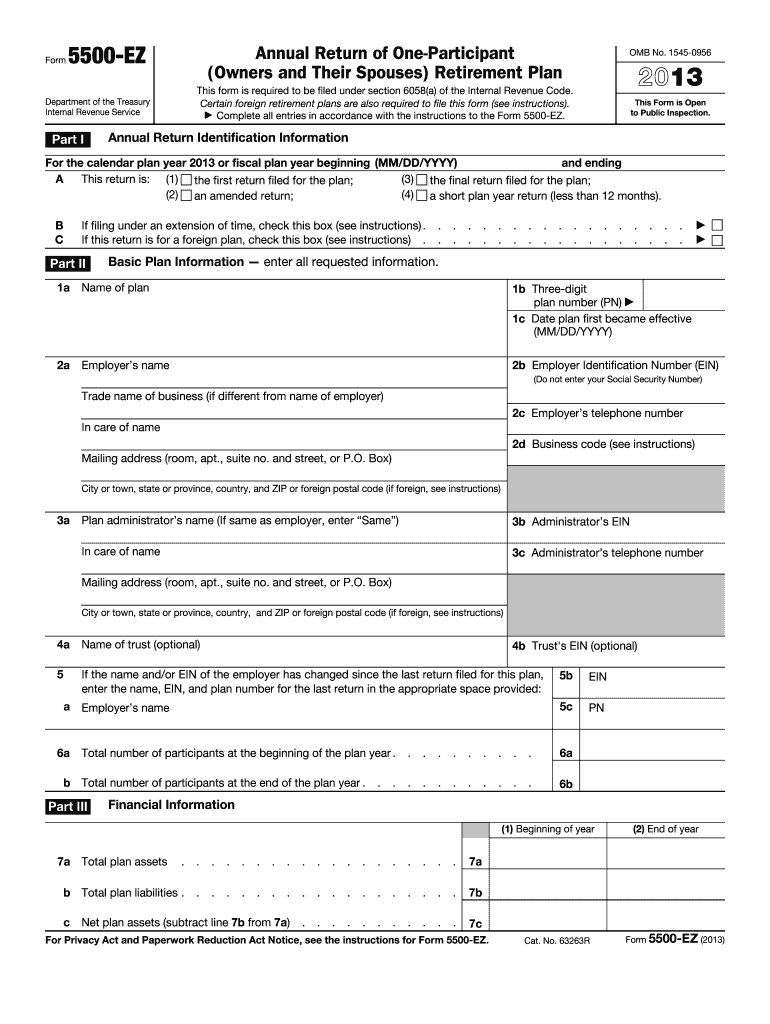
The 2013 EZ Form, officially known as Form 5500-EZ, is designed for one-participant retirement plans, including those for self-employed individuals and their spouses. This annual return, required under section 6058(a) of the Internal Revenue Code, collects essential information such as plan details, financial data, contributions, and compliance questions. This form is pivotal for ensuring that small business owners and self-employed individuals comply with retirement plan regulations.
Important Sections of the 2013 EZ Form
Plan Identification Information
- Plan Name: Provide the official name of the retirement plan.
- Plan Year: Indicate the year in which the form applies.
- Employer Identification: The employer identification number (EIN) must be correctly listed for IRS tracking purposes.
Financial Information
- Plan Assets: List the total assets of the plan at the beginning and end of the plan year.
- Liabilities: Include the total liabilities at the end of the plan year to calculate net assets.
- Contributions: Document the amount of money contributed to the plan during the year.
Compliance Questions
This section ensures the plan follows IRS regulations. Key inquiries include:
- Participant Loans: Whether any loans were current.
- Prohibited Transactions: Questions about any transactions that may not comply with IRS rules.
Instructions for Completion
- Begin with Form Title: Ensure you have the correct form year.
- Fill in Plan Information Accurately: Double-check EINs and plan names for accuracy.
- Answer Compliance Questions Thoroughly: Understand each compliance question to ensure your responses are accurate.
Eligibility Criteria for Using the 2013 EZ Form
- One-participant Plans: The form is intended for retirement plans covering a business owner and their spouse.
- No Employee Participants: If your plan includes employees, you must use the more comprehensive Form 5500.
- Total Asset Limits: Plans with assets up to $250,000 at the end of the plan year are typically eligible.

How to Obtain and Submit the 2013 EZ Form
Where to Find the Form
- IRS Website: The form is available as a downloadable PDF on the IRS website.
- Tax Preparation Software: Software like TurboTax or QuickBooks may offer digital versions of the form.
Submission Methods
- Mail: Send the completed form to the address specified in the IRS instructions.
- Electronic Filing: Smaller plans may have the option to submit electronically, depending on IRS guidelines.
Filing Deadlines and Consequences of Non-Compliance
Important Dates
- Filing Deadline: Generally due by the last day of the seventh month after the plan year ends. For most, this is July 31 of the following year.
- Extensions: A two and one-half-month extension can be requested by filing Form 5558.
Penalties for Late Filing
- IRS Penalties: Can accrue rapidly if the form is not filed on time.
- Correction Programs: The IRS offers programs to help filers correct late submission mistakes and potentially reduce penalties.
Legal Implications and Compliance
- Public Inspection: Once filed, the information is subject to public disclosure under specific conditions.
- Audit Considerations: Correct completion reduces the risk of triggering an audit by IRS.
Utilizing the 2013 EZ Form for Business Benefits
Benefits for Small Business Owners
- Simplification of Filing: Streamlines retirement plan reporting for sole proprietors.
- Cost Efficiency: Avoids more complex forms which require additional administrative support.
Case Study: Self-employed Individual
A sole proprietor with a 401(k) operating as a one-participant plan uses Form 5500-EZ to report annual plan information, ensuring compliance while minimizing paperwork.
Conclusion
The 2013 EZ Form is essential for self-employed individuals and small business owners managing one-participant retirement plans. By understanding the sections, eligibility, and submission requirements, businesses can ensure compliance, avoid penalties, and efficiently manage their retirement plan reporting.