Manage Individual to Trust Deeds easily online

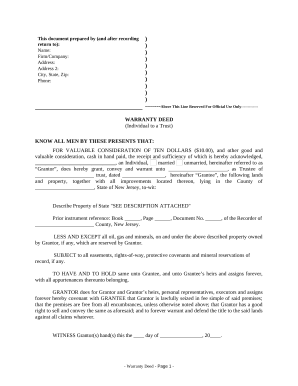
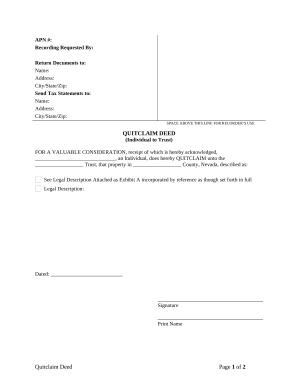
Document managing can overpower you when you can’t discover all of the documents you need. Luckily, with DocHub's substantial form collection, you can get all you need and quickly deal with it without switching among software. Get our Individual to Trust Deeds and begin utilizing them.

How to use our Individual to Trust Deeds using these simple steps:

  1. Browse Individual to Trust Deeds and select the form you need.
  2. Review the template and then click Get Form.
  3. Wait for it to open in our online editor.
  4. Modify your template: include new information and pictures, and fillable fields or blackout certain parts if necessary.
  5. Complete your template, preserve alterations, and prepare it for delivering.
  6. When all set, download your form or share it with other contributors.

Try out DocHub and browse our Individual to Trust Deeds category easily. Get your free account right now!


Video Guide on Individual to Trust Deeds management

video background

Commonly Asked Questions about Individual to Trust Deeds

credit rating having a trust deed will affect your credit rating for 6 years from the date the trust deed begins. This can make it harder to get credit like a mortgage or a loan in the future. selling your belongings and property you may have to sell some of the things you own (your assets) such as your home.
The main difference between a deed and a deed of trust is that a deed is a transfer of ownership, while a deed of trust is a security interest. A deed of trust is used to secure a loan, while a deed is used to transfer ownership of a property.
Assets can be transferred to a trust through methods like a deed of grantor(s) to trustee(s), title transfer, assignment of ownership, opening new accounts, naming the trust as a beneficiary, and more. Transferring assets to a trust can be done through various legal means, providing flexibility to the grantor.
Trust Deed Disadvantages You will be unable to obtain credit. They are not appropriate for secured obligations. They can cause issues for business owners. Your trustee has the authority to claim new assets.
A deed of trust, also called a trust deed, is the functional equivalent of a mortgage. It does not transfer the ownership of real property, as the typical deed does. Like a mortgage, a trust deed makes a piece of real property security (collateral) for a loan.
In financed real estate transactions, trust deeds transfer the legal title of a property to a third partysuch as a bank, escrow company, or title companyto hold until the borrower repays their debt to the lender. Investing in trust deeds can provide a high-yielding income stream.
If the borrower defaults, a trust deed makes it possible for the lender to sell the property without having to go to court. With a mortgage, the lender has to file a foreclosure claim in court and secure a judges approval to sell the property. This can mean a lot of expenses for both the borrower and the lender.
Commonly, both terms are used to mean the same type of legal document. A deed of trust is a legally binding document that contains a declaration of trust, but which also contains other statements (technically called trusts) that describe how the assets in trust should be dealt with.