Type text, add images, blackout confidential details, add comments, highlights and more.
02. Sign it in a few clicks
Draw your signature, type it, upload its image, or use your mobile device as a signature pad.
03. Share your form with others
Send it via email, link, or fax. You can also download it, export it or print it out.
How to use or fill out montana trust with our platform
Ease of Setup
DocHub User Ratings on G2
Ease of Use
DocHub User Ratings on G2
Click ‘Get Form’ to open the montana trust document in the editor.
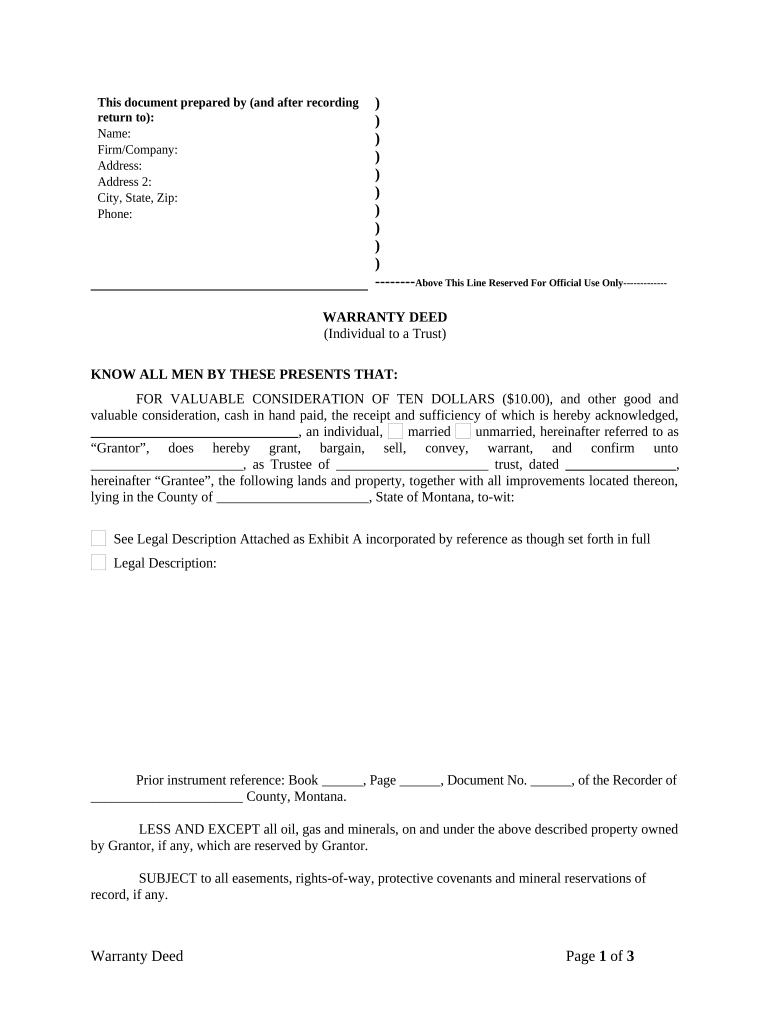
Begin by filling in your personal information at the top of the form. Enter your name, firm/company, address, city, state, zip code, and phone number accurately.
In the section labeled 'KNOW ALL MEN BY THESE PRESENTS THAT', specify the Grantor's name and marital status (married/unmarried). This identifies who is transferring property rights.
Next, enter the Grantee's name as Trustee and provide the name of the trust along with its date. This section clarifies who will receive the property.
Fill in the legal description of the property being transferred. If you have an attachment (Exhibit A), ensure it is referenced correctly.
Complete any additional fields regarding prior instrument references and any reservations or easements that apply to the property.
Finally, sign and date where indicated. Ensure all required signatures are included for validity.
Start using our platform today to easily complete your montana trust form online for free!
Montana trust for saleMontana trust lookupMontana trust taxMontana trust tax returnMontana trust filing requirementsMontana trust residencyCertificate of trust montanaHow to set up a living trust in montana
Security and compliance
At DocHub, your data security is our priority. We follow HIPAA, SOC2, GDPR, and other standards, so you can work on your documents with confidence.
Cookie consent notice
This site uses cookies to enhance site navigation and personalize your experience.
By using this site you agree to our use of cookies as described in our Privacy Notice.
You can modify your selections by visiting our Cookie and Advertising Notice.