



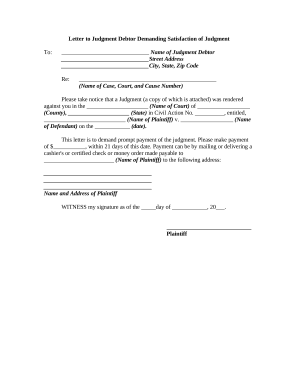
Get and manage Debt Collection Letter Templates online
Boost your document administration using our Debt Collection Letter Templates library with ready-made templates that suit your needs. Access your form, modify it, complete it, and share it with your contributors without breaking a sweat. Begin working more efficiently with your forms.
How to use our Debt Collection Letter Templates:
- Open our Debt Collection Letter Templates and look for the form you require.
- Preview your form to ensure it’s what you want, and click Get Form to start working on it.
- Change, include new text, or point out important information with DocHub features.
- Complete your form and save the modifications.
- Download or share your form template with other recipients.
Explore all of the possibilities for your online file management using our Debt Collection Letter Templates. Get your free free DocHub profile right now!
Video Guide on Debt Collection Letter Templates management

Commonly Asked Questions about Debt Collection Letter Templates
What is the best reason to put when disputing a collection?
What is the best reason why you would dispute a collection? The Fair Credit Reporting Act (FCRA) gives you the right to dispute any item on your credit report that is incorrect, questionable or fraudulent. If any item on your credit report falls into one of these categories, you can dispute it.
How do I write a letter of debt collection?
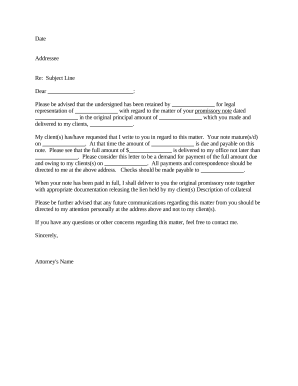
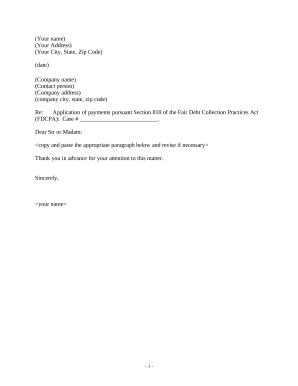
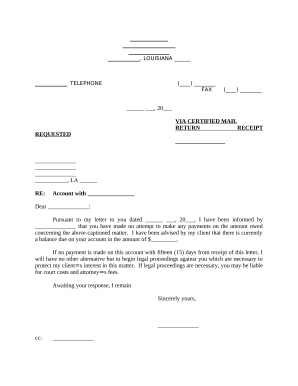
Key Components to Include in a Debt Collection Letter Clear identification. Begin by clearly identifying the debtor, including their name, address, and relevant account information. Specific debt information. Payment options and due dates. Contact information. Call to Action. Legal considerations.
Format What does a debt collection letter look like?
The letter typically includes the amount of debt, the date it was incurred, and consequences for non-payment like legal action or late fees. Debt collection letters are often the first step in the debt collection process. Drafting a Debt Collection Letter - Solution Scout solutionscout.com debt-collection drafting-coll solutionscout.com debt-collection drafting-coll
What is an example of a nice collection letter?
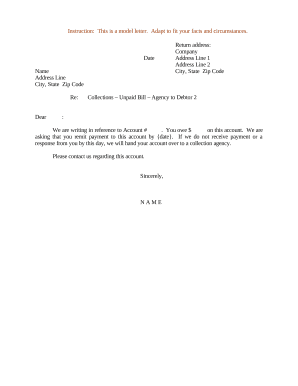
I am writing to inform you that payment for the invoice [Invoice Number] has yet to be received. The invoice was due on [due date] and has been marked as overdue for [# days]. Please be advised that continued non-payment may result in legal action, collections, and negative impact on your credit score.
How do I dispute a debt collection?
Within 30 days of receiving the written notice of debt, send a written dispute to the debt collection agency. You can use this sample dispute letter (PDF) as a model. Once you dispute the debt, the debt collector must stop all debt collection activities until it sends you verification of the debt.
How to write a letter of dispute in debt collector?
Things to Consider When Drafting a Collection Dispute Letter Accurate information. Include your complete details name, address, official email address, account numbers or reference numbers, etc. A clear statement of the dispute. Factual details. Professional tone. Mention a deadline for response.
How do you write a successful dispute letter?
Your letter should identify each item you dispute, state the facts, explain why you dispute the information, and ask that the business that supplied the information take action to have it removed or corrected.
How to write a letter to collect outstanding payments?
Tips to Write Overdue Payment Letters Use a Friendly Approach. Choose the Right Time to Send the Letter. Include All Necessary Details About the Outstanding Invoice. Show Empathy and Understanding for Your Customers Situation. Suggest Alternative Payment Plans. Mention Late Payment Fees and Penalties. Send Regular Follow-ups.
How to write a debt collection dispute letter?
If you write a letter, instead of using the tear-off form, the debt dispute letter should include your personal identifying information; verification of the amount of debt owed; the name of the creditor for the debt; and a request the debt not be reported to credit reporting agencies until the matter is resolved or


