






Definition and Meaning of a Nebraska Revocable Living Trust Form
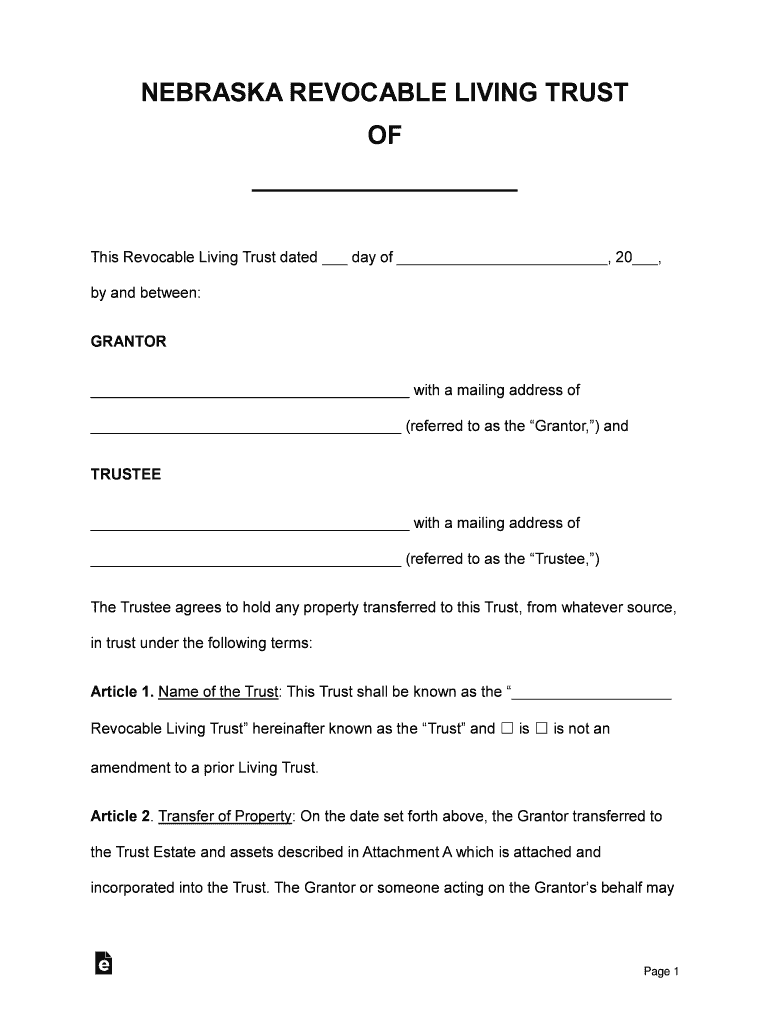
The Nebraska Revocable Living Trust Form is a critical legal document that outlines the terms under which a grantor transfers property to a trustee. The trustee manages the property during the grantor's lifetime and is responsible for its distribution after the grantor's death. This document provides detailed roles for both the grantor and trustee, ensuring precise management of assets and their subsequent distribution.
Key Aspects of the Form
-
Grantor's Role: The grantor creates the trust and can alter or revoke it at any time during their lifetime. This control allows the grantor to make changes based on evolving financial conditions or personal circumstances.
-
Trustee's Role: The trustee manages the trust's assets, acting in the best interest of the beneficiaries outlined in the document. Their responsibilities include handling funds, investments, and other trust properties.
-
Beneficiary Provisions: Designated individuals or organizations that receive the trust assets according to the grantor's instructions. These can include family members, charities, or other entities.
-
Property Transfer and Management: Details the transfer of assets from the grantor to the trustee and provides guidelines for managing these assets.
How to Obtain the Nebraska Revocable Living Trust Form
To obtain the Nebraska Revocable Living Trust Form, individuals can visit legal form websites such as eForms or consult with an attorney specializing in estate planning. Accessing the form through a trusted source ensures it meets legal standards and is the latest version.
Online Sources
- eForms: As a digital platform for legal documents, eForms provides downloadable trust forms tailored to Nebraska’s legal requirements.
Professional Assistance
- Estate Planning Attorneys: Engaging an attorney offers personalized guidance in drafting a trust that fits your specific needs and circumstances.
Steps to Complete the Nebraska Revocable Living Trust Form
Filling out a Nebraska Revocable Living Trust Form involves careful consideration of several components to ensure legal compliance and clarity in asset management.
-
Prepare Personal and Beneficiary Information: Gather all relevant personal data for yourself, the trustee, and the beneficiaries.
-
Detail Asset and Property Information: Clearly outline all assets being transferred to the trust, including real estate, investment accounts, and other valuables.
-
Specify Conditions and Instructions: Provide explicit instructions for asset management, distribution, and any special conditions for beneficiaries.
-
Obtain Signatures and Notarization: Sign the completed document in the presence of a notary public to ensure legal validity.
-
Distribute Copies as Necessary: Ensure copies are stored safely and distributed to relevant parties, including the trustee and beneficiaries.
Reasons to Use a Nebraska Revocable Living Trust Form
A Nebraska Revocable Living Trust Form offers several advantages for effective estate planning, from asset protection to streamlined asset transfer after death.
Benefits
-
Avoids Probate: Assets in a trust are generally exempt from probate, expediting the distribution process.
-
Privacy Preservation: As trust documents are not public record, they ensure greater privacy for the estate's details.
-
Flexibility and Control: The revocable nature of the trust allows the grantor to make changes or dissolve the trust as needed.
Legal Use of the Nebraska Revocable Living Trust Form
For the form to be legally binding, it must comply with Nebraska's statutory requirements pertaining to living trusts. This includes proper notarization and the involvement of authorized parties such as trustees and beneficiaries.
Legal Requirements
-
Must be Revocable: The document must state clearly that the grantor retains the right to revoke.
-
Specific Asset Identification: All involved assets must be precisely identified and transferred into the trust’s ownership.
Important Terms Related to the Nebraska Revocable Living Trust Form
Understanding the language of trust documents is crucial for accurate completion and execution.
Terms to Know
-
Grantor: The person who creates and transfers assets into the trust.
-
Trustee: The individual or entity responsible for managing the trust.
-
Beneficiary: Any individual or organization designated to receive assets from the trust.
State-Specific Rules for the Nebraska Revocable Living Trust Form
Nebraska imposes particular rules and regulations that govern how trusts are established and managed within the state.
Compliance Requirements
- Statutory References: The form should adhere to Nebraska state statutes defining trusts and estates to avoid any legal pitfalls.
Key Elements of the Nebraska Revocable Living Trust Form
Certain elements are integral to the trust form, ensuring comprehensive estate management and clear directives for asset distribution.
Essential Components
-
Trust Purposes and Goals: Stating the overarching objectives for the trust's existence and operations.
-
Trustee Powers and Duties: Outlining specific responsibilities and powers given to the trustee, including investment decisions and financial reporting.
Conclusion
The Nebraska Revocable Living Trust Form is indispensable for individuals looking to manage their estate efficiently. By providing clear instructions and transferring asset control to a trusted individual or organization, the form supports smooth asset management both during the grantor’s life and after their passing.