






Definition & Meaning of a Letter Judgment
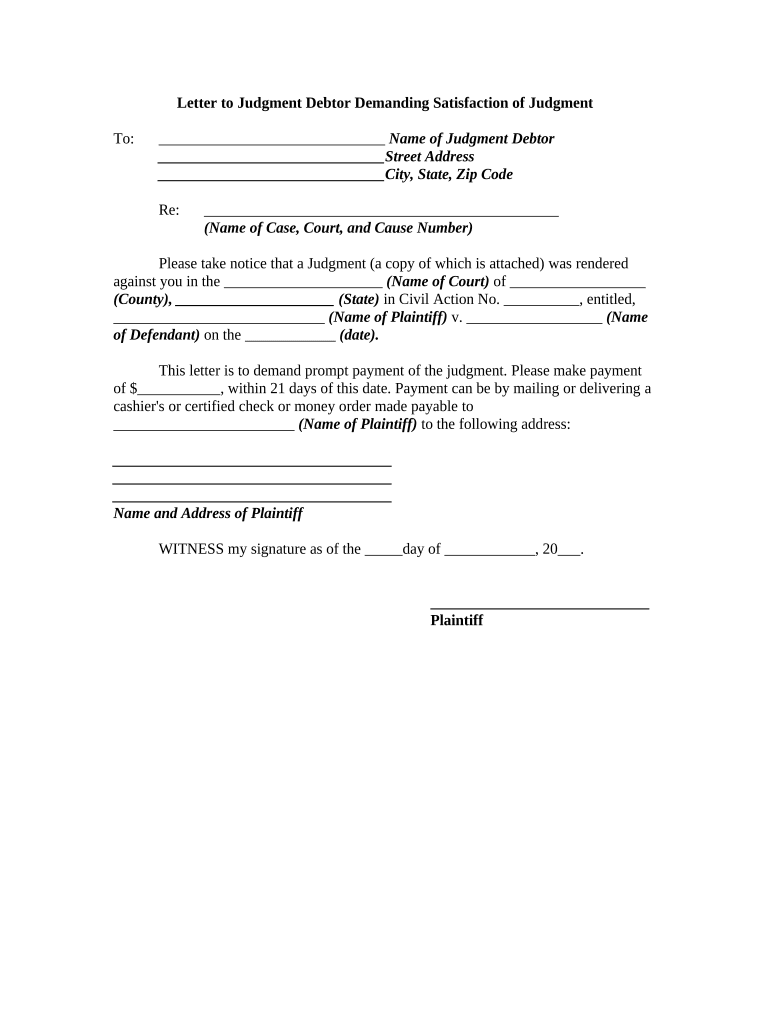
A letter judgment refers to a formal communication directed at a judgment debtor from a court or creditor, demanding the payment of an outstanding debt that has been legally adjudicated. This letter outlines the essential components of the judgment rendered, including the case number, the name of the court, the amount owed, and any relevant dates pertaining to the judgment. Typically, it also includes instructions for repayment and the consequences of failing to comply.
- Purpose: The primary goal of a letter judgment is to formalize the creditor's request for payment. It serves not only as a notification of the legal obligation to pay but also as a way to prompt action from the debtor without further legal escalation.
- Importance: Understanding the implications of a letter judgment is crucial for judgment debtors, especially as it may impact their credit score and financial health. Responding to the letter within the stipulated timeline is vital to avoid additional legal repercussions.
How to Use the Letter Judgment Effectively
Effectively utilizing a letter judgment involves several steps that ensure compliance and appropriate response from the involved parties. The letter provides a framework for how debtors should respond, and it outlines the acceptable methods for making payments.
- Review the Content: Begin by carefully reading the judgment letter to understand the specific amounts due and the deadlines for payment.
- Prepare Payment: Gather the necessary funds to resolve the debt. The letter often outlines payment methods, such as electronic transfer, mailing a check, or paying in person.
- Communicate with the Creditor: If you have questions or require clarity regarding the judgment or payment terms, reach out to the creditor using the contact information provided in the letter.
- Record Keeping: It's advisable to keep a copy of the letter and any correspondence related to the judgment for personal records, as they might be required for future reference or disputes.
Steps to Complete the Letter Judgment Process
Completing the letter judgment process involves several key actions that both creditors and debtors should follow to ensure compliance and closure of the debt.
- Receive the Letter Judgment: This is the initial stage where the debtor is notified of their outstanding obligation and the judgment against them.
- Analyze the Specifics: Identify pertinent details such as due dates and the total amount owed mentioned in the letter.
- Arrange for Payment: Fund the required amount, ensuring you adhere to the payment methods specified within the letter. It's crucial to meet the deadline provided.
- Follow Up: After submitting the payment, contact the creditor to confirm receipt and request a satisfaction letter to document that the judgment has been settled.
Legal Use of the Letter Judgment
The legal implications of a letter judgment are significant for both creditors and debtors. Understanding the legal standing of the document can help individuals navigate their rights and responsibilities effectively.
- Legally Binding Nature: A letter judgment carries the weight of a court order, making it enforceable under law. Failing to comply can lead to more severe financial consequences, including wage garnishments or bank levies.
- Recipient Rights: Debtors have the right to dispute the judgment if they believe it was issued in error. It's critical to understand the procedures for contesting a judgment within the time frame allowed post-notification.
Key Elements of a Letter Judgment
To construct an effective letter judgment, specific elements must be included to ensure clarity and enforceability:
- Identifying Information: The names of the creditor and debtor, as well as the case number, should be clearly indicated at the beginning of the letter.
- Details of the Judgment: The letter must describe the nature of the debt, the original claim, and the amount awarded by the court.
- Payment Instructions: Clear instructions regarding how the debtor can remit payment must be provided, including acceptable formats (e.g., check, electronic).
- Consequences of Non-Compliance: The letter should stipulate what actions may be taken if the debtor does not pay within the defined timeline, emphasizing the seriousness of the situation.
Examples of Using the Letter Judgment
Understanding the practical applications of a letter judgment can provide clarity on how it operates within real-world scenarios:
- Debt Recovery: A creditor may use the letter judgment to formally demand payment from a business that owes a substantial amount for goods received.
- Personal Loan Situations: Individuals who have failed to pay a personal loan may receive a letter judgment outlining the debt and the required steps to avoid further legal action.
- Tenant Issues: Landlords may issue a letter judgment to tenants who have not paid rent, detailing the amount owed and the legal ramifications of continued non-payment.
State-Specific Rules for the Letter Judgment
The regulations governing how letter judgments are issued and enforced can vary significantly from state to state. It is essential to be familiar with the specific rules in your jurisdiction to ensure compliance.
-
Filing Procedures: Some states may have additional requirements for how creditors must file for a judgment or how they must communicate with debtors through a letter judgment.
-
Statute of Limitations: Different states have varying statutes of limitations for collecting debts, influencing the timeframe creditors must operate within when issuing a letter judgment.
-
Legal Advice: Consult legal professionals knowledgeable about local laws to ensure that processes are followed correctly and rights are protected in cases involving a letter judgment.
Requirement Documents for a Letter Judgment
Creating or responding to a letter judgment typically necessitates certain documentation:
- Court Judgment Record: A copy of the official court ruling that affirmed the judgment may be required.
- Proof of Debt: Evidence supporting the claim, such as invoices or contracts, helps substantiate the creditor's position.
- Communications Records: Any prior correspondence related to the debt should be maintained to bolster the case for repayment.
This comprehensive understanding of letter judgments, along with the practical examples and delineation of legal boundaries, can significantly aid individuals in navigating their respective obligations or rights associated with such documents.