Estate inventory Canada Forms

Explore up-to-date compliant Estate inventory Canada Forms and go green with DocHub. Easily navigate our web document collection and organize your document processes online.

Enhance your template operations with Estate inventory Canada Forms

Your workflows always benefit when you are able to discover all the forms and documents you may need at your fingertips. DocHub delivers a huge selection of document templates to ease your day-to-day pains. Get a hold of Estate inventory Canada Forms category and easily discover your document.

Start working with Estate inventory Canada Forms in several clicks:

  1. Access Estate inventory Canada Forms and discover the form you require.
  2. Click Get Form to open it in the editor.
  3. Start modifying your file: add fillable fields, highlight paragraphs, or blackout sensitive info.
  4. The app saves your adjustments automatically, and once you are ready, you can download or distribute your file with other contributors.

Enjoy seamless file managing with DocHub. Check out our Estate inventory Canada Forms collection and get your form today!


Video Guide on Estate inventory Canada Forms management

video background

Commonly Asked Questions about Estate inventory Canada Forms

Theres a common-law rule of thumb that an estates executor has 1 year from the date of death to settle the estate. This includes: Collecting all estate assets. Paying all estate debts and liabilities.
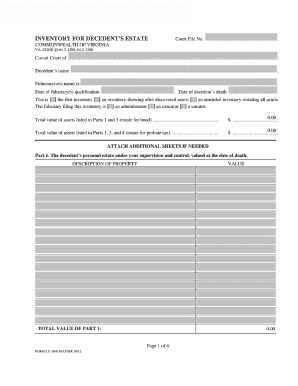
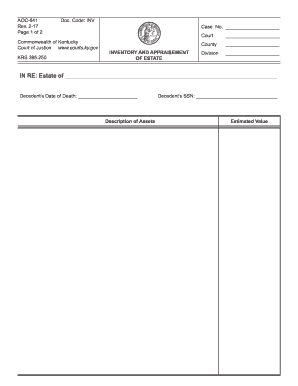
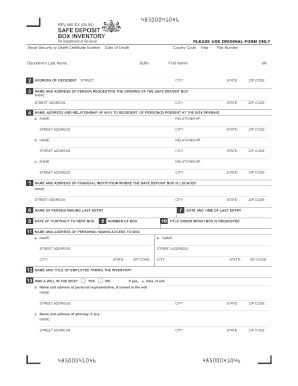
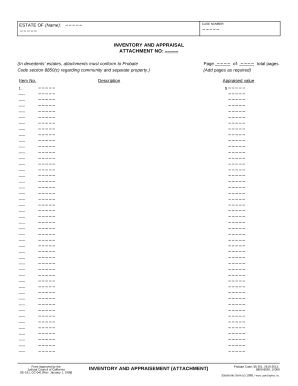
How To Take Inventory of an Estate Identify the Assets. The first step involves listing all the assets that are part of the individuals estate. Note Details of Assets. Once you have a general list of the assets, the next step is to gather information about them. Appraise the Assets. Making a List of Debts and Liabilities.
Letters Probate and Letters of Administration are court orders that prove the authority of the person or persons named therein to deal with the property of the deceased person. Letters Probate are granted when the deceased left a will in which he or she named an executor.
Simple estates might be settled within six months. Complex estates, those with a lot of assets or assets that are complex or hard to value can take several years to settle. If an estate tax return is required, the estate might not be closed until the IRS indicates its acceptance of the estate tax return.
Firstly, if the estate has outstanding debts or financial obligations, the executor may hold funds to settle these. Secondly, in cases of legal disputes or challenges to the wills validity, withholding funds might be necessary until these issues are resolved.
The inheritance process in Canada can be somewhat long and complicated, depending on the complexity of the deceased persons estate. It may last anywhere on average between six to 18 months, so youll need to be patient.
For a simple estate, the executor is granted one year from the date of death or one year from probate (more on that later) to distribute assets such as property, gifts, and cash to beneficiaries.
The inventory of a decedents estate should include a comprehensive list of all assets and their estimated values. This should cover both real property (land and buildings), and personal property (movable possessions like a vehicle).