




01. Edit your ontario rental application form 410 online
Type text, add images, blackout confidential details, add comments, highlights and more.

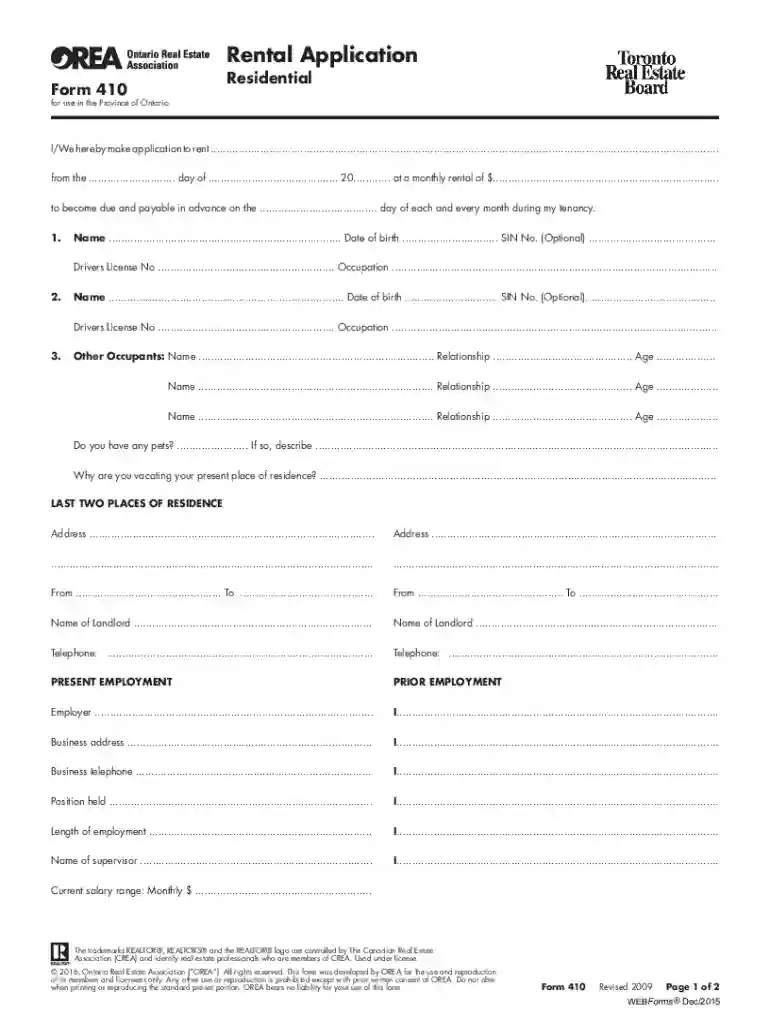
Type text, add images, blackout confidential details, add comments, highlights and more.

Draw your signature, type it, upload its image, or use your mobile device as a signature pad.

Send form 410 rental application via email, link, or fax. You can also download it, export it or print it out.
The Ontario 410 Rental Application is a standardized form used primarily by landlords and property managers in Ontario to assess potential tenants. This form collects essential information from applicants that includes:
The primary purpose of this document is to help landlords make informed decisions based on financial capacity and reliability of applicants before signing a lease agreement.
Using a standardized rental application, such as the Ontario 410, helps streamline the tenant screening process. It allows for consistent collection of the necessary data while safeguarding against discrimination. This uniformity benefits both parties: landlords get vital information for evaluating applicants, and tenants understand what is needed for consideration.
Completing the Ontario 410 rental application accurately is crucial for potential tenants who want to secure rental housing. The steps are straightforward and involve the following:
Before finalizing, review the completed application for any errors or missing information. Comprehensive submissions ensure a smoother approval process. Once satisfied, submit the application according to the landlord’s specified methods, which may include electronic submission, mail, or in-person delivery.
Understanding the key components of the Ontario 410 rental application is pivotal for an efficient application process. The major sections include:
Additionally, the form usually contains a section for consent, which allows the landlord to conduct credit checks or contact listed references, ensuring the verification of the provided information.
The usage of the Ontario 410 rental application is widespread among various stakeholders in the rental process. This includes:


Completing the Ontario 410 can also benefit tenants. It provides a structured way to present their credentials and rental history, which can aid in securing a desirable rental property.
The legal framework surrounding rental applications, including the Ontario 410, is governed by specific rental laws in Ontario. Key legal aspects include:
Landlords and property managers should ensure compliance with these legal requirements to avoid potential liabilities and foster trust with applicants. This may involve proper training on the use of the rental application form and implementing fair practices throughout the tenant selection process.
Practical use cases for the Ontario rental application showcase how landlords and tenants can benefit from the process:
Landlord Scenario: A landlord looking to fill a vacancy posts the rental listing and receives several applications. By using the Ontario 410, they can systematically evaluate each applicant’s qualifications based on their employment status and rental history.
Tenant Scenario: An individual applying for a new apartment ensures they have all necessary documents, including the completed Ontario 410 application. They provide accurate information to present themselves as reliable applicants, significantly improving their chances of securing the rental property.
In some cases, modifications might be made to the Ontario 410 to suit specific property types, like shared housing or corporate rentals. Understanding how to adjust the document can enhance compliance with unique property requirements or landlord preferences.
The comprehensive understanding of the Ontario 410 rental application—from its definition to practical examples—equips all parties involved in the rental process. An informed approach to filling out and submitting the application can lead to favorable outcomes for both tenants and landlords.
At DocHub, your data security is our priority. We follow HIPAA, SOC2, GDPR, and other standards, so you can work on your documents with confidence.



rental vehicle at a minimal daily charge. If you need a rental, it is Ontario N9A 4H6. Phone: (800) 465-2001 English / (800) 387-9983 French. InRead more
Application of the Program requirements to the Development is proposed as follows: A. The Applicant will offer a minimum of 25% of the units for rent toRead more


