




Here's how it works

01. Edit your court pleading format online
Type text, add images, blackout confidential details, add comments, highlights and more.

02. Sign it in a few clicks
Draw your signature, type it, upload its image, or use your mobile device as a signature pad.

03. Share your form with others
Send pleading document via email, link, or fax. You can also download it, export it or print it out.
How to use or fill out pleading format with our platform

- Click ‘Get Form’ to open the pleading format in the editor.
- Begin by filling in the header section, which includes the names and titles of the parties involved, such as 'Complainant' and 'Respondents'. Ensure all names are spelled correctly.
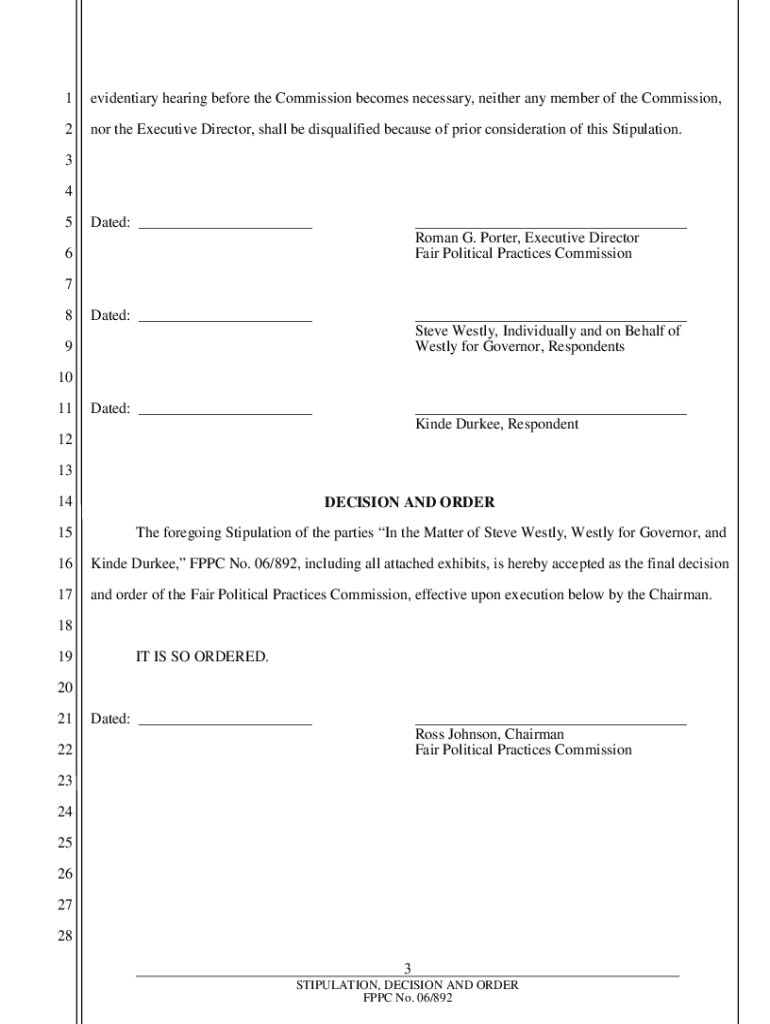
- Proceed to the 'Stipulation' section. Here, clearly state the agreement between parties. Use concise language to summarize any factual and legal issues being resolved.
- In the next part, detail any violations or failures to report as outlined in the document. Number each violation for clarity.
- Complete the 'Decision and Order' section by confirming acceptance of terms. Ensure that all signatures are added where indicated, including dates.
Start using our platform today for free to streamline your document editing and signing process!
Fill out pleading format online
It's free
It's free
See more pleading format versions
We've got more versions of the pleading format form. Select the right pleading format version from the list and start editing it straight away!
| Versions | Form popularity | Fillable & printable |
|---|---|---|
| 2009 | 4.8 Satisfied (50 Votes) |
Security and compliance
At DocHub, your data security is our priority. We follow HIPAA, SOC2, GDPR, and other standards, so you can work on your documents with confidence.
Learn more




