



01. Edit your form online
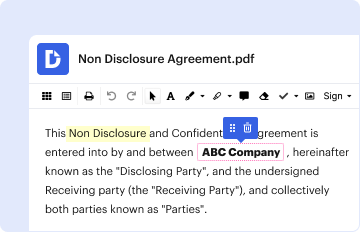
Type text, add images, blackout confidential details, add comments, highlights and more.

Type text, add images, blackout confidential details, add comments, highlights and more.

Draw your signature, type it, upload its image, or use your mobile device as a signature pad.

Send it via email, link, or fax. You can also download it, export it or print it out.
The Alaska Federal-Based Credits refer to a specific set of tax credits that are calculated based on federal guidelines and then applied to Alaska state taxes. Primarily used during tax filings, these credits allow taxpayers within Alaska to offset their state tax liabilities by leveraging federal tax benefits. It's crucial to understand that these credits align with both federal and state regulations, offering potential reductions on taxes owed to the state of Alaska.
These credits are rooted in various aspects of federal tax incentives and can significantly impact the net tax liability for individuals and businesses. By understanding the interplay of federal and state tax laws, taxpayers can optimize the credits they claim, ensuring full compliance while minimizing financial burdens.
Determining eligibility for Alaska Federal-Based Credits is the first step in utilizing these benefits. Generally, these credits are available to individuals and businesses that engage in qualifying activities during the tax year. For instance, businesses that invest in research and development or energy-efficient practices might qualify for specific credits.
Specific guidelines outline which federal credits can be used to off-set state taxes in Alaska. It is crucial to meet all outlined federal requirements for each respective credit to apply them to your state taxes. Eligibility often involves adherence to both state-specific regulations and overarching federal criteria.


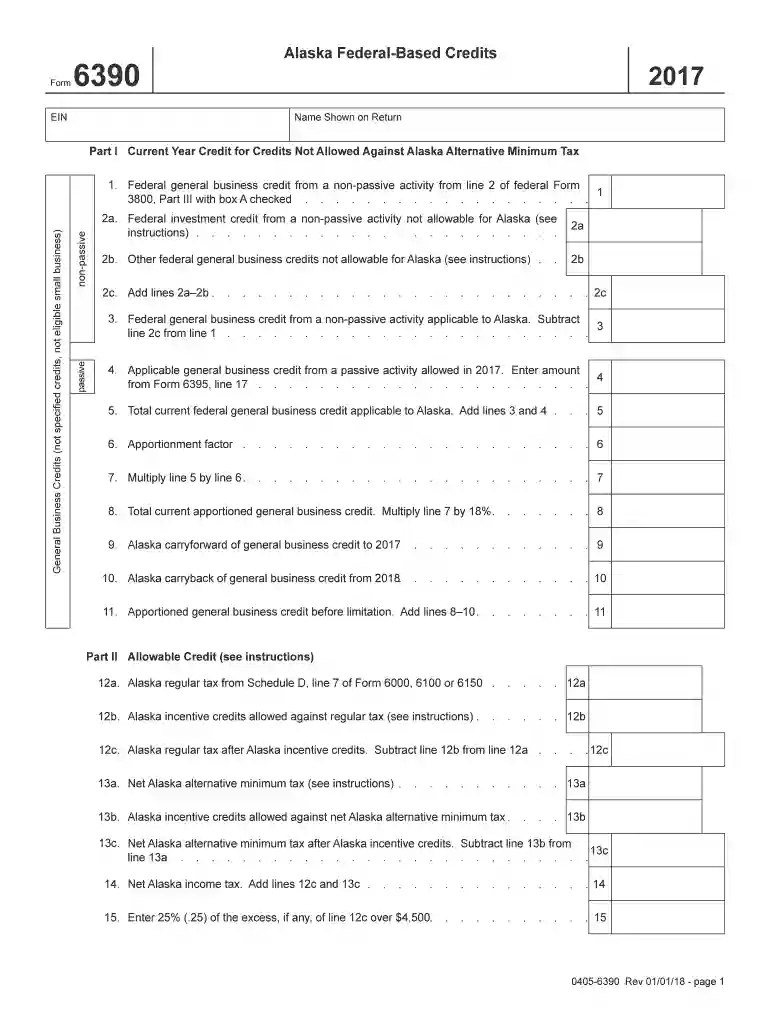
Acquiring the Alaska Federal-Based Credits requires precise documentation and adherence to a systematic application process. Begin by collecting all necessary federal tax forms that pertain to potential credit applications. Next, complete Form 6390, which is crucial for applying these federal-based credits against state taxes.
Form 6390 involves inputting detailed financial data and credit apportionments related to both passive and non-passive business activities. Ensure all documentation aligns with federal tax filings to avoid discrepancies. It's prudent to consult with a tax advisor to navigate complex tax scenarios and ensure accurate submissions.
Using Alaska Federal-Based Credits legally involves ensuring that all criteria are met consistently with both state and federal tax guidelines. This includes not only claiming legitimate costs and investments but also maintaining detailed records as evidence.
Taxpayers are obliged to adhere to relevant laws and avoid misrepresentation. Legal compliance also involves submitting accurate documentation within specified timelines to avoid interest charges or penalties.
IRS guidelines play a pivotal role in the application of Alaska Federal-Based Credits. Each federal credit has specific criteria outlined by the IRS, influencing the state-level application. To align with federal rules, taxpayers need to comprehend and apply these guidelines meticulously.
The IRS's evolving regulations necessitate staying informed on updates, especially regarding eligibility and documentation requirements. Following IRS publications ensures taxpayers leverage maximum benefits while maintaining compliance.
Adhering to filing deadlines is critical when claiming Alaska Federal-Based Credits. For the 2017 tax year, documentation, including Form 6390, should be submitted alongside state tax returns by April 15 of the following year.
Missing deadlines can result in disqualification from credits or imposition of penalties. It's essential to be aware of any extensions or interim submissions that may be required by either federal or state tax authorities.
Consider a tech company in Alaska engaging in substantial research and development. Such activities qualify for federal research credits, which can translate into Alaska state credits, reducing the company's state tax liabilities.
Similarly, a manufacturing firm implementing energy-efficient systems could claim federal energy credits. These credits would then lower the company's state taxes, illustrating leveraging federal initiatives to gain state benefits.
Applying these credits requires strategic planning, ensuring all potential benefits are maximized under both federal and state provisions.
We've got more versions of the Alaska Federal-Based Credits form. Select the right Alaska Federal-Based Credits version from the list and start editing it straight away!
| Versions | Form popularity | Fillable & printable |
|---|---|---|
| 2025 | 4.7 Satisfied (46 Votes) | |
| 2024 | 4.3 Satisfied (42 Votes) | |
| 2023 | 4.8 Satisfied (22 Votes) | |
| 2022 | 4.8 Satisfied (49 Votes) | |
| 2021 | 4.9 Satisfied (24 Votes) | |
| 2020 | 4.3 Satisfied (78 Votes) | |
| 2019 | 4.4 Satisfied (212 Votes) | |
| 2019 | 4.3 Satisfied (88 Votes) | |
| 2017 | 4.2 Satisfied (29 Votes) | |
| 2015 | 4.3 Satisfied (121 Votes) |
At DocHub, your data security is our priority. We follow HIPAA, SOC2, GDPR, and other standards, so you can work on your documents with confidence.
An Act relating to the interest rate applicable to certain amounts due for fees, taxes, and payments made and property delivered to the Department of Revenue.
Mar 14, 2023 The University of Alaska can only supply the information to the student because of the federal family education rights and privacy act (FERPA).
Aug 28, 2021 Fracking takes place regularly on about 20 percent of conventional wells in Alaska, according to EnergyWire in January 2013.


