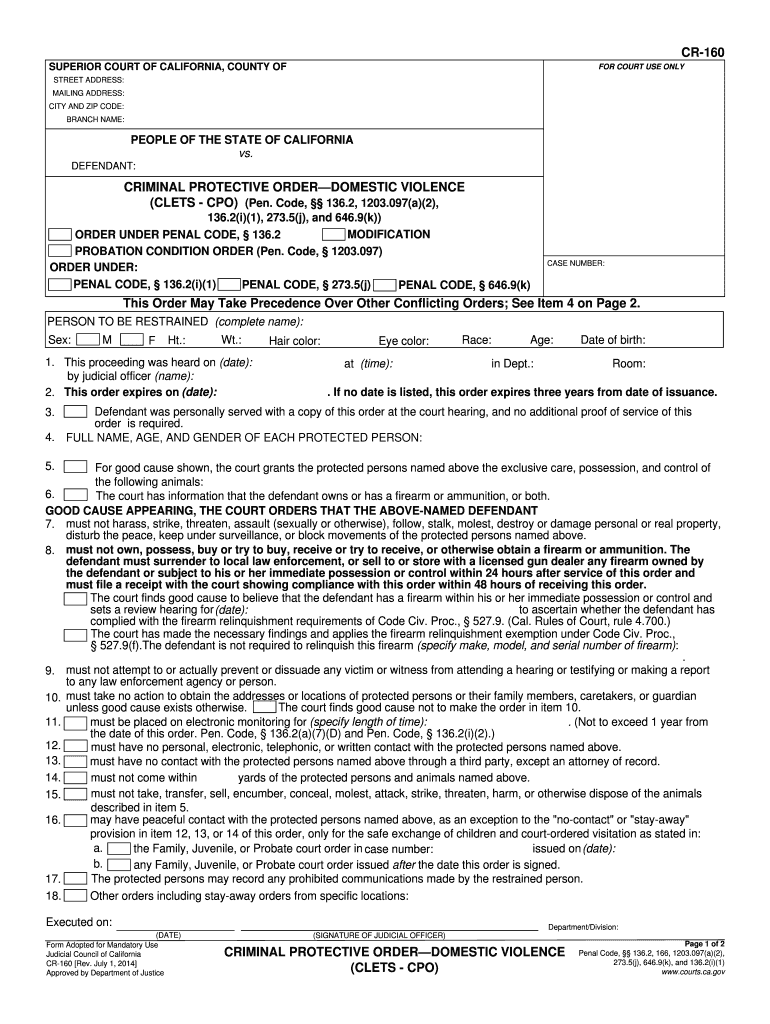







Definition and Meaning
The "child domestic abuse document 2014 form" is a legal document typically used by courts to outline protective measures for children involved in domestic abuse cases. It serves as a crucial tool for ensuring the safety and well-being of minors who may be exposed to violent or abusive environments. This form includes specific orders aimed at preventing contact between a child and an alleged abuser and may encompass directives regarding child custody or visitation rights in the context of domestic violence situations. By clearly detailing the legal restrictions and conditions imposed, the form helps enforce the protection of vulnerable children.
How to Use the Child Domestic Abuse Document 2014 Form
To effectively utilize the child domestic abuse document 2014 form, it is essential first to understand its components and fill out the required sections accurately. Typically, a legal professional or court official will facilitate this process, guiding the parties involved through the necessary steps to ensure comprehensive protection for the child. Users must accurately fill in personal details, specify the nature of the abuse, and outline any requested protective orders. The form is then submitted to the pertinent legal authority, often accompanied by other documentation that supports the claims of abuse, to seek a judicial ruling on the protective measures outlined.
How to Obtain the Child Domestic Abuse Document 2014 Form
Individuals seeking access to the child domestic abuse document 2014 form can obtain it through several channels, primarily via local court offices or their websites. Legal aid organizations and family law attorneys also provide access to these forms and can offer additional guidance on how to complete them. In the United States, each state might have its version of the document, reflecting localized legal requirements and procedures. It is crucial to ensure that the correct version of the form is used, as state-specific nuances can impact the protection's legality and enforcement.
Steps to Complete the Child Domestic Abuse Document 2014 Form
- Gather Required Information: Collect all necessary details related to the child, the alleged abuser, and any incidents of domestic abuse.
- Complete Personal Details: Fill out sections pertaining to the identities and relationships of the involved parties.
- Describe the Abuse: Provide a detailed account of the abuse, including dates, locations, and specific incidents, to substantiate the need for legal protection.
- Specify Protective Orders: Indicate the type of restrictions or protective measures being sought, such as no-contact orders or custody modifications.
- Review and Sign: Ensure all information is accurately filled out, and sign the document. Attestation by a legal authority or witness may be required.
- Submit the Form: File the completed form with the appropriate court authorities, as specified by state or local guidelines.
Legal Use of the Child Domestic Abuse Document 2014 Form
The child domestic abuse document 2014 form is used legally to seek a protective order from the court aimed at safeguarding children from domestic violence. It activates legal measures to prevent further abuse or contact between a child and an individual named in the form. Once submitted and approved, the form serves as a legally binding document that can be enforced by law enforcement agencies, providing assurances that any violations will have legal repercussions. The use of this document must adhere strictly to judicial guidelines to ensure its legal efficacy and protect the affected child.
Key Elements of the Child Domestic Abuse Document 2014 Form
- Parties Involved: Identification of the child, petitioner, and alleged abuser.
- Nature of Abuse: Detailed descriptions of the abuse or threats faced by the child.
- Requested Protections: Specific protective measures or restrictions, such as no-contact orders or custody arrangements.
- Legal Endorsements: Signatures and stamps from legal authorities to validate the document's authenticity.
- Compliance Conditions: Clear instructions on how the order should be enforced and consequences for violations.
State-Specific Rules for the Child Domestic Abuse Document 2014 Form
State-specific rules can significantly affect the use and implementation of the child domestic abuse document 2014 form. Different jurisdictions may have unique procedures for filing such forms, variations in the protective measures that can be requested, and specific requirements for evidence or legal representation. Understanding these rules is vital for effectively leveraging the form to secure protective measures. It is advisable to consult with legal professionals who understand the state-specific nuances to ensure compliance and maximize the form's efficacy.
Who Typically Uses the Child Domestic Abuse Document 2014 Form
This form is predominantly used by parents, guardians, or legal representatives seeking legal protection for children under threat of domestic abuse. It might also be utilized by social service agencies that intervene in domestic violence situations to safeguard affected minors. Family law attorneys often assist in filing these forms, ensuring they meet legal standards and adequately address the child's protective needs. Additionally, domestic violence advocates may provide support and resources to individuals during this process, offering guidance through each step.