




01. Edit your intermountain healthcare doctors note online
Type text, add images, blackout confidential details, add comments, highlights and more.

Type text, add images, blackout confidential details, add comments, highlights and more.

Draw your signature, type it, upload its image, or use your mobile device as a signature pad.

Send intermountain healthcare doctors note template via email, link, or fax. You can also download it, export it or print it out.
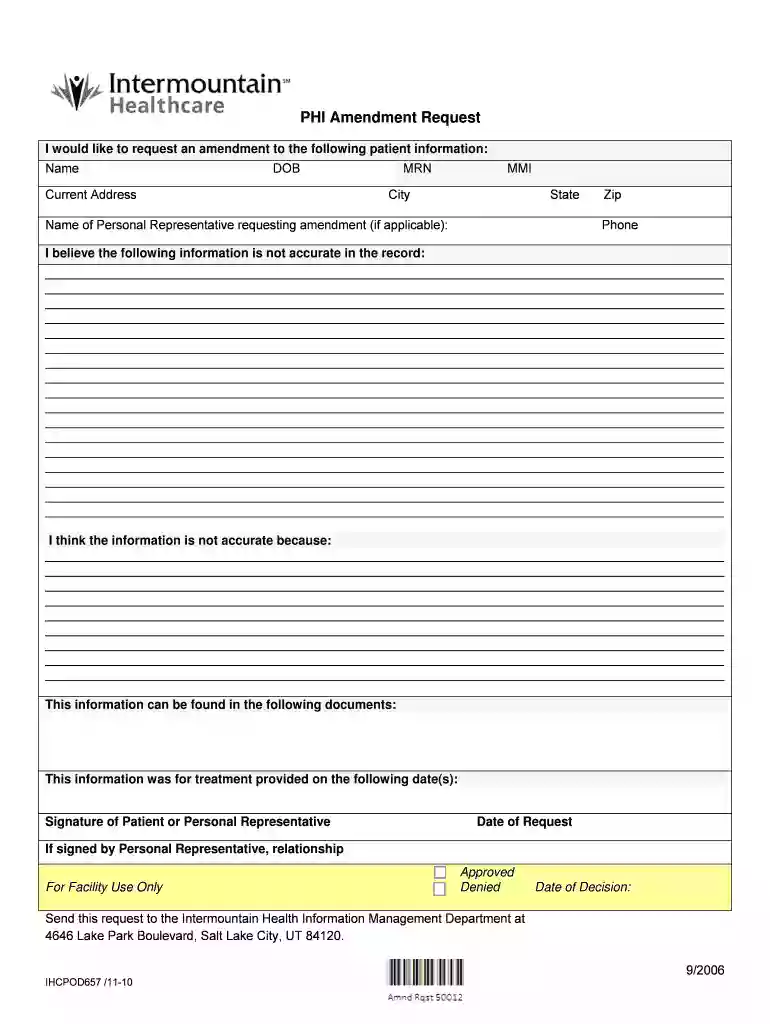
The PHI Amendment Request is a formal document that patients can utilize to request changes to their protected health information (PHI) held by Intermountain Healthcare. The purpose of this request is to address discrepancies or inaccuracies in patient records, ensuring that the information reflects the true and current state of the individual's health information. PHI encompasses any health-related data that can identify a patient, such as medical history, treatment details, and billing information.
This amendment request is important because it provides patients the right to correct any potential errors in their healthcare records, which may include incorrect information about diagnoses, treatment options, prescribed medications, or other medical details. By allowing amendments, Intermountain Healthcare supports its commitment to patient accuracy and empowerment, enabling individuals to manage their health data actively.
Completing the PHI Amendment Request involves several key steps that ensure the form is filled out accurately and submitted properly. Following these steps will facilitate a smoother amendment process.
Obtain the Form: Access the PHI Amendment Request form from Intermountain Healthcare's official website or request it directly from a healthcare provider. It’s crucial to ensure that you have the most recent version of the form.
Fill Out Patient Information: Provide accurate personal details, including your full name, date of birth, and patient identification number, if applicable. This section establishes your identity and association with the health records in question.
Describe the Requested Amendment: Clearly specify the part of your health information that you believe is incorrect or requires amendment. Detail the inaccuracies and provide explicit corrections or modifications. Specificity is essential to facilitate the review process.
Provide Supporting Documentation: If applicable, include documents that justify your request. This could be prior test results, diagnoses from other providers, or any other relevant information supporting the necessity for the amendment.
Sign and Date the Form: Confirm your acknowledgment and request for amendment by signing and dating the form. Your signature verifies the authenticity of the request.
Submit the Form: Choose a submission method—this could be online, by mail, or in person. Ensure that your submission adheres to Intermountain Healthcare's specified guidelines for processing.
Await Confirmation: After submission, you will receive confirmation of your request. Intermountain Healthcare will then review your amendment request, typically within a specified timeframe.
By diligently following these steps, you can enhance the chances for a successful amendment to your health records.
Understanding specific terminology associated with the PHI Amendment Request can significantly aid in navigating the process. Here are key terms:
Protected Health Information (PHI): Any health information that can be linked to a specific individual, including medical records, treatment history, and billing information.
Amendment: A change or correction made to existing health records to ensure accuracy and completeness.
HIPAA: The Health Insurance Portability and Accountability Act, a federal law that establishes rights for patients to access and amend their health information.
Requestor: The individual submitting the PHI Amendment Request, typically the patient or their designated representative.
Covered Entity: An organization subject to HIPAA regulations, such as healthcare providers or health plans, which maintains PHI.
Response Timeframe: The duration within which the healthcare institution must respond to an amendment request, often stipulated by HIPAA regulations.
Understanding these terms will enhance comprehension of your rights and responsibilities regarding health information and the amendment process.
The legal framework surrounding the PHI Amendment Request is based largely on regulations set forth by the Health Insurance Portability and Accountability Act (HIPAA). Under HIPAA, patients possess the right to request amendments to their PHI maintained by a healthcare provider. Legal use includes adhering to specific guidelines:
Right to Request: Patients can request amendments if they believe their PHI is inaccurate or incomplete. This covers information from various sources, such as previous treatments, notes from doctors, or diagnostic test results.
Criteria for Approval: Intermountain Healthcare may deny requests if the information is accurate and complete, not created by the entity maintaining it, or if it is not part of the designated record set. Understanding these criteria is essential before submitting a request.
Response Obligations: Covered entities are legally obligated to respond to amendment requests within a specified timeframe, typically 30 days. Failure to do so can lead to HIPAA violations.
This framework ensures that patients are empowered while also balancing the healthcare provider's need to maintain accurate and reliable records.
The PHI Amendment Request is typically used by various groups of individuals who wish to amend their health records. Understanding the primary users of this form provides insight into who may benefit the most.
Current Patients: Individuals actively receiving treatment from Intermountain Healthcare who have noticed inaccuracies in their records are the most common users.
Former Patients: Individuals who have previously received care and wish to amend information from their past records may also utilize this request.
Parents or Guardians: Legal guardians of minors or individuals unable to make healthcare decisions may submit an amendment request on their behalf to ensure that records accurately reflect the minor's health status.
Health Advocates: Representatives or advocates for patients, such as social workers or legal representatives, may assist in submitting the amendment request, ensuring that patients receive proper care and their records reflect accurate information.
These users are often focused on maintaining the integrity of their health data to ensure correct treatment and management moving forward.


We've got more versions of the intermountain healthcare doctors note form. Select the right intermountain healthcare doctors note version from the list and start editing it straight away!
| Versions | Form popularity | Fillable & printable |
|---|---|---|
| 2006 | 4.9 Satisfied (56 Votes) |
At DocHub, your data security is our priority. We follow HIPAA, SOC2, GDPR, and other standards, so you can work on your documents with confidence.


