







Definition and Purpose of the NM PTE Return
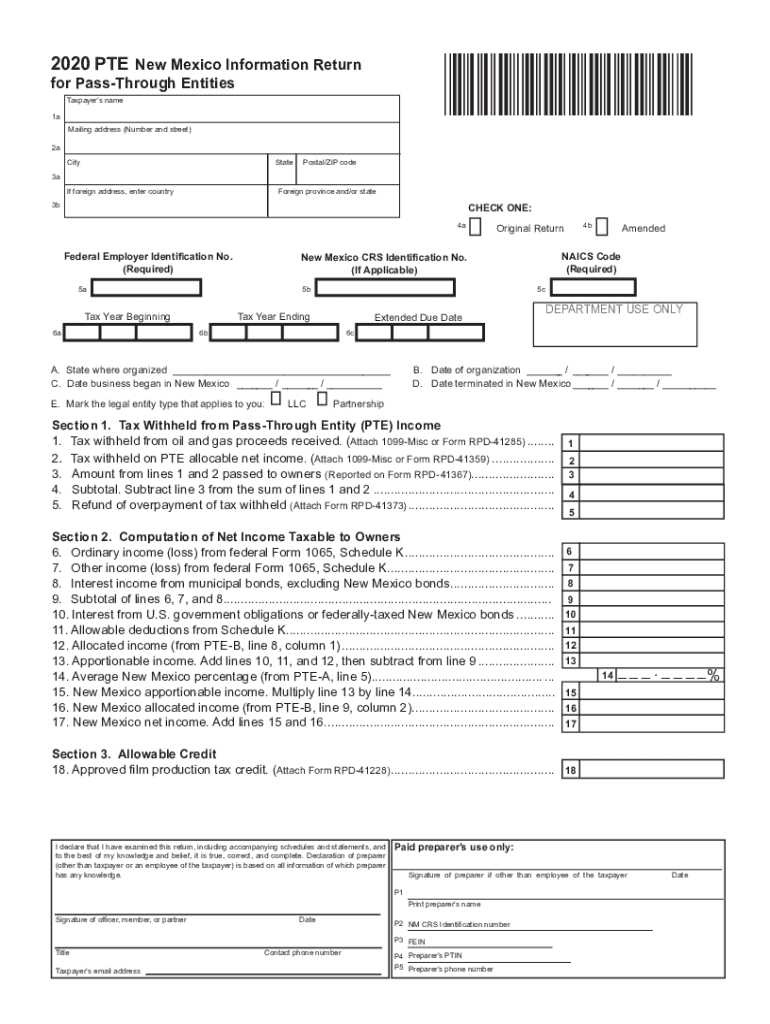
The New Mexico PTE Return, also known as the New Mexico Information Return for Pass-Through Entities, is a state tax form specifically designed for reporting by pass-through entities such as limited liability companies (LLCs) and partnerships. This form is an essential component for these entities to comply with New Mexico's tax regulations. It focuses on tax reporting requirements including details on tax withheld from income, computation of net taxable income for owners, allowable credits, and apportionment factors specific to New Mexico.
Essential Features
- Entity Reporting: The form requires entities to report on their organizational structure, tax year, and income sources.
- Income Calculations: It involves detailed computation of the net taxable income for each owner of the pass-through entity.
- Credits and Deductions: The form allows for reporting of any applicable tax credits and deductions.
How to Use the NM PTE Return
This form is pivotal in ensuring compliance with New Mexico's taxation rules for pass-through entities. It serves as a comprehensive record of financial activities, helping both the entity and its owners to determine tax liabilities accurately. Users need to understand each section of the form, including income calculations and credit applications, to properly fill it out.
Completing Important Sections
- Income Reporting: Provide detailed records of gross receipts and deduct any eligible business expenses.
- Tax Withholding: Clearly indicate any taxes withheld at source, ensuring accurate reporting.
- Apportionment Factors: Properly document the apportionment of income and expenses to New Mexico if the entity operates in multiple states.
Steps to Complete the NM PTE Return
Completing the NM PTE Return requires careful attention to each section of the document to ensure full compliance.
Detailed Instructions
- Gather Necessary Financial Information:
- Collect all financial documents including income statements, balance sheets, and previous tax returns.
- Calculate Net Income:
- Determine the total income by consolidating revenue figures and subtracting allowable business expenses.
- Complete Owner Information:
- Include detailed information about each owner, such as their share of income and any specific deductions applicable.
- Apply Credits and Deductions:
- Compute any tax credits and deductions to affordably reduce the tax liability.
Legal Use of the NM PTE Return
Filing the NM PTE Return is a legal obligation for pass-through entities operating in New Mexico. Failure to complete and submit the form accurately could result in penalties or fines.
Compliance Requirements
- Timely Filing: Ensure the form is filed within the stipulated deadline to avoid late fees.
- Accurate Information: Each section must be accurately completed to comply with state laws.
- Supporting Documentation: Maintain records verifying the entries on the form to safeguard against audits.
State-Specific Rules for the NM PTE Return
New Mexico enforces unique tax laws that directly impact how the NM PTE Return should be completed.
Particular Considerations
- Apportionment Rules: Understand how income is apportioned to New Mexico, especially for entities with operations across multiple states.
- Credit Specificity: Be aware of state-specific tax credits that can be claimed on this form, such as the Angel Investment Credit.
- Local Tax Regulations: Stay updated with any changes in New Mexico’s tax regulations that could affect the form's completion.
Important Terms Related to NM PTE Return
Understanding specific terminology is critical for accurately completing the form, ensuring compliance, and optimizing tax liabilities.
Key Terms
- Pass-Through Entity (PTE): A business structure where tax liabilities pass through to the individual owners rather than being taxed at the corporate level.
- Apportionment Factor: A percentage used to determine the amount of income attributable to New Mexico.
- Tax Withholding: The portion of income withheld for taxes, which must be reported on this form.
Penalties for Non-Compliance
Non-compliance with filing requirements for the NM PTE Return can lead to financial repercussions.
Potential Consequences
- Monetary Fines: Fines for late submission or inaccurate information.
- Legal Issues: Potential audits or legal proceedings if the entity fails to comply repetitively.
- Interest Charges: Accumulated interest on taxes not paid by the due date.
Form Submission Methods for the NM PTE Return
Choosing the right method for submitting the NM PTE Return is essential to ensure timely and accurate filing.
Available Options
- Online Filing: Use the New Mexico Taxation and Revenue Department's online portal for electronic submissions, which offers a quicker processing time.
- Mail: Physical submissions are also accepted; ensure all documents are included and properly addressed.
- In-Person: Directly submit forms at a local New Mexico tax office to ensure receipt and correctness.
Required Documents for the NM PTE Return
Gathering the appropriate documents before completing the form ensures information accuracy and completeness.
Necessary Documentation
- Financial Statements: Income statements and balance sheets from the applicable tax year.
- Previous Tax Returns: Last year's tax documents for reference.
- Owner Agreements: Details on any owner-specific deductions or agreements that may affect tax liability.
Business Entity Types for NM PTE Return
The NM PTE Return is specifically designed for various pass-through entities, making it essential for certain business structures.
Eligible Entities
- Limited Liability Companies (LLCs): Taxed as pass-through entities where income is reported on personal tax returns.
- Partnerships: Similarly required to file the NM PTE Return for distributing income among partners.
- S Corporations: While not the primary focus, they may have to reference elements of this form for state compliance.




