






Definition & Meaning
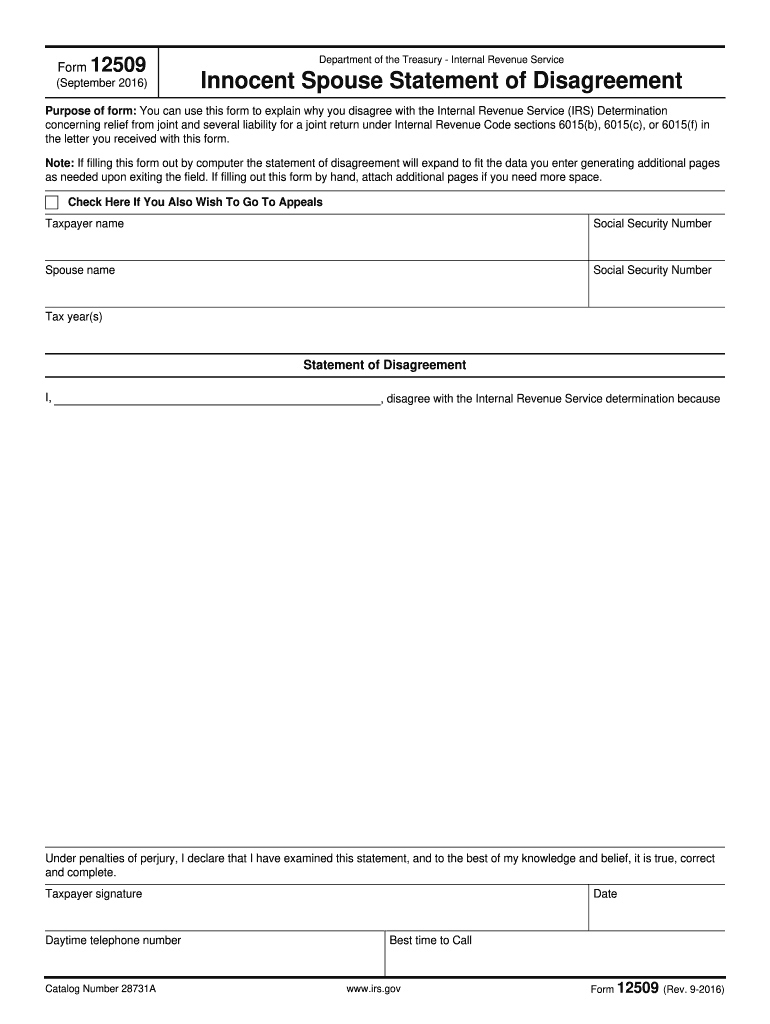
Form 12509, known as the Innocent Spouse Statement of Disagreement, is an IRS document used by taxpayers who wish to contest an IRS decision regarding relief from joint tax liability. This form is crucial for individuals seeking to formally express their disagreement with an IRS determination, ensuring that their concerns are officially recorded and reviewed. The form includes sections for taxpayer and spouse information, the specific tax years in question, and a detailed statement outlining the reasons for disagreement.
Steps to Complete the 12509 IRS 2016 Form
-
Gather Necessary Information: Before starting the form, collect all relevant documents related to your tax situation, including joint tax returns and any correspondence with the IRS.
-
Fill Out Personal Details: Enter your full name, social security number, and contact information in the designated fields.
-
Specify Tax Years: Clearly indicate the tax years that are relevant to your disagreement with the IRS's determination.
-
Detail the Disagreement: Provide a concise but detailed explanation of why you disagree with the IRS’s decision. Include evidence or documentation that supports your position.
-
Sign Declaration: Read the declaration carefully and sign under penalty of perjury, confirming that the information provided is true and accurate.
-
Submit the Form: Depending on IRS instructions, send the completed form by mail or submit it through an online portal if available.
Why Use the 12509 IRS 2016 Form
This form is essential for individuals who believe they should not be held responsible for tax liabilities on a joint return due to circumstances beyond their control. Using Form 12509 allows taxpayers to officially contest the IRS’s decision and potentially obtain relief from financial obligations they deem unjust. This process helps ensure fair tax practices and offers a chance to rectify possible errors in IRS decisions.
Legal Use of the 12509 IRS 2016 Form
The form can be used within the legal framework established by the United States tax code. It's a legitimate step in the process for taxpayers seeking relief under the Innocent Spouse provisions. Submissions must be truthful, and any misrepresentation can lead to penalties. Understanding the legal implications and requirements is vital for completing this form accurately.
Key Elements of the 12509 IRS 2016 Form
- Taxpayer Details: Name, social security number, and contact information.
- Tax Years in Question: Documentation of the specific years under dispute.
- Statement of Disagreement: A thorough explanation of why you contest the IRS decision.
- Declaration of Truth: An affirmation signed under penalty of perjury acknowledging the truthfulness of the information provided.
Examples of Using the 12509 IRS 2016 Form
Consider a scenario where a taxpayer, who was unaware of substantial underreported income by their spouse, finds themselves liable for additional taxes. Submitting Form 12509 allows them to request relief by explaining their lack of knowledge and involvement. Another example is a taxpayer who was misled by their spouse about financial matters, leading to incorrect information on their joint return.
IRS Guidelines
The IRS has detailed guidelines that specify who can file this form, under what conditions, and the type of documentation needed. It’s crucial to adhere to these guidelines to increase the chances of a successful outcome. The IRS website and their offices can provide further detail on these stipulations.
Eligibility Criteria
Eligibility primarily revolves around the circumstances where the taxpayer was not aware, and had no reason to be aware, of the inaccuracies in the joint return. Taxpayers must demonstrate that holding them liable would be unfair, given their lack of involvement or knowledge concerning tax discrepancies. Understanding these criteria is vital for a successful application.