
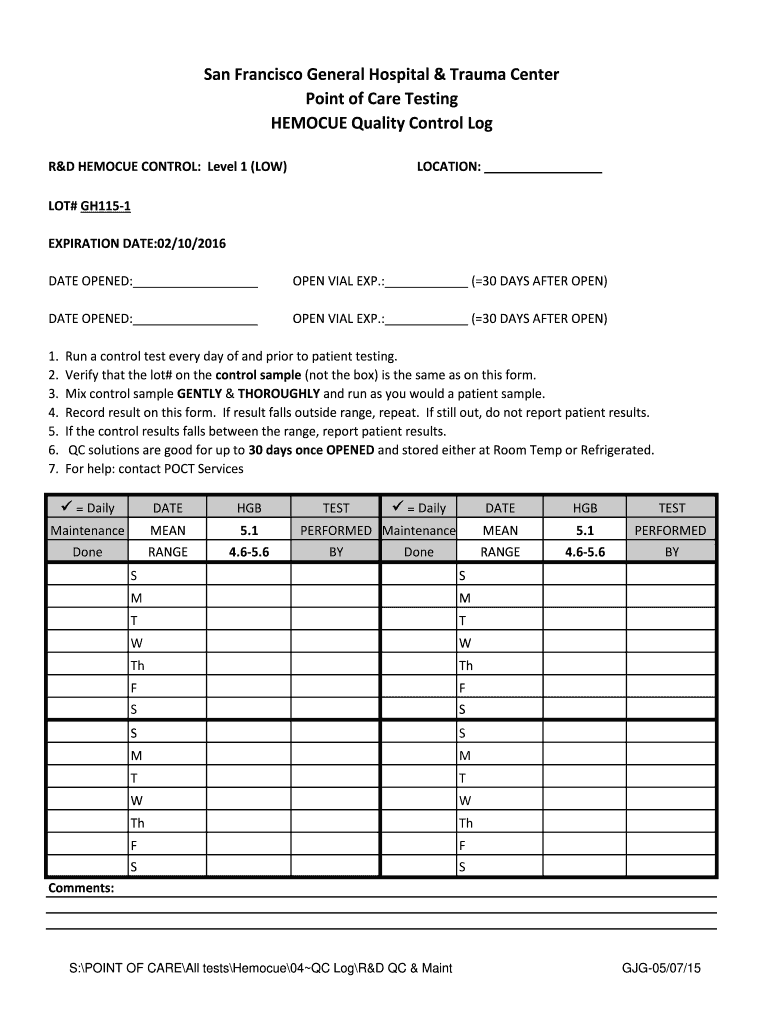







Definition of the HEMOCUE Quality Control Log
The HEMOCUE Quality Control Log is a critical tool used in laboratory settings to ensure the accuracy and reliability of hemoglobin testing. This log is specific to the HEMOCUE testing devices utilized for point-of-care testing. It serves as a formal record to document the quality control (QC) processes that are followed when conducting hemoglobin tests.
A key function of the HEMOCUE Quality Control Log is to track the performance of control samples against established standards. It includes parameters such as target values, acceptable ranges, and the actual results obtained during testing. By documenting these aspects, the log ensures compliance with healthcare regulations and guidelines while also contributing to patient safety and effective treatment decisions.
In addition to maintaining compliance, this log helps practitioners in identifying trends over time with the equipment's performance. Any significant deviations from the expected control results can prompt immediate investigation and corrective actions to prevent erroneous patient results. Ultimately, this log validates the testing processes utilized in clinical decision-making.
Steps to Complete the HEMOCUE Quality Control Log
Accurately completing the HEMOCUE Quality Control Log involves several steps to ensure that all relevant information is correctly recorded.
-
Preparation
Gather necessary materials, including the QC log, control samples, and HEMOCUE testing device. Ensure that you have access to the latest lot numbers and expiry dates for the control materials. -
Perform Control Tests
Conduct the control tests as per the manufacturer's instructions. This typically involves running the specified control samples on the HEMOCUE device and noting the results. -
Record Results
In the HEMOCUE Quality Control Log, fill in the date and time of testing, control lot numbers, the expected target values, and the actual results obtained. Ensure all entries are clear and legible. -
Evaluate Results
Compare the actual test results against the expected target ranges. If the results fall within the acceptable limits, mark the entry as “passed.” If any results are outside the specified range, detail the corrective actions taken in the log. -
Signature Verification
The log should be signed by the individual who performed the quality control tests and possibly a supervisory figure to validate the procedure and results. -
Retention of Records
Maintain copies or digital records of the completed logs for future reference and compliance audits as per institutional or regulatory requirements.
This structured approach helps ensure thorough documentation and supports quality assurance in hemoglobin measurements.
Key Elements of the HEMOCUE Quality Control Log
The HEMOCUE Quality Control Log consists of several key elements that are essential for maintaining proper documentation and ensuring quality control in hemoglobin testing. These elements not only encapsulate the testing procedures but also highlight critical compliance aspects.
-
Date and Time: Each entry must include the specific date and time of the QC tests conducted to accurately reflect the testing timeline.
-
Control Sample Details: Document the lot number and expiry date of each control sample used. This information is vital for traceability and accountability.
-
Expected vs. Actual Results: The log must clearly differentiate between the target (expected) results and the results obtained after testing. This comparison is crucial for assessing the validity of the testing process.
-
Comments Section: A space for notes that may include anomalies, corrective actions taken, or other observations during the testing process. This section assists in further analysis if discrepancies occur.
-
Signature of Personnel: Include signatures to authorize and confirm that the procedures followed were in accordance with established protocols.
-
Review and Finalization: Space for supervisory review or finalization of the log, which can include checks for compliance and quality assurance.
These elements are designed to create a comprehensive account of the quality control measures taken during testing.
Who Typically Uses the HEMOCUE Quality Control Log
The HEMOCUE Quality Control Log is essential for a diverse group of professionals operating within healthcare settings, particularly those involved in diagnostic testing and patient care management.
-
Laboratory Technicians: They are primarily responsible for operating the HEMOCUE devices and conducting the necessary quality control tests. They utilize the log to document their findings and ensure compliance with testing protocols.
-
Point-of-Care Testing (POCT) Teams: These teams often include healthcare providers who implement rapid testing in various environments outside traditional laboratory settings. They rely on the QC log to maintain testing standards.
-
Healthcare Administrators: These individuals monitor compliance with regulatory requirements and ensure that testing procedures align with institutional protocols. They review logged data for trends and quality assurance purposes.
-
Quality Control Officers: They oversee the quality management systems within healthcare organizations. The QC log serves as a tool for reviewing quality assurance practices and addressing any compliance issues.
-
Regulatory Compliance Inspectors: Representatives from regulatory bodies may examine the HEMOCUE Quality Control Log during inspections to ensure adherence to healthcare standards and practices.
By facilitating clear documentation, the log serves as a foundational resource for these professionals to maintain high standards in hemoglobin testing and patient care.


Legal Use of the HEMOCUE Quality Control Log
The legal implications of using the HEMOCUE Quality Control Log extend to various aspects of healthcare compliance and accountability. Proper documentation via this log is crucial for several reasons:
-
Regulatory Compliance: The log assists healthcare providers in adhering to regulatory standards set forth by agencies such as the Food and Drug Administration (FDA) and the Clinical Laboratory Improvement Amendments (CLIA). Keeping detailed records demonstrates compliance during inspections and audits.
-
Legal Accountability: In the event of disputes regarding test results or patient care outcomes, a well-maintained HEMOCUE Quality Control Log can serve as legal documentation that verifies the testing process was conducted correctly and according to protocols.
-
Quality Assurance Evidence: This log acts as a permanent record of quality assurance practices, thus ensuring that proper methodologies were followed in testing. This is critical in defending against any claims of negligence related to patient results.
-
Traceability and Transparency: The log enhances accountability by providing a clear trail of actions taken during testing and quality control processes. This traceability is essential in a legal context should discrepancies arise in patient diagnostics.
-
Protecting Patient Safety: Ultimately, meticulous maintenance of the quality control log contributes to patient safety and care quality. It reassures stakeholders that the healthcare institution maintains high testing standards, enacted through clear documentation.
By ensuring that the HEMOCUE Quality Control Log is utilized correctly, healthcare organizations can protect themselves legally while also enhancing the overall quality of patient care.


