Printable brief pain inventory form 2026

Get Form
bpi score interpretation Preview on Page 1

Here's how it works

01. Edit your bpi score interpretation online
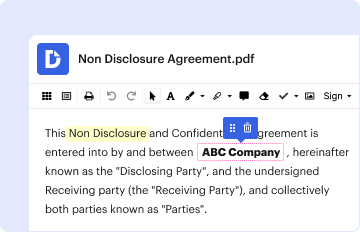
Type text, add images, blackout confidential details, add comments, highlights and more.

02. Sign it in a few clicks
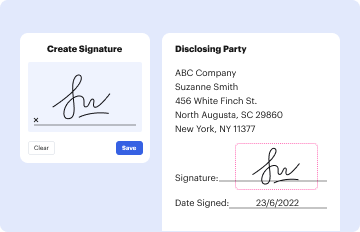
Draw your signature, type it, upload its image, or use your mobile device as a signature pad.

03. Share your form with others
Send brief pain inventory via email, link, or fax. You can also download it, export it or print it out.

How to use or fill out printable brief pain inventory form with our platform

Form edit decoration
9.5
Ease of Setup
DocHub User Ratings on G2
9.0
Ease of Use
DocHub User Ratings on G2
  1. Click ‘Get Form’ to open the printable brief pain inventory form in the editor.
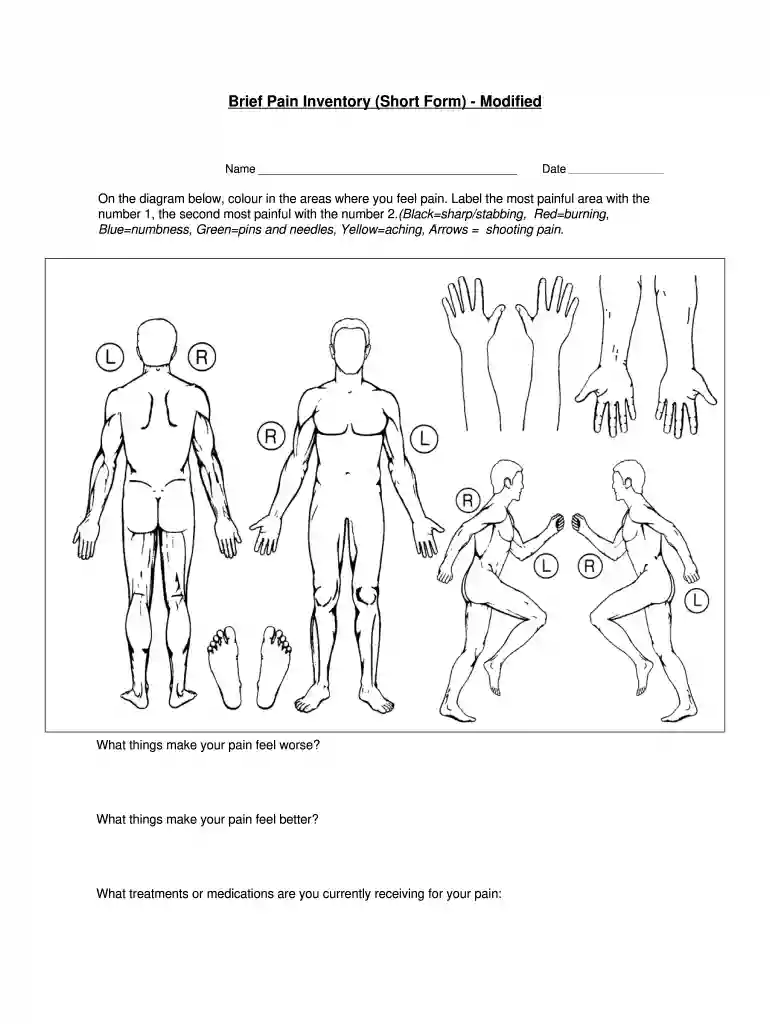
  2. Begin by entering your name and the date at the top of the form. This personal information is essential for tracking your pain assessment.
  3. Use the diagram provided to color in areas where you feel pain. Label these areas according to their intensity, using numbers 1 and 2 for the most painful spots.
  4. In the designated sections, list what aggravates and alleviates your pain. This information is crucial for understanding your pain triggers and relief methods.
  5. Rate your pain levels by circling a number from 0 (no pain) to 10 (worst imaginable pain) for various time frames: worst, least, average, and right now.
  6. Indicate how much relief you have received from treatments or medications by circling a percentage that reflects your experience over the last 24 hours.
  7. Finally, assess how much your pain has interfered with daily activities such as general activity, mood, walking ability, work, relationships, sleep, and enjoyment of life by circling a number from 0 to 10.

Start filling out your printable brief pain inventory form today for free on our platform!

See more printable brief pain inventory form versions

We've got more versions of the printable brief pain inventory form form. Select the right printable brief pain inventory form version from the list and start editing it straight away!
Versions Form popularity Fillable & printable
1997 4.8 Satisfied (259 Votes)
be ready to get more

Complete this form in 5 minutes or less

Get form

Got questions?

We have answers to the most popular questions from our customers. If you can't find an answer to your question, please contact us.
Contact us
The Brief Pain Inventory (BPI) is a multidimensional pain inventory that can reliably provide a measure of the effect of pain on an individuals physical and social functioning. The BPI consists of a nine-part questionnaire and is available in a short (15 items) (Fig. 9.3) and a long format (32 items).
Evaluating cut-off values for mild, moderate, and severe pain resulted in the optimal cut-off being (a) a score of 0 = no pain; (b) 13 = mild pain; (c) 46 = moderate pain; and (d) 7 = severe pain (F-value = 11.8).
The patient is asked to rate their worst, least, average, and current pain intensity, list current treatments and their perceived effectiveness, and rate the degree that pain interferes with general activity, mood, walking ability, normal work, relations with other persons, sleep, and enjoyment of life on a 10 point
Brief Pain Inventory (BPI) Monitors change in both pain intensity and pain interference with many aspects of a persons life throughout a treatment program. (MDC = 1/10, MCID = 2+/10) This is sensitive to the initial severity and the individual circumstances.
Vowles et al. found that the average CPAQ-20 score of chronic pain patients with low acceptance is 29.1 (Standard deviation = 10.8) (17). Thus, standard deviation (SD) multiplied by 1.64 and then plus the average score, which is 46.8, could be used as the cut-off point to distinguish low and high acceptance.

Security and compliance

At DocHub, your data security is our priority. We follow HIPAA, SOC2, GDPR, and other standards, so you can work on your documents with confidence.

Learn more
ccpa2
pci-dss
gdpr-compliance
hipaa
soc-compliance
be ready to get more

Complete this form in 5 minutes or less

Get form

People also ask

For screening purposes, we considered scores 12 indicative of nociceptive pain, scores between 13 and 18 as unclear, and scores 19 indicative of neuropathic-like symptoms.
Scoring Patients are asked to rate their current symptoms, their average experiences of pain, and the minimum and maximum intensities of their symptoms on scales that range from 0 to 10. A total pain severity score can be found by averag- ing these items or a single item can be treated as the primary outcome measure.
The most commonly used version of this scale uses an 11-point numeric rating scale where 0 = no interference and 11 = complete pain-related interference in 7 domains, including general activity, mood, walking ability, normal work including outside the home, relations with others, enjoyment of life, and sleep.

brief pain inventory long form pdf