
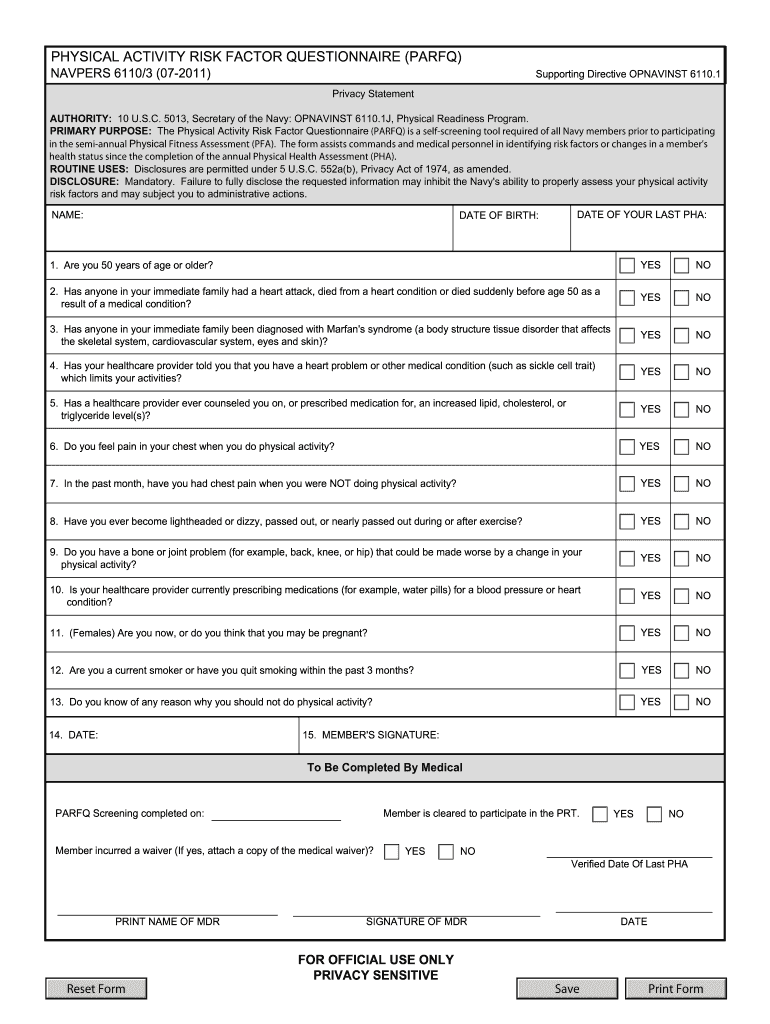







Definition and Meaning of the 6110 3 2011 Form
The 6110 3 2011 form, also known as NAVPERS 6110/3, is a vital document within the United States Navy designed to assess the physical readiness of personnel. This form serves as a comprehensive self-screening tool to identify potential health risk factors that might impact a member's ability to participate in the Physical Fitness Assessment (PFA). It includes a variety of questions related to health history and current physical conditions to ensure the safety and well-being of navy members during rigorous physical training.
The information collected on the 6110 3 2011 form is crucial for service members and command leaders to evaluate individual health risks and ensure proper fitness levels. By systematically addressing health and fitness issues, the form aids in creating a culture of fitness and accountability within the Navy. Moreover, it also fulfills legal requirements tied to the physical readiness program.
Key elements assessed through this form include cardiovascular health, medical conditions, and activity limitations, all of which are critical for determining an individual's readiness for physical performance evaluations. Completing this form accurately is essential for maintaining good standing within the service, as it directly correlates with a member's fitness assessment results.
Who Typically Uses the 6110 3 2011 Form
The 6110 3 2011 form is utilized primarily by active duty Navy personnel, including sailors from various ranks and specialties. It is mandatory for all sailors to complete this form prior to participating in the semi-annual Physical Fitness Assessment (PFA). By requiring all members to self-screen their health status, the Navy promotes accountability and fitness as essential components of military readiness.
Additionally, the form is often used by commanding officers and health personnel to monitor the physical readiness of their teams. Command leaders have the responsibility to ensure that their crew meets the physical standards set by Navy regulations. The gathered data assists in identifying individuals who may require additional medical support or fitness plans, thus fostering a proactive approach towards health and fitness issues.
While primarily geared towards Navy members, the insights from the 6110 3 2011 form can also benefit medical personnel involved in the physical health assessment process. They can use the information to better understand a sailor’s fitness levels, devise tailored fitness regimens, and address any medical concerns that may arise.


Steps to Complete the 6110 3 2011 Form
Completing the 6110 3 2011 form requires a systematic approach to ensure all sections are accurately addressed. Below are key steps intended to guide personnel through the completion process:
-
Review the Instructions: Before beginning, read through the form’s instructions to familiarize yourself with what is required. This will help to understand how to answer the questions appropriately.
-
Provide Personal Information: Enter your personal data accurately, including your name, rank, and contact information. Double-check for spelling errors, as this information is used for identification.
-
Assess Medical History: Carefully review and answer the medical questions that pertain to your health status. Be honest about any conditions you have or have had, as this information is critical.
-
Evaluate Physical Activity Levels: Reflect on your current physical activity and training routines. This section often entails evaluating your exercise frequency and type.
-
Complete Required Signatures: Once the form is filled out, ensure that you sign and date the document to confirm its accuracy. Depending on command procedures, you may also need a supervisor's endorsement.
-
Submit the Form: Follow your command's guidelines for submission. Ensure the form is turned in by the specified deadline to avoid any issues with your participation in the PFA.
Through these steps, personnel can ensure their 6110 3 2011 is completed accurately and comprehensively, contributing to individual and overall command readiness.
Key Elements of the 6110 3 2011 Form
Understanding the key elements of the 6110 3 2011 form is critical for navigating the requirements effectively. The form encompasses several main sections, each tailored to gather specific information related to a sailor's physical health:
-
Personal Information: This initial section collects essential identifying information about the service member, such as full name, rank, and contact details.
-
Medical History: Questions in this section encompass a range of health-related topics, including previous surgeries, chronic conditions, medications, and any known allergies.
-
Physical Activity Assessment: Individuals are required to describe their physical activity levels, including the frequency, intensity, and type of exercises they perform routinely.
-
Certification and Signatures: This concluding section requires the service member's signature to certify the accuracy of the information provided. In some cases, it may also require a witness signature or endorsement from a supervising officer.
Understanding these components aids in filling out the form comprehensively and accurately, ensuring compliance with Navy standards.
Important Terms Related to the 6110 3 2011 Form
Familiarity with important terminology associated with the 6110 3 2011 form enhances the understanding of its purpose and implications. Below are some key terms that personnel should know:
-
Physical Fitness Assessment (PFA): A comprehensive evaluation conducted semi-annually to measure the physical fitness of Navy personnel.
-
Self-Screening Tool: A mechanism that allows individuals to assess their health risks and fitness levels through a series of guided questions.
-
Health Risk Factors: Conditions or histories that might predispose an individual to health issues during physical activity.
-
ESIGN Act: A federal law that governs electronic signatures and recognizes their validity in electronic documentation.
-
Risk Assessment: The process of identifying and evaluating potential health risks associated with an individual's physical health and readiness to perform.
Understanding and utilizing these terms contributes to a clearer grasp of the 6110 3 2011 form's significance in maintaining physical fitness within Navy personnel.




