







Definition & Meaning
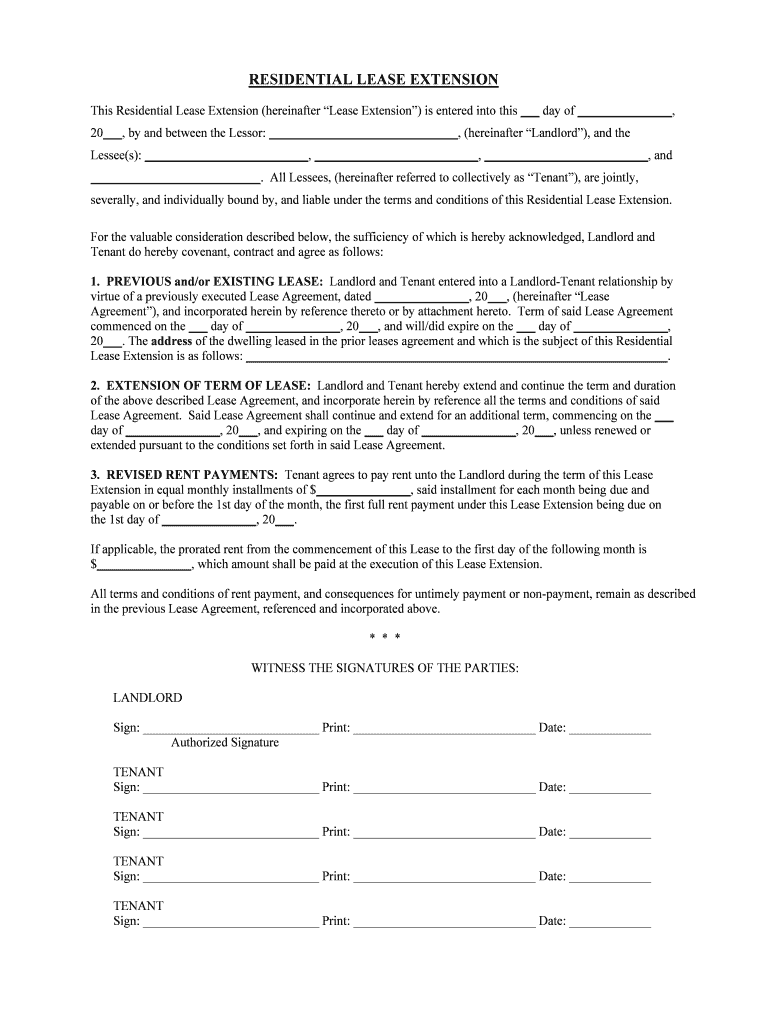
A Texas Residential or Rental Lease Extension Agreement is a legal document used to extend the term of an existing lease for a specific residential property in the state of Texas. The agreement serves as an addendum to the original lease, allowing the landlord and tenant (or lessee) to agree on continuing the rental terms without needing to draft a new lease contract. This extension is ideal for maintaining consistency in living arrangements while avoiding the interruptions or negotiations of drafting a new lease agreement. Such agreements typically outline the extended period term, any rent adjustments, and any altered conditions within the lease timeframe.
How to Use the Texas Residential or Rental Lease Extension Agreement
Using the Texas Residential or Rental Lease Extension Agreement involves several clear steps. Initially, both parties should review the terms of the original lease to ensure compliance and determine changes or updates needed. Afterward, parties should discuss and agree on any new terms, such as the length of the extension, rent modifications, or additional conditions. Once agreed upon, the lease extension form needs to be properly filled out, capturing all new terms. Importantly, both the landlord and tenant(s) need to sign and date the extension to make it legally binding. Copies should be kept by all relevant parties for recordkeeping and future reference.
Steps to Complete the Texas Residential or Rental Lease Extension Agreement
-
Review the Original Lease: Examine the existing lease to identify sections that require updates or clarifications.
-
Negotiate Terms: Discuss with the other party the terms of the extension including rent changes, duration of the extension, and any new conditions.
-
Complete the Form: Fill out the lease extension form, accurately documenting all alterations to the original lease.
-
Signatures: Ensure that all landlords and tenants involved sign and date the form to validate the extension.
-
Distribute Copies: Provide signed copies to each party to maintain personal records and ensure mutual understanding of the updated terms.
Key Elements of the Texas Residential or Rental Lease Extension Agreement
A comprehensive lease extension agreement in Texas typically includes the following:
- Parties Involved: Names and contact information for both the landlord and tenant(s).
- Property Description: Address and property details to confirm the leased premises.
- Extension Term: Clearly defined start and end dates for the extension period.
- Amended Rent: Any changes to the rent amount, including adjustments for extension duration.
- Conditions or Amendments: Additional agreements or modifications introduced during the extension.
- Signatures: Both parties must sign to confirm their agreement with the terms listed.
Legal Use of the Texas Residential or Rental Lease Extension Agreement
In Texas, lease extension agreements are governed by state leasing laws and must comply with the Texas Property Code. Both landlords and tenants should ensure that their lease extension adheres to these requirements to avoid disputes. Legally, the extension agreement should not violate any terms of the original lease unless specifically addressed and mutually agreed upon in writing. Notably, any extension that materially changes the lease terms should be carefully reviewed, potentially with legal counsel, to ensure compliance and validity.
Who Typically Uses the Texas Residential or Rental Lease Extension Agreement
The Texas Residential or Rental Lease Extension Agreement is primarily used by landlords and tenants who wish to continue their rental arrangement beyond the initial lease term. This form is particularly popular among property owners who want to retain reliable tenants without the hassle of concluding an existing lease and starting anew. Additionally, tenants who desire continued residence without moving or renegotiating a new lease benefit from this straightforward extension method.


Examples of Using the Texas Residential or Rental Lease Extension Agreement
Consider a scenario where a tenant has been in good standing with their rental payments and the current lease is nearing expiration. Both parties may decide to extend the lease for an additional 12 months without drafting a whole new document. Another example is when a tenant anticipates a one-time rent increase but prefers remaining in the location, negotiating the extended lease period with a slightly escalated rent. These agreements provide flexibility to modify existing terms while retaining a stable rental relationship.
State-Specific Rules for the Texas Residential or Rental Lease Extension Agreement
In Texas, certain specific rules affect the drafting and enforcement of lease extensions. Landlords must not impose illegal terms that conflict with tenant rights under Texas law, such as integrating non-waivable responsibilities illegally. Additionally, any changes to the terms must be clearly outlined, and all parties should be fully informed of their rights under this extension. Extensions must comply with the broader legal framework, including anti-discrimination laws, tenant protections, and the specific conditions laid out in the original lease.
Penalties for Non-Compliance
Failing to comply with a legally binding Texas Residential or Rental Lease Extension Agreement can have significant consequences. For tenants, non-compliance might result in eviction or forfeiture of the lease extension. For landlords, violations of tenant rights or improper adjustments to the lease terms could lead to legal disputes or penalties enforced by state jurisdiction. It's crucial that both parties fully understand and adhere to the agreed-upon terms to avoid these potential issues.




