







Definition and Meaning
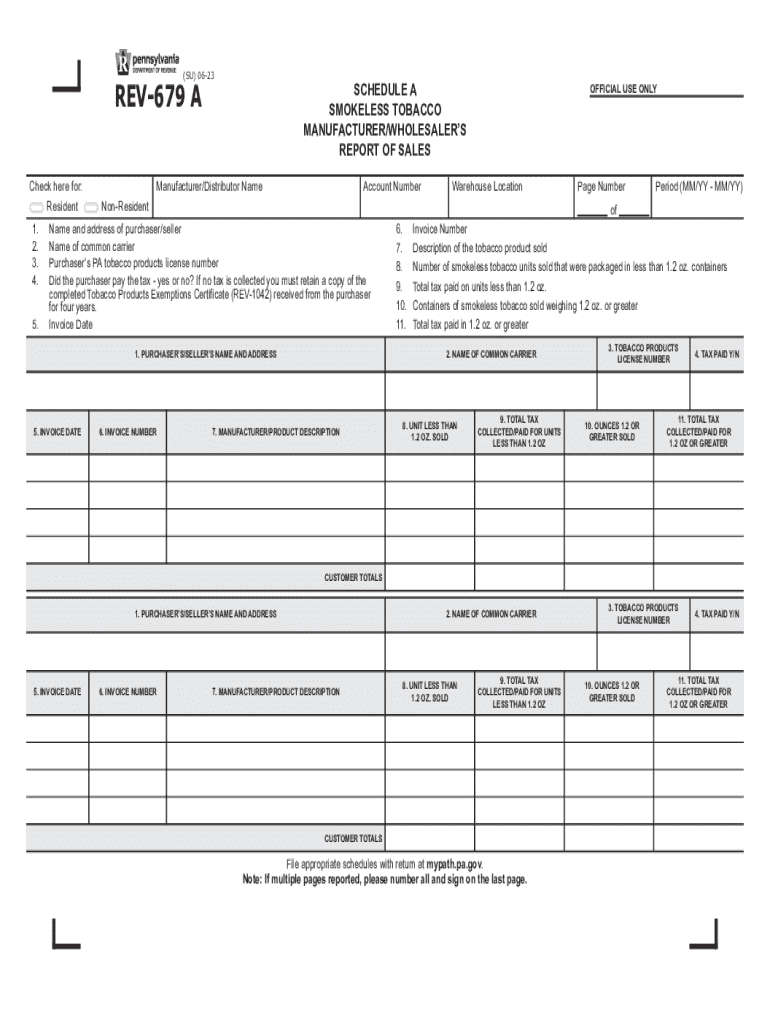
The Smokeless Tobacco Sales Report is a regulatory form used for reporting the sales and distribution of smokeless tobacco products. The report is critical for compliance with federal and state regulations, which aim to monitor and control the distribution of tobacco products to ensure they meet health and safety standards. The form requires detailed documentation of sales figures, types of products sold, and distribution channels.
- Purpose: Primarily used to track sales activities to ensure compliance with taxation and legal obligations.
- Scope: Encompasses various smokeless tobacco products including snuff, chew, and dissolvable tobacco.
How to Use the Smokeless Tobacco Sales Report
This report is utilized by entities involved in the manufacture, sale, or distribution of smokeless tobacco products. The usage involves compiling sales data, categorizing different products, and entering this information into the appropriate sections of the form.
- Gather Sales Data: Collect monthly or quarterly sales transactions.
- Categorize Products: Identify different types of smokeless tobacco products sold.
- Input Information: Enter data accurately into the report format.
Steps to Complete the Smokeless Tobacco Sales Report
The completion of this report involves a step-by-step process to ensure accuracy and compliance.
- Download the Form: Access the Smokeless Tobacco Sales Report from the regulatory body's website.
- Fill in the Manufacturer/Distributor Information: Enter name, address, and identification number.
- Document Sales Statistics: Input detailed sales figures for each product type.
- Review and Verify: Double-check all entries for accuracy before submission.
- Submit: File the report through the designated method, whether online, by mail, or in person.
Legal Use of the Smokeless Tobacco Sales Report
Using the Smokeless Tobacco Sales Report legally is essential for compliance and to avoid penalties.
- Compliance: Ensures adherence to national and state laws regarding tobacco sales.
- Taxation: Facilitates accurate tax reporting and payment based on sales volume.
- Documentation: Provides an official record of tobacco product transactions.
Key Elements of the Smokeless Tobacco Sales Report
The report must include several key elements to fulfill regulatory requirements.
- Manufacturer Data: Includes basic identifying information about the entity submitting the report.
- Sales Volume Per Product: Detailed accounting of quantities sold for each product variant.
- Financial Figures: Total revenue derived from smokeless tobacco sales.
State-Specific Rules for the Smokeless Tobacco Sales Report
Different states may have varying requirements for the submission of this report.
- Variations: Some states may require additional documentation or specific filing deadlines.
- Regulations: Adherence to local rules is necessary to comply fully with state laws.
Required Documents
To complete the Smokeless Tobacco Sales Report, several documents are typically required.
- Sales Receipts: Proof of transactions and sales data.
- Inventory Reports: Document to track movement of products.
- Purchase Invoices: Records of acquisitions from suppliers.
Form Submission Methods
Submission methods may vary depending on regulations and personal preference.
- Online: Submit through a secure electronic portal for fast processing.
- Mail: Send completed forms via certified mail to ensure receipt.
- In-Person: Hand deliver to the local regulatory office for immediate processing.
Penalties for Non-Compliance
Failing to accurately complete and submit the Smokeless Tobacco Sales Report can lead to significant penalties.
- Fines: Financial penalties based on the severity of non-compliance.
- Legal Action: Potential prosecution for deliberate misrepresentation or omission.
- Business Consequences: Risk of losing licenses or permits to operate.
Understanding these aspects of the Smokeless Tobacco Sales Report is crucial for any entity involved in the trading of smokeless tobacco products. Adhering to the outlined processes and requirements will help ensure compliance and avoid unnecessary penalties.




