






Definition and Meaning of Verification of Employment Loss of Income
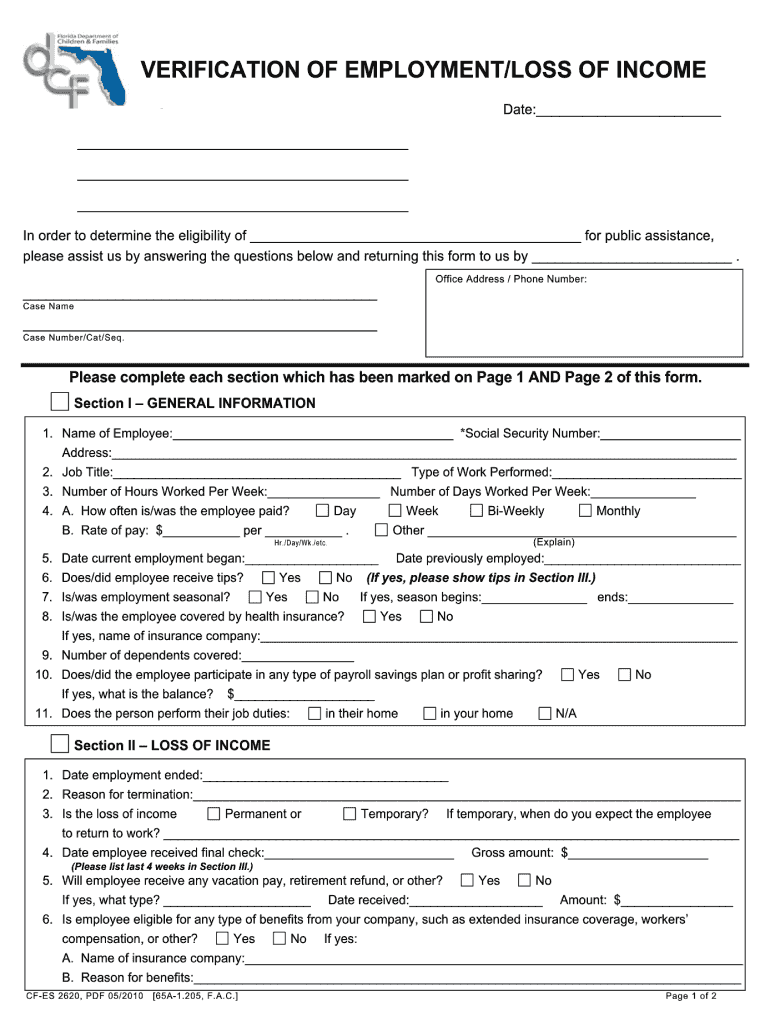
The Verification of Employment Loss of Income form is a critical document utilized to determine an individual's eligibility for various public assistance programs. This form collects essential information about an employee's work history, income level, and reasons for job termination, including any applicable benefits received. It is commonly required under situations such as applications for government financial aid, food assistance, or unemployment services.
Key Components of the Form
-
General Employment Information: This section includes the employee's name, employer's details, position held, and the duration of employment. This information establishes the basis for evaluating the person's employment history.
-
Income Details: Applicants must provide comprehensive information about their income. This includes gross pay, hourly rates, or commissions. A detailed account of regular and irregular earnings is crucial for accurately assessing financial situations.
-
Employment Termination Circumstances: Understanding the reasons for employment loss—be it due to layoffs, furloughs, or voluntary resignations—is vital. This part of the form helps to clarify the context surrounding the individual’s current financial hardship.
-
Benefits Information: Recipients of unemployment benefits or severance packages must disclose these results. This ensures that the form accurately reflects their financial standing and potential eligibility for support services.
Steps to Complete the Verification of Employment Loss of Income Form
Completing the Verification of Employment Loss of Income form is a systematic process requiring careful attention to detail. Below are the steps to ensure accurate and complete submissions:
-
Gather Required Documentation: Before starting the form, compile necessary documents such as pay stubs, termination letters, and any other proof of income. Ensure you have current employment details if applicable.
-
Fill Out Employee Information: Input personal details accurately, including your full name, contact information, and Social Security Number. Any discrepancies can lead to delays or denials.
-
Detail Employment History: Document your work history comprehensively, covering all employers over the past few years. Specify your job title, dates of employment, and the nature of each position.
-
Outline Income Sources: Clearly indicate all forms of income, including wages, bonuses, and any secondary jobs. If receiving unemployment or other assistance, include this information distinctly.
-
Specify Termination Circumstances: Provide detailed explanations for your employment loss. If the termination was due to company layoffs or restructuring, ensure to mention these circumstances specifically.
-
Review and Sign the Form: Before submitting, review the entire form for accuracy. Sign and date to certify that the information provided is true and complete to the best of your knowledge.
Importance of the Verification of Employment Loss of Income Form
The Verification of Employment Loss of Income form serves several significant functions. Its primary purpose is to assess eligibility for public assistance and aid programs effectively. Here are key reasons for its importance:
-
Eligibility Evaluation: Government agencies and organizations use this form to accurately evaluate financial needs and determine eligibility for assistance programs such as food stamps or unemployment benefits.
-
Facilitation of Financial Aid: Accurate completion can hasten the approval process for individuals requiring immediate financial support. Comprehensive and correct details minimize the chances of delays in receiving aid.
-
Documentation of Financial Hardship: The form establishes a clear record of job loss and current financial conditions. This documentation can be beneficial for future employment opportunities, financial planning, or legal requirements.
Common Users of the Verification of Employment Loss of Income Form
Several groups typically utilize the Verification of Employment Loss of Income form. Understanding these users can provide insights into the form’s application and significance:
-
Unemployed Individuals: Those currently seeking employment after losing their jobs are the primary users. They submit this form to access unemployment benefits or other forms of assistance.
-
Social Services Agencies: Organizations that provide financial assistance and support programs require this form to facilitate aid and ensure resources are allocated to those in genuine need.
-
Legal and Financial Advisors: Professionals assisting clients with financial planning or legal issues related to employment may use this form to gather necessary documentation for unemployment claims or court hearings.


Required Documentation for the Verification of Employment Loss of Income Form
Submission of the Verification of Employment Loss of Income form requires specific documentation to substantiate the claims presented. This ensures the process remains validated and transparent. Key documents required include:
-
Pay Stubs: Recent pay stubs that demonstrate the income level prior to employment loss are essential. This establishes a baseline for calculating eligibility.
-
Tax Returns: Previous tax returns can serve as comprehensive records of income, illustrating annual earnings and financial trends.
-
Termination Letter: A formal notice from the employer detailing the reason for termination provides context for the employment loss, an important component for eligibility assessments.
-
Unemployment Benefits Documentation: If the individual is applying for unemployment benefits, documentation specifying the type and amount received is necessary for full disclosure.
Overview of Available Assistance Programs
Various assistance programs exist to support individuals experiencing employment loss. Understanding these programs can help applicants identify the resources available to them. Some common programs include:
-
Unemployment Insurance: A state-operated program that provides temporary financial assistance to eligible workers who are unemployed through no fault of their own.
-
Temporary Assistance for Needy Families (TANF): A federal aid program designed to provide financial help and support services to families with children who are in need.
-
Supplemental Nutrition Assistance Program (SNAP): Commonly known as food stamps, SNAP provides nutritional assistance to those with limited income, helping to reduce food insecurity.
-
Housing Assistance Programs: Depending on the state, various housing assistance programs offer support for rent or mortgage payments to prevent homelessness during periods of financial hardship.
-
Non-Profit Assistance Services: Numerous non-profits provide resources, financial aid, or job placement services for individuals navigating through employment loss and financial struggles.