






Definition and Importance of Foreign Exchange Transaction Related Service Charges
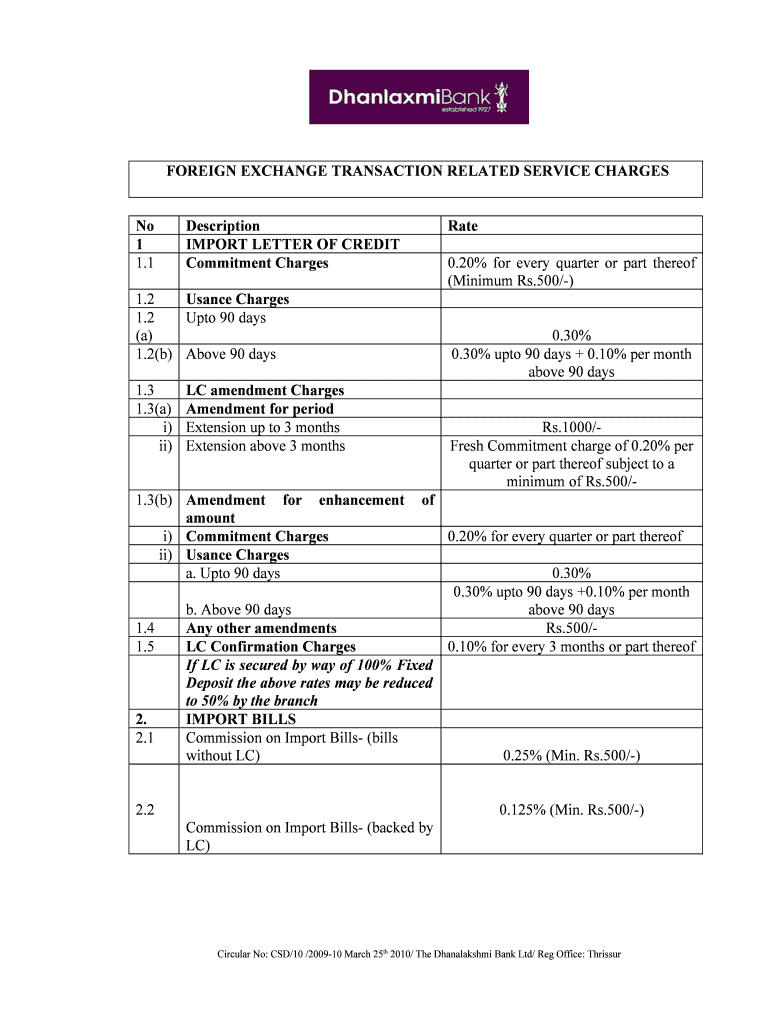
Foreign exchange transaction-related service charges refer to the fees levied by financial institutions for processing and handling transactions involving the exchange of currencies. These charges can include costs associated with import letters of credit, amendments, import bills, drafts, telegraphic transfers, and outward remittances. Understanding these fees is crucial for businesses and individuals engaged in international trade, as they directly affect the cost of transactions and budgeting for foreign dealings.
Examples of these fees include commitment charges for securing a letter of credit, usance charges calculated based on repayment terms, and additional charges for amendments and confirmations. Knowing the details of these charges helps stakeholders make informed financial decisions and ensure compliance with banking regulations.
Steps to Complete the Foreign Exchange Transaction Related Service Charges
- Identify the Type of Transaction: Determine whether your transaction involves an import letter of credit, an amendment, a bill, or another service.
- Review Fee Schedule: Consult the bank's detailed fee schedule to understand the specific costs associated with your transaction type.
- Prepare Necessary Documents: Gather all required documentation, such as invoices and contracts, to support your transaction request.
- Submit Payment: Pay the necessary charges through your bank to ensure the transaction is processed promptly.
- Track Transaction Status: Use the bank's tracking tools to monitor the progress of your foreign exchange transaction.
Following these steps can streamline the process and prevent delays in completing international trades.
Who Typically Uses Foreign Exchange Transaction Related Service Charges
These charges are most commonly utilized by importers, exporters, multinational corporations, and individuals engaged in international financial transactions. Importers often deal with letters of credit or telegraphic transfers when sourcing goods from abroad, while exporters may encounter these charges when receiving payments in foreign currencies.
In addition, financial institutions that facilitate currency exchange for clients frequently apply these fees to cover administrative costs and mitigate risks. Understanding who benefits from these services enables better planning and negotiation with financial partners.
Key Elements of Foreign Exchange Transaction Related Service Charges
- Commitment Charges: Fees for securing financial commitments through letters of credit.
- Usance Charges: Costs calculated based on the time allowed for payment after goods have been shipped.
- Amendment Fees: Additional charges for making modifications to existing financial agreements or terms.
- Telegraphic Transfer Fees: Costs associated with the electronic transfer of funds across borders.
- Minimum Charges: Baseline fees applied to certain services regardless of the transaction size.
These key elements provide a framework for understanding the various components of foreign exchange service charges, assisting in precise financial planning.
Legal Use and Compliance for Financial Transactions
Legal compliance is paramount when dealing with foreign exchange transactions. All related service charges must adhere to both local and international banking laws to prevent legal repercussions and ensure smooth financial operations.
Key compliance considerations include customer identification processes, anti-money laundering regulations, and adherence to specific country laws regarding currency control. Businesses and individuals must work closely with their banks to ensure all legal requirements are met when engaging in foreign currency exchanges.
Required Documents for Foreign Exchange Transactions
- Import/Export Documentation: Bills of lading, invoices, and certificates of origin.
- Bank Forms: Application forms for letters of credit and telegraphic transfers.
- Identification Proofs: Valid ID and business registration documents for verification purposes.
- Contractual Agreements: Copies of trade contracts detailing the terms of the transaction.
Having these documents ready and properly filled out facilitates the processing of foreign exchange transactions and aids in the prompt completion of cross-border financial activities.
State-Specific Rules for the Foreign Exchange Transaction Related Service Charges
While federal regulations govern most aspects of foreign exchange transactions, certain state-specific rules may apply, especially regarding taxation and reporting standards. Some states might have more stringent documentation requirements or additional registration procedures for businesses engaging in international transactions.
Companies operating across multiple states need to be aware of these variations to ensure compliance and avoid potential fines or legal actions. Consulting with a financial advisor or legal expert familiar with state regulations can provide valuable guidance in navigating these complexities.
Digital vs. Paper Version of Foreign Exchange Transaction Services
With advancements in technology, many financial institutions offer digital platforms for processing foreign exchange transactions. Digital services offer benefits such as reduced processing times, real-time tracking, and convenient access from anywhere with an internet connection.
Conversely, paper-based transactions may still be necessary for areas where digital infrastructure is limited or for clients who prefer traditional methods. Understanding the differences between these options helps users choose the most efficient method for their specific needs while ensuring timely completion of their financial obligations.